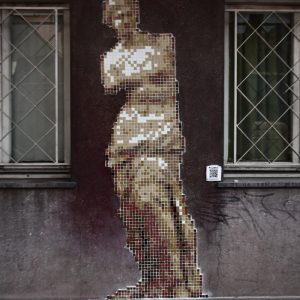
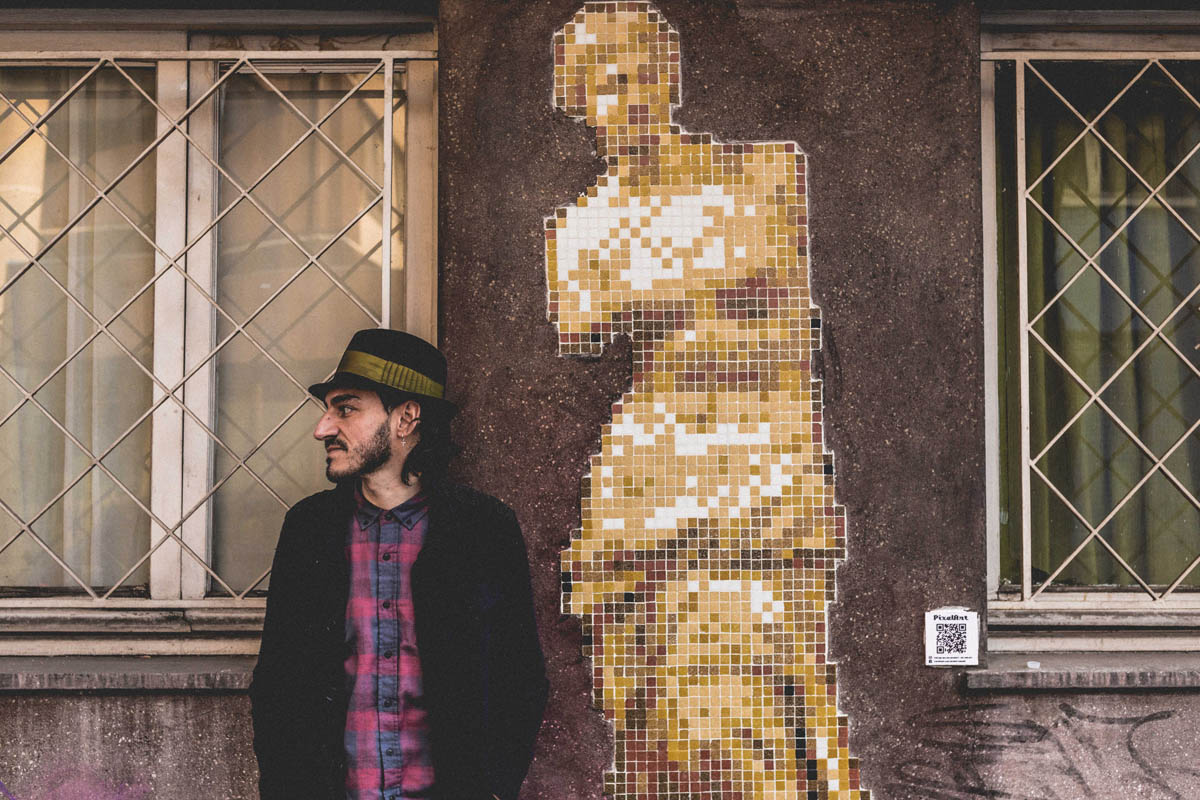
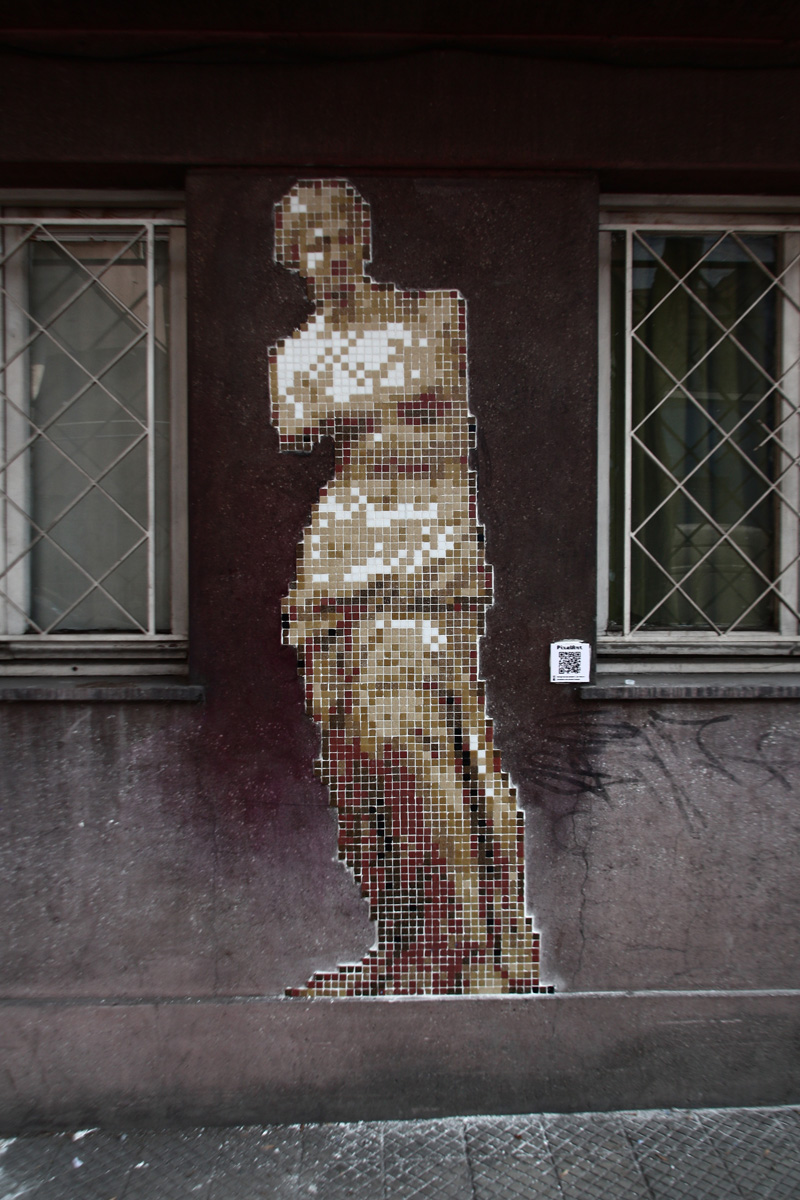
Mosaic reconstruction of the Venus de Milo exploring image permanence and architectural displacement through a rare urban migration process in which the work survived the demolition of its original location.
Derived from one of the most recognizable sculptures in Western art history, this large-scale mosaic intervention translates the Venus de Milo into a pixel-based structure investigating permanence, displacement and the survival of cultural symbols within the contemporary city. Through thousands of individually placed glass tesserae, the classical figure is reconstructed as a fragmented digital image, positioning ancient sculpture within the visual language of contemporary technological culture.
The work occupies a unique position within the artist’s urban practice due to its unusual architectural history. Originally installed on a building later scheduled for demolition, the mosaic was preserved and carefully relocated to a new site by the construction company responsible for the redevelopment. This rare process transformed the intervention into a living example of architectural migration, allowing the work to survive the disappearance of the structure for which it was originally conceived.
By physically moving from one building to another, the mosaic extends its investigation into image persistence beyond representation and into reality itself. The work demonstrates how cultural symbols can outlive the spaces that contain them, echoing the historical journey of classical artworks that have endured through centuries of political, social and architectural transformation.
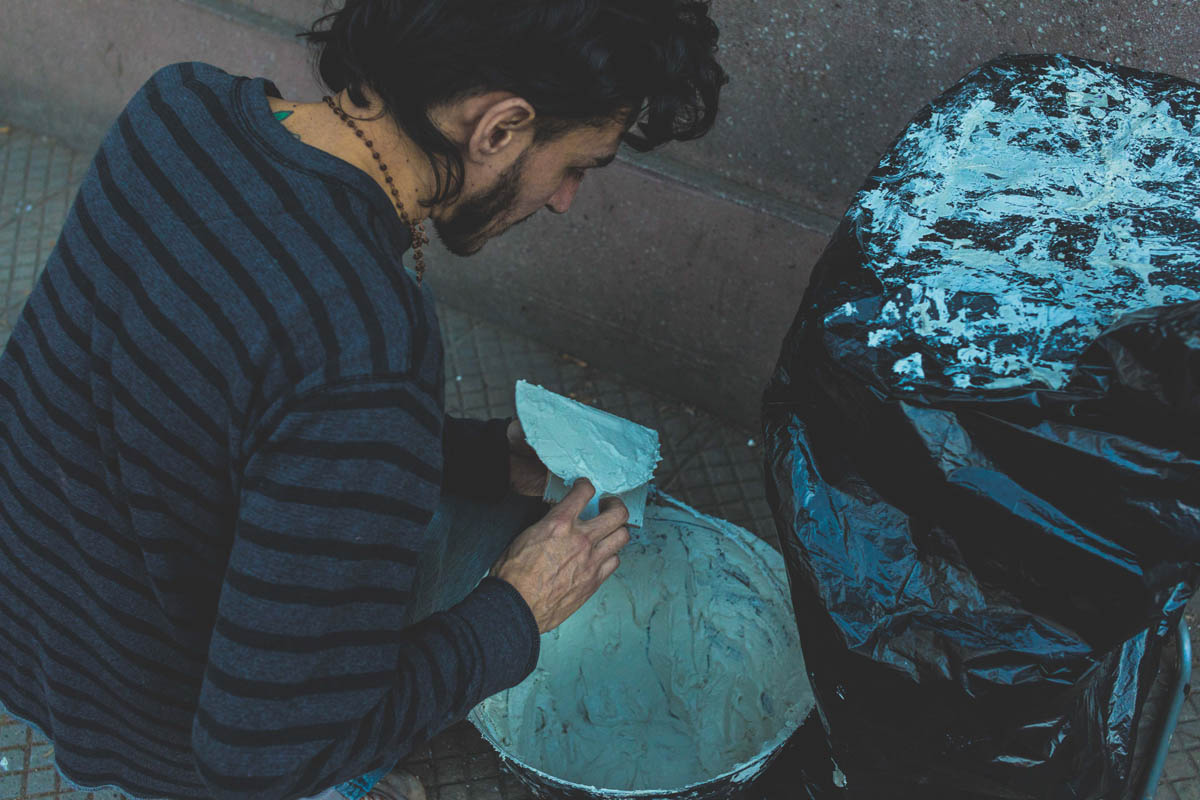
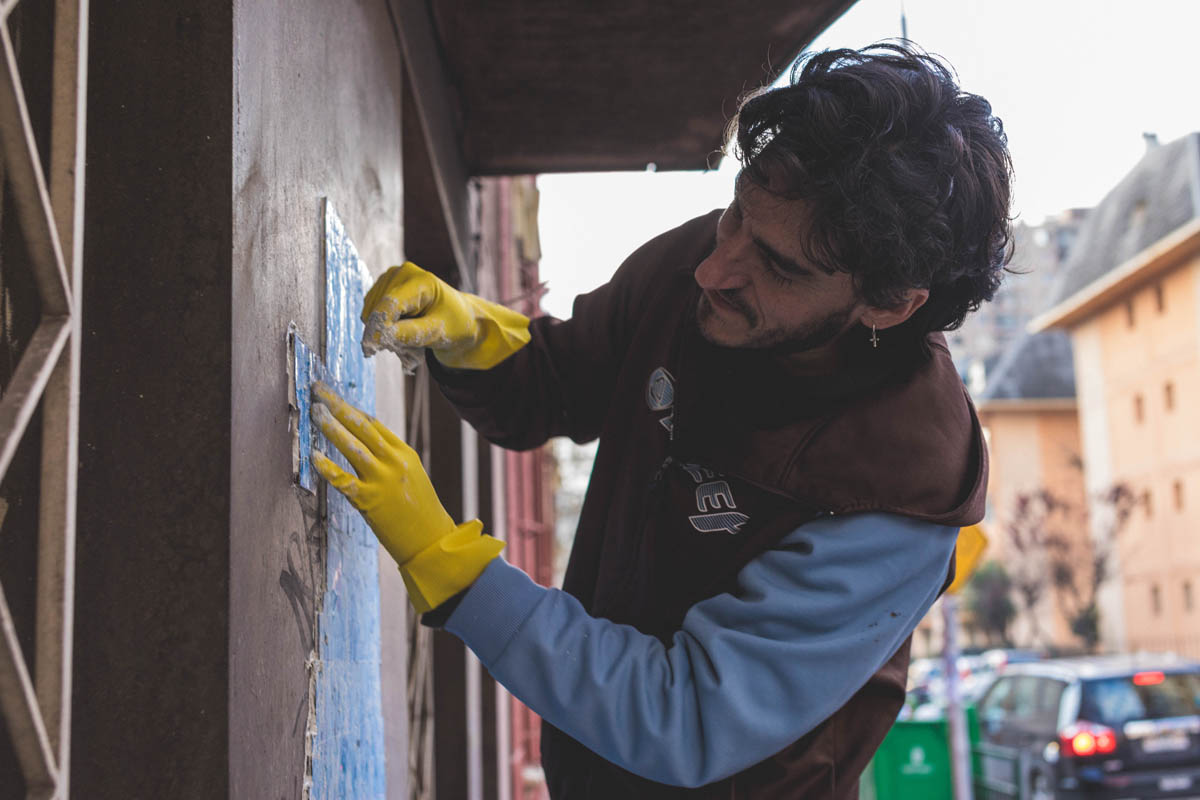
Executed tessera by tessera using traditional indirect mosaic techniques, the intervention continues the artist’s ongoing exploration of symbolic invocation, public space and the transmission of cultural memory. Venus de Milo becomes both image and artifact, simultaneously rooted in antiquity and embedded within the evolving fabric of the contemporary city.