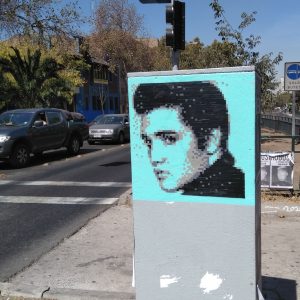
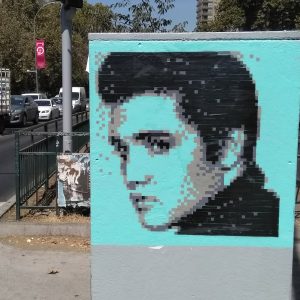
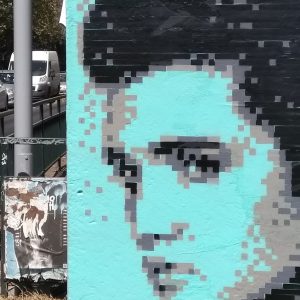
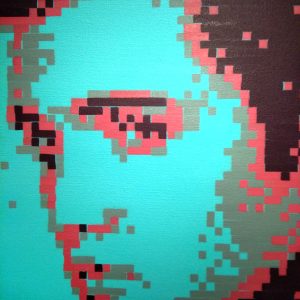
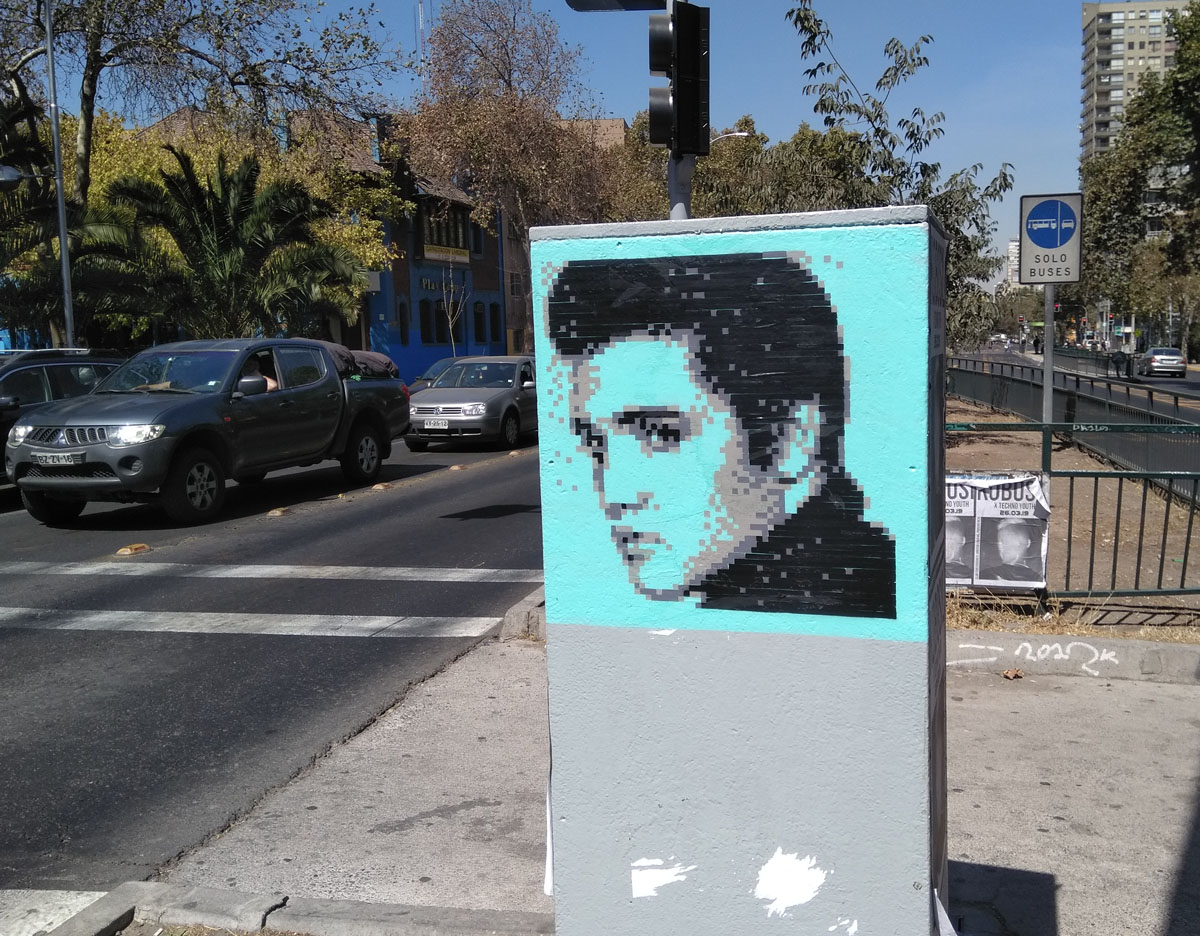
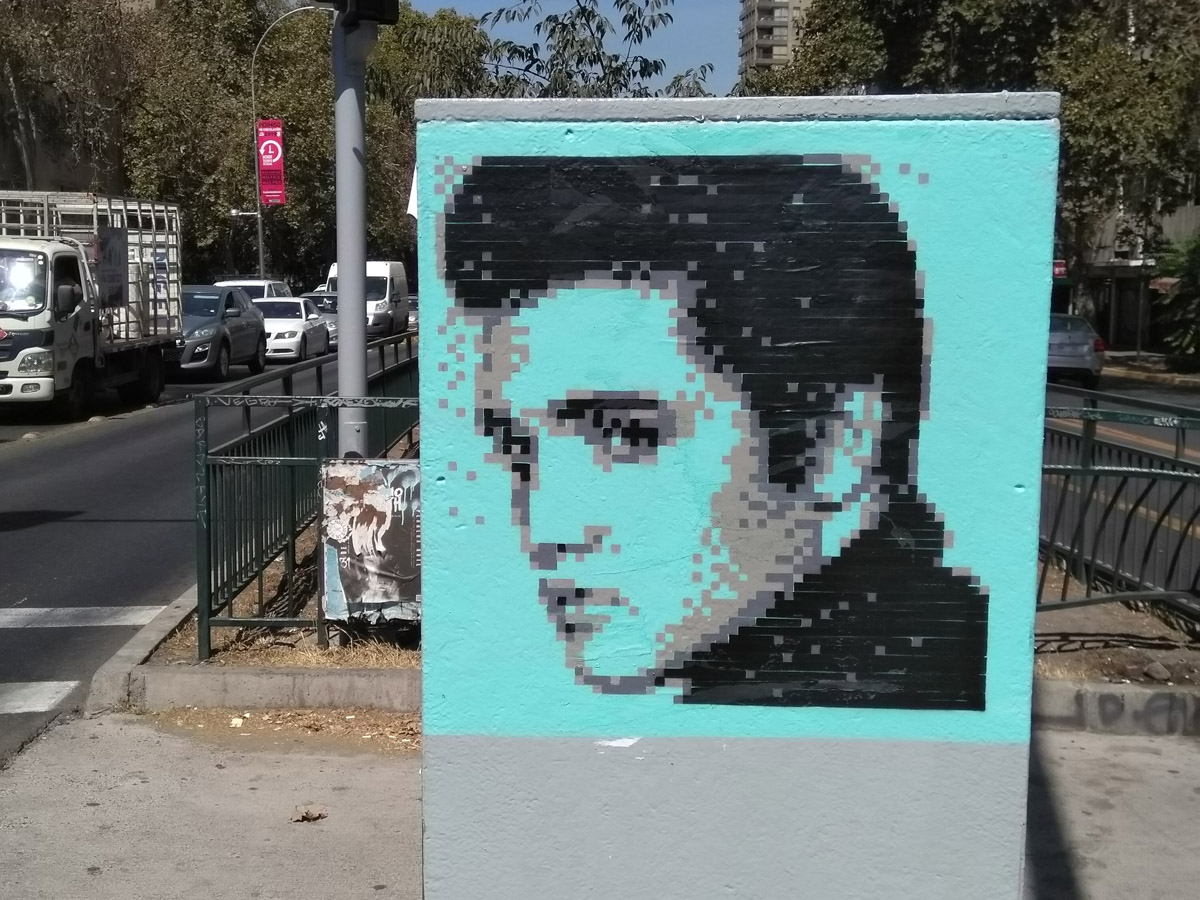
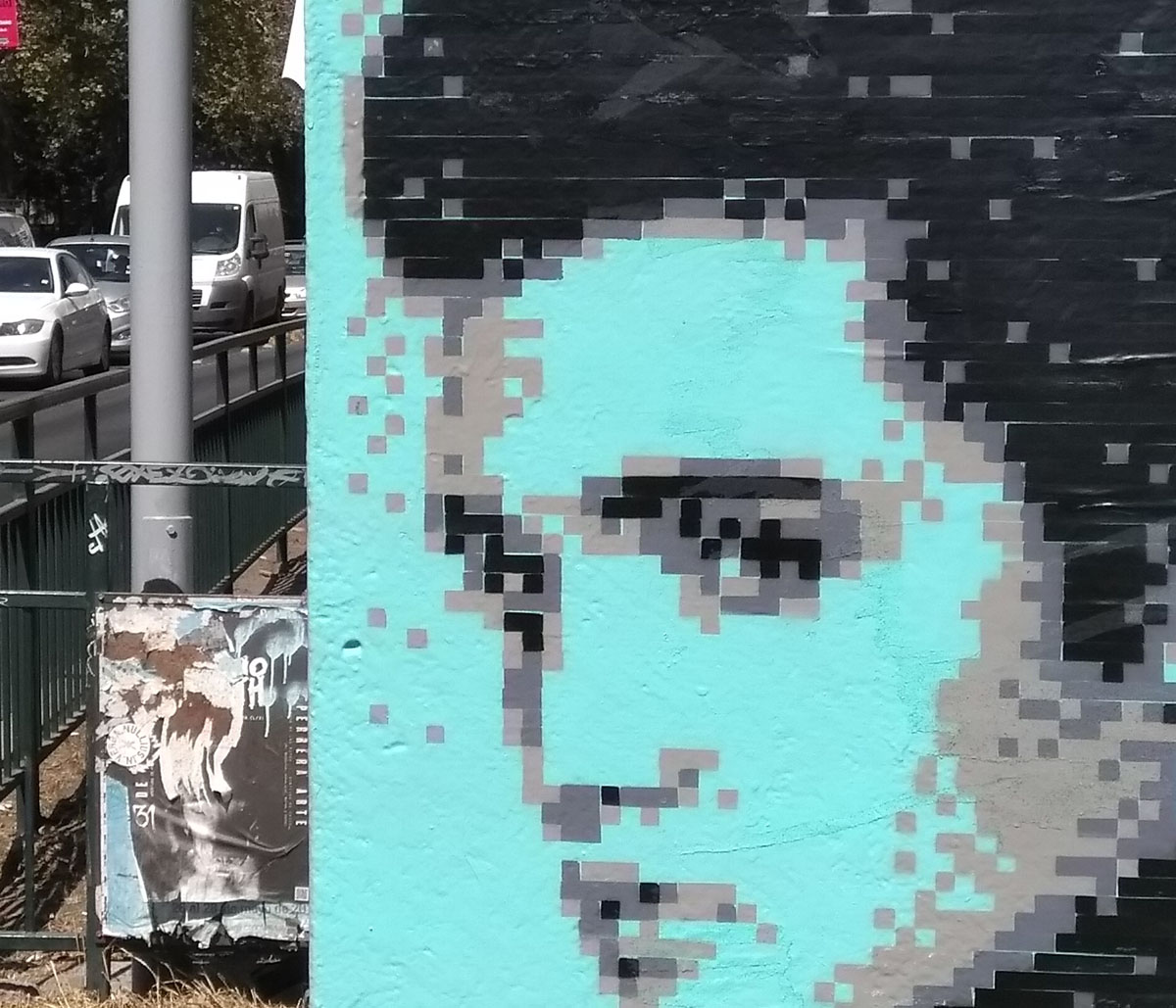
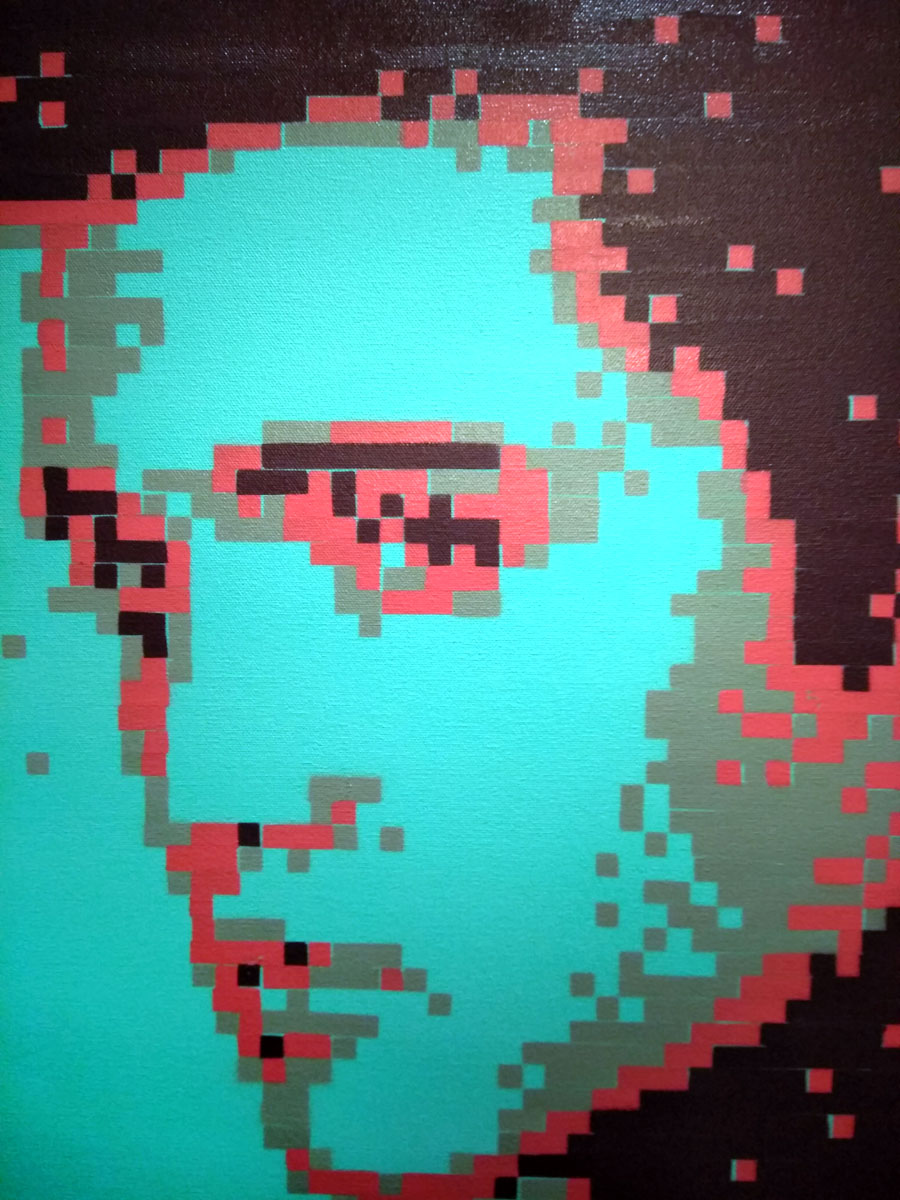
Created in 2019, this portrait of Elvis Presley marks an important technical development within the artist’s stencil practice. Expanding beyond earlier monochromatic systems, the work was constructed through six independent stencil layers and a three-color palette, increasing both visual complexity and chromatic depth while preserving the precision required for repeated reproduction.
Rather than functioning as a single intervention, the image was conceived as a transferable visual system capable of operating across multiple contexts. The same matrix can be reproduced on urban walls, textile surfaces and exhibition supports, allowing the image to migrate between public space and the contemporary art environment while maintaining its structural integrity. In this sense, the stencil becomes both artwork and transmission technology.
The choice of Elvis Presley reinforces the investigation into cultural circulation. As one of the most reproduced figures in popular culture, his image already exists through endless cycles of replication and reinterpretation. By translating the portrait into a modular stencil system, the work extends this process through a handcrafted methodology rooted in repetition, transfer and controlled image distribution.
Positioned between street art, pop iconography and mechanical reproduction, Elvis explores how visual identities persist through constant migration across media, territories and cultural contexts.