Public mosaic homage created during Nicanor Parra’s lifetime to commemorate the poet’s centenary, translating anti-poetic identity into a pixel-based urban monument operating between literary memory and collective recognition.
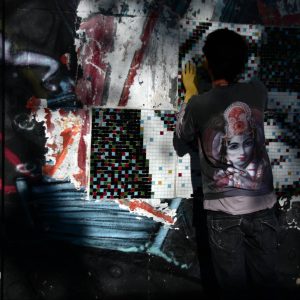
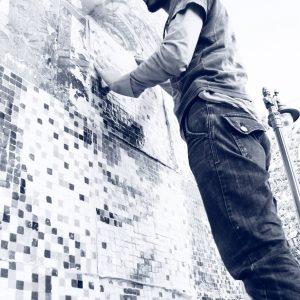
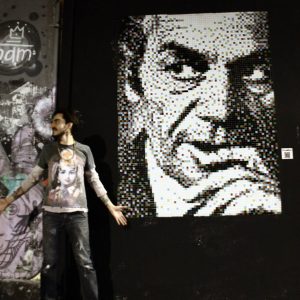
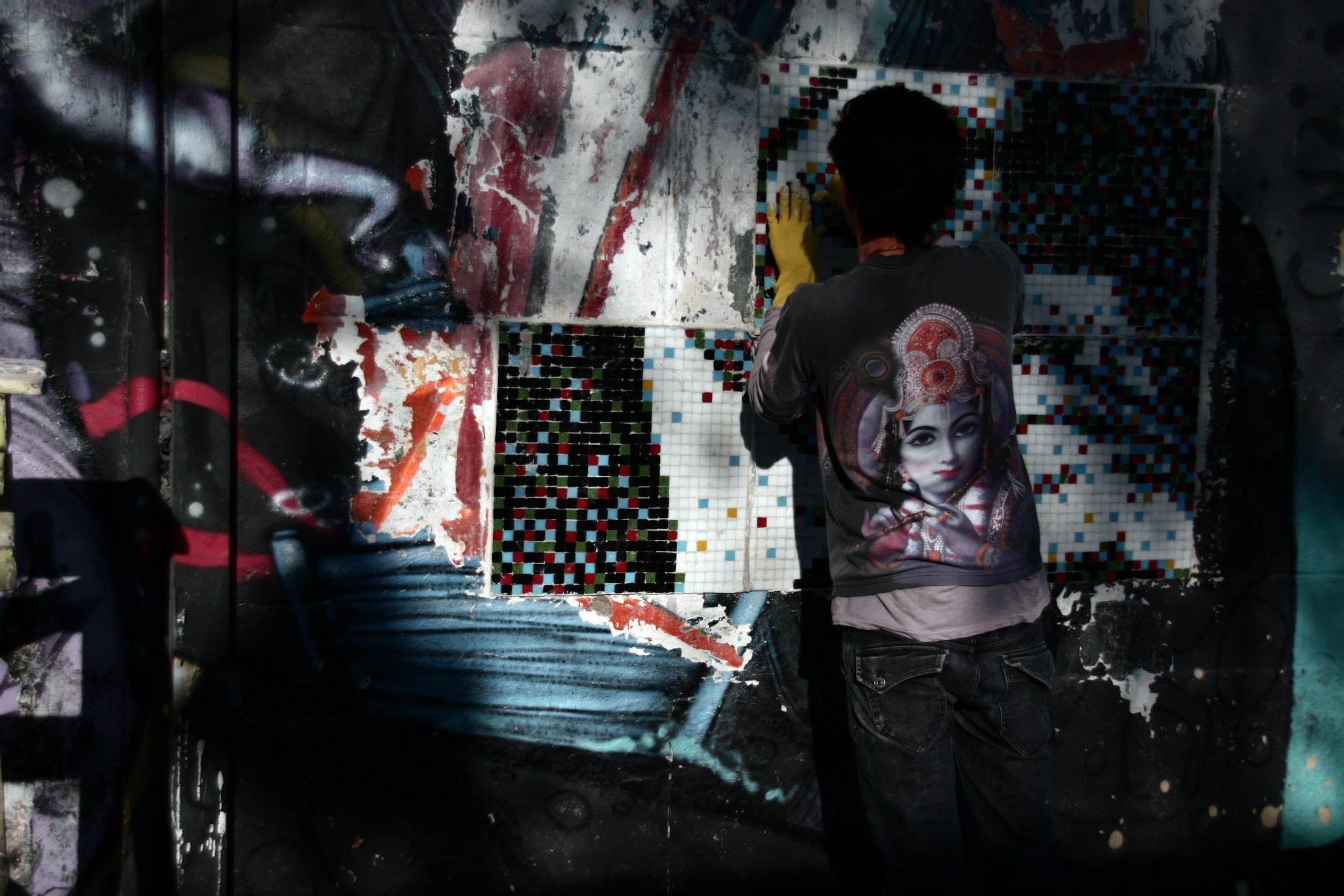
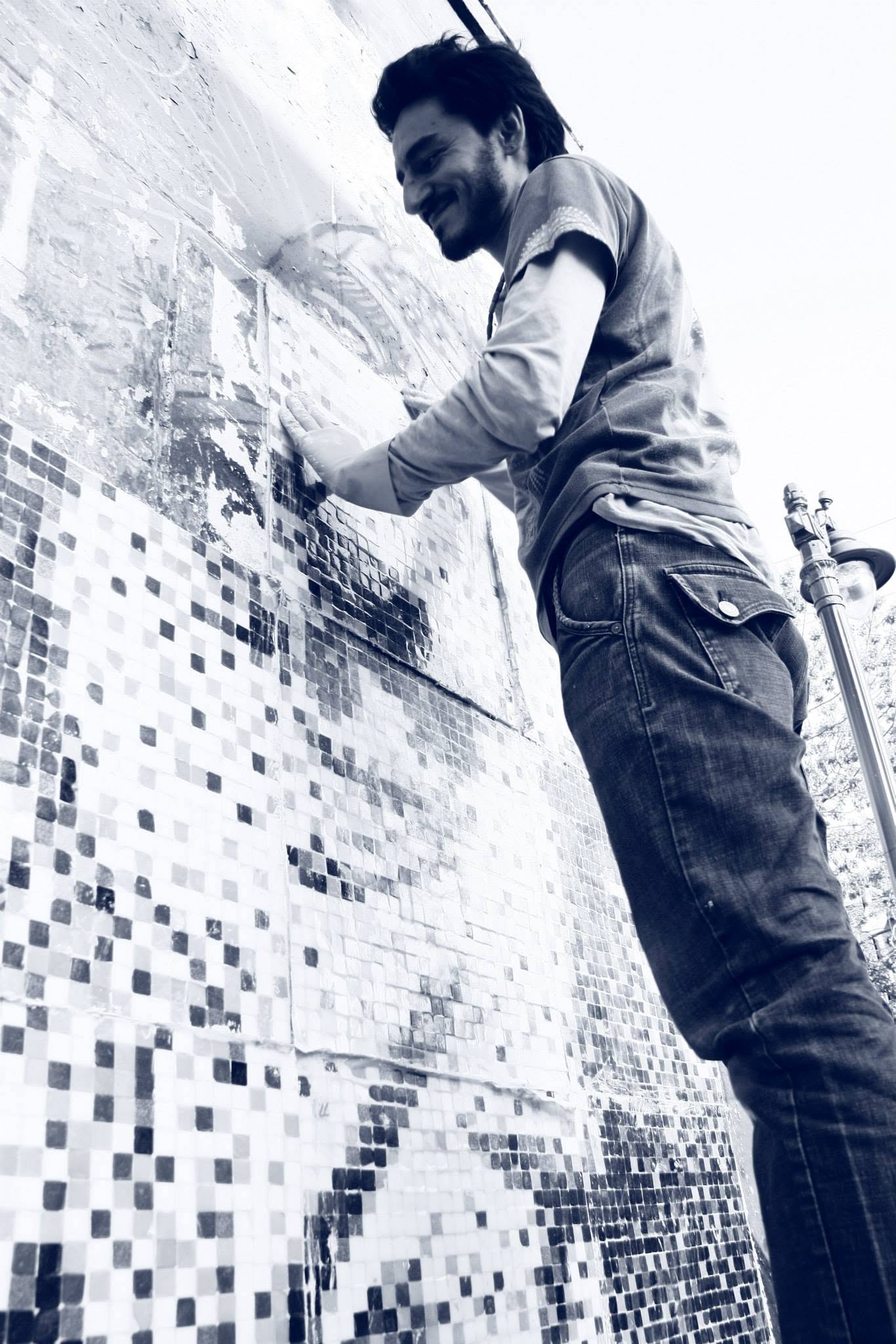
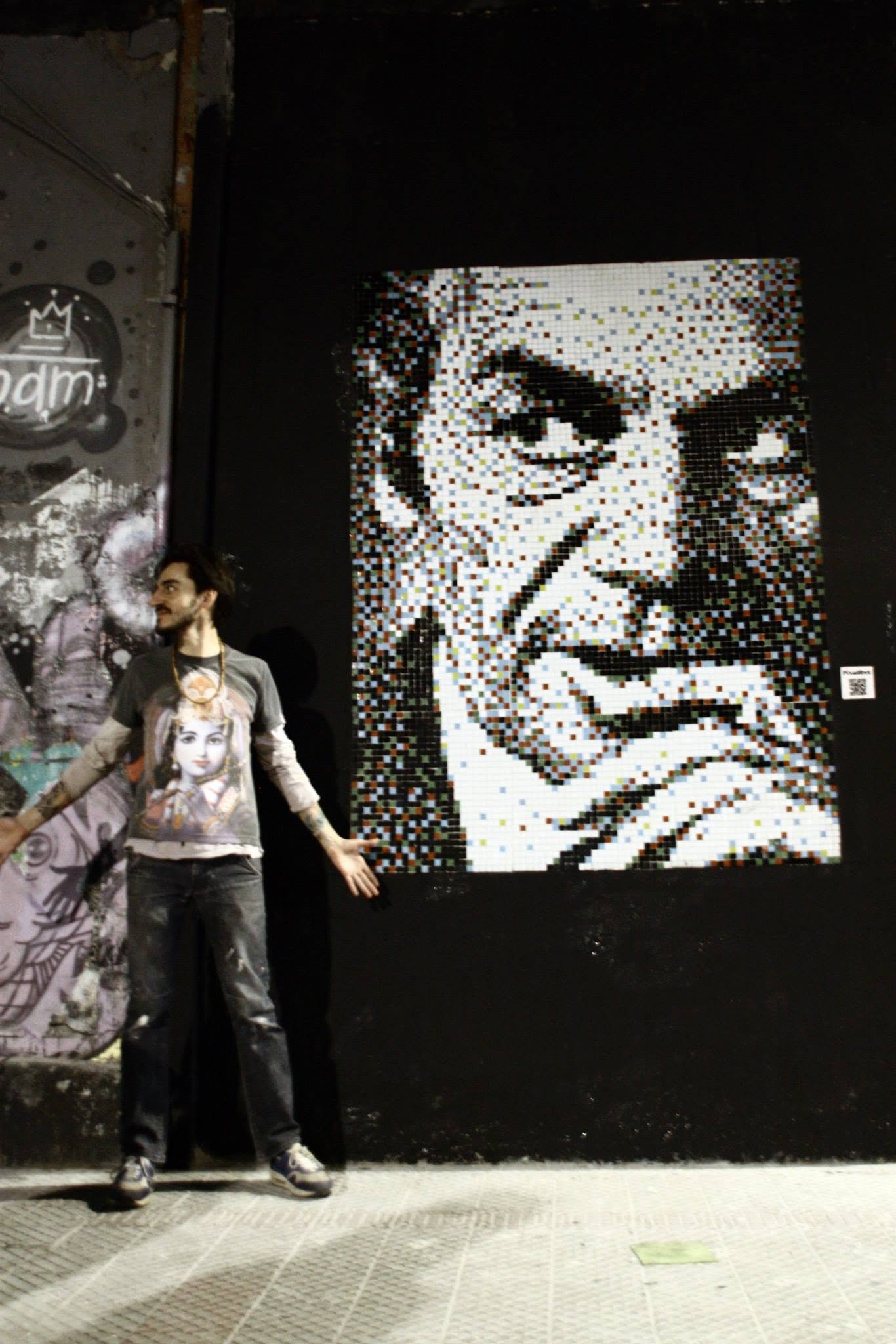
Created in 2014 to commemorate the centenary of Nicanor Parra while the poet was still alive, this public mosaic intervention transforms one of Chile’s most influential literary figures into a large-scale system of handcrafted pixels. Measuring 200 × 150 cm, the work was installed in the Recoleta district of Santiago, extending the artist’s ongoing investigation into how cultural memory can be embedded within everyday urban space.
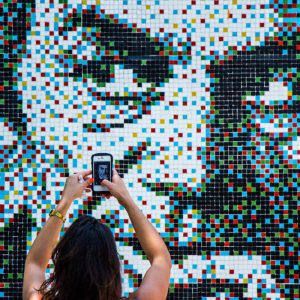
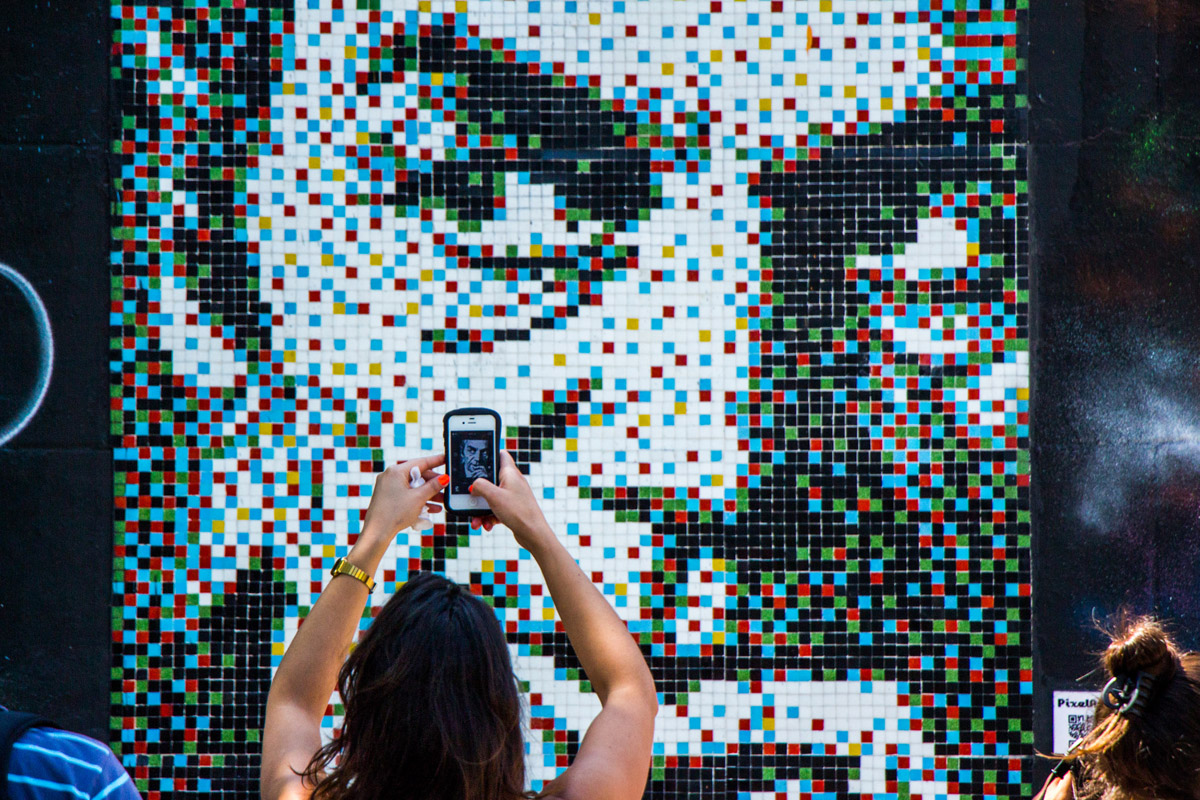
The portrait introduces a distinctive technical experiment within the artist’s mosaic practice. Although perceived as a black-and-white image from a distance, the work is constructed from a carefully calibrated combination of colored tesserae including red, green, blue, yellow, cyan, black and white. Operating through principles similar to photographic halftone and color separation systems, the image demonstrates how perception reconstructs tonal information, allowing color to disappear and re-emerge according to viewing distance.
Installed on an adobe structure in a particularly exposed urban environment, the intervention has survived for more than a decade despite the gradual loss of individual tesserae. This slow process of erosion has become part of the work’s meaning, reinforcing its investigation into permanence, fragility and the persistence of cultural symbols within public space.
Positioned between literature, public art and digital image construction, the mosaic translates Parra’s anti-poetic spirit into a visual language of fragmentation and reconstruction. The work functions simultaneously as portrait, monument and perceptual experiment, demonstrating how collective memory continues to operate through images capable of surviving both time and material transformation.