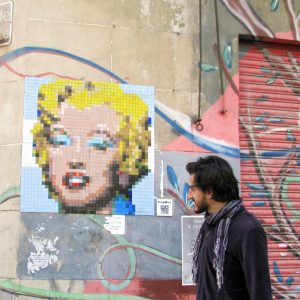
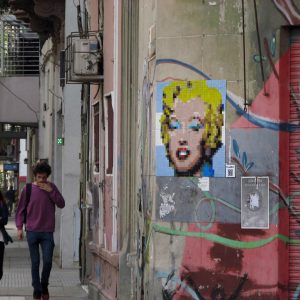
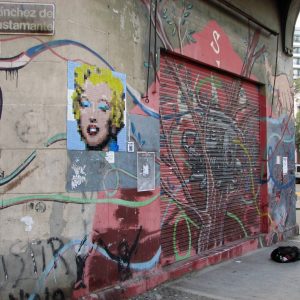
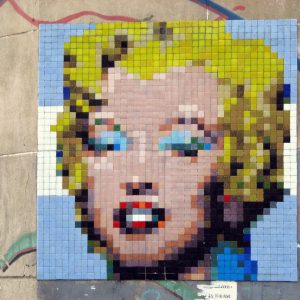
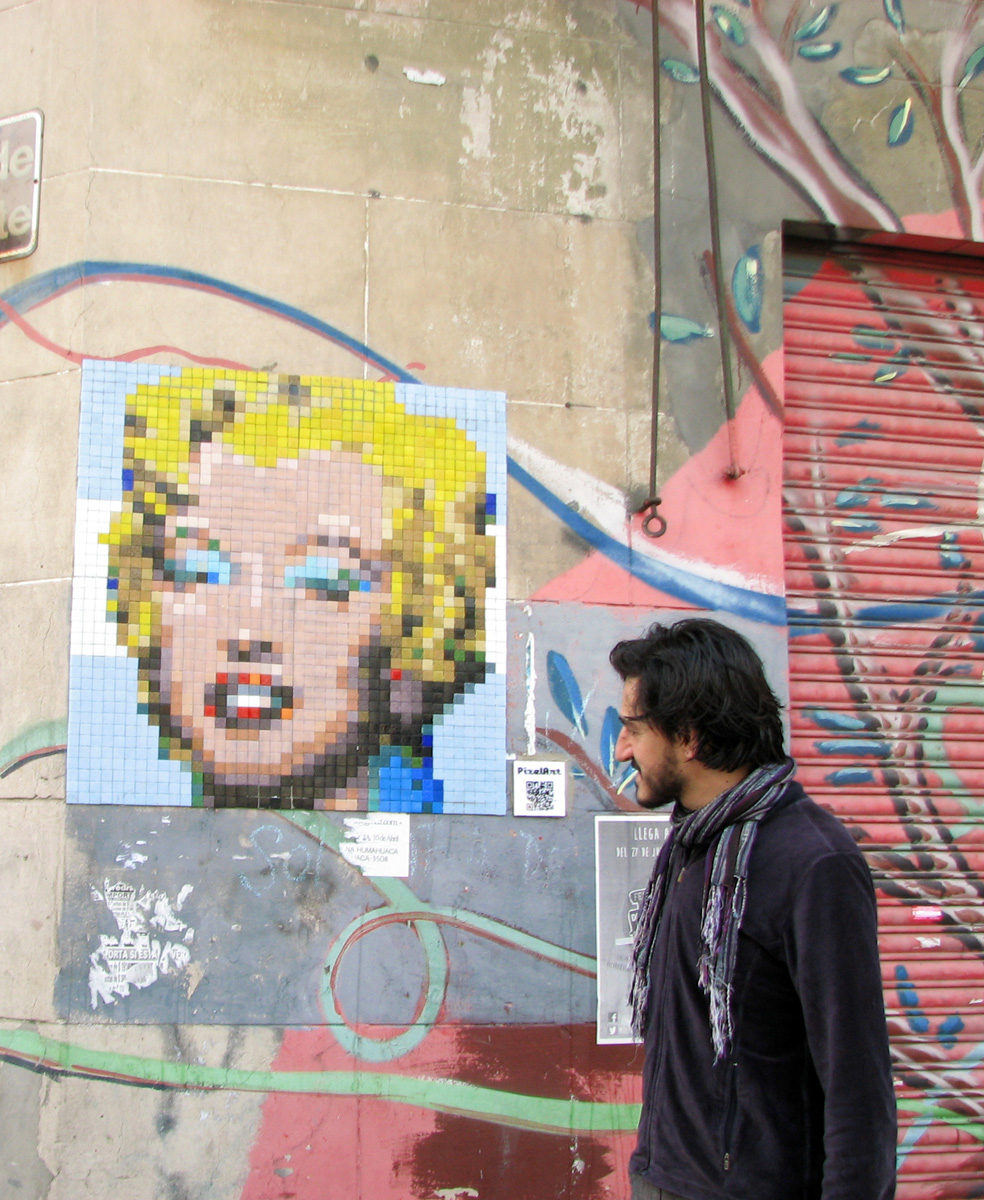
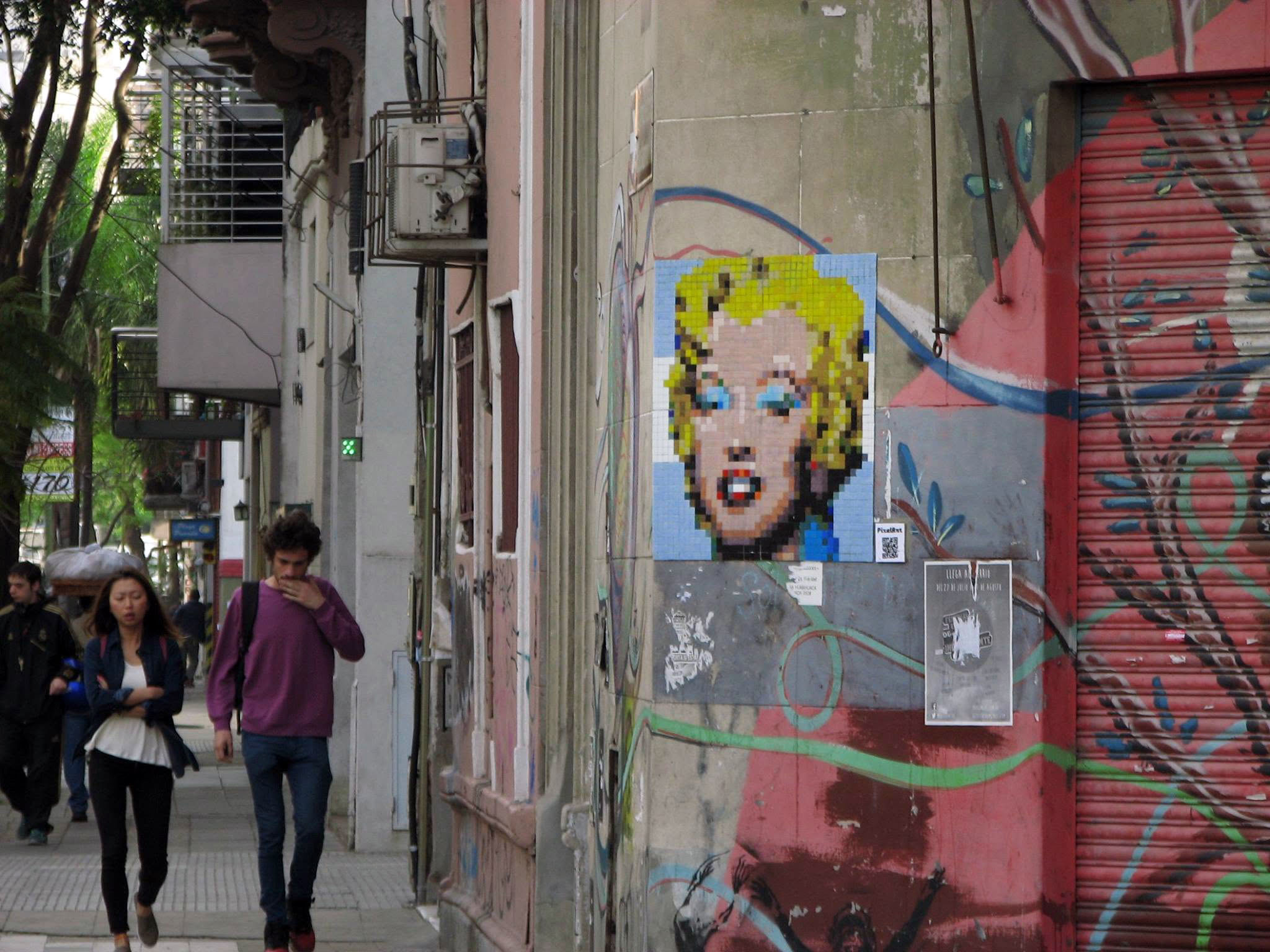
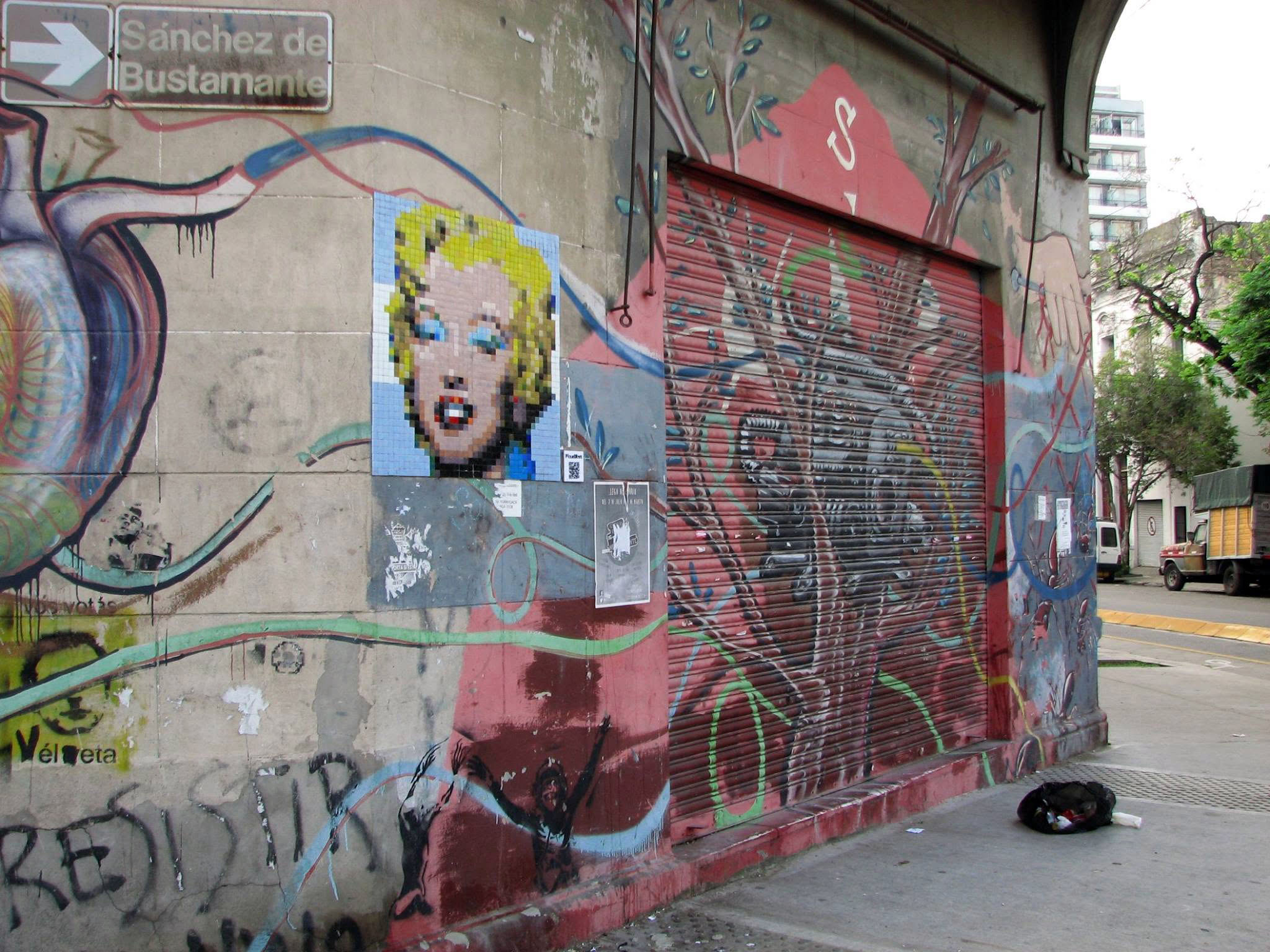
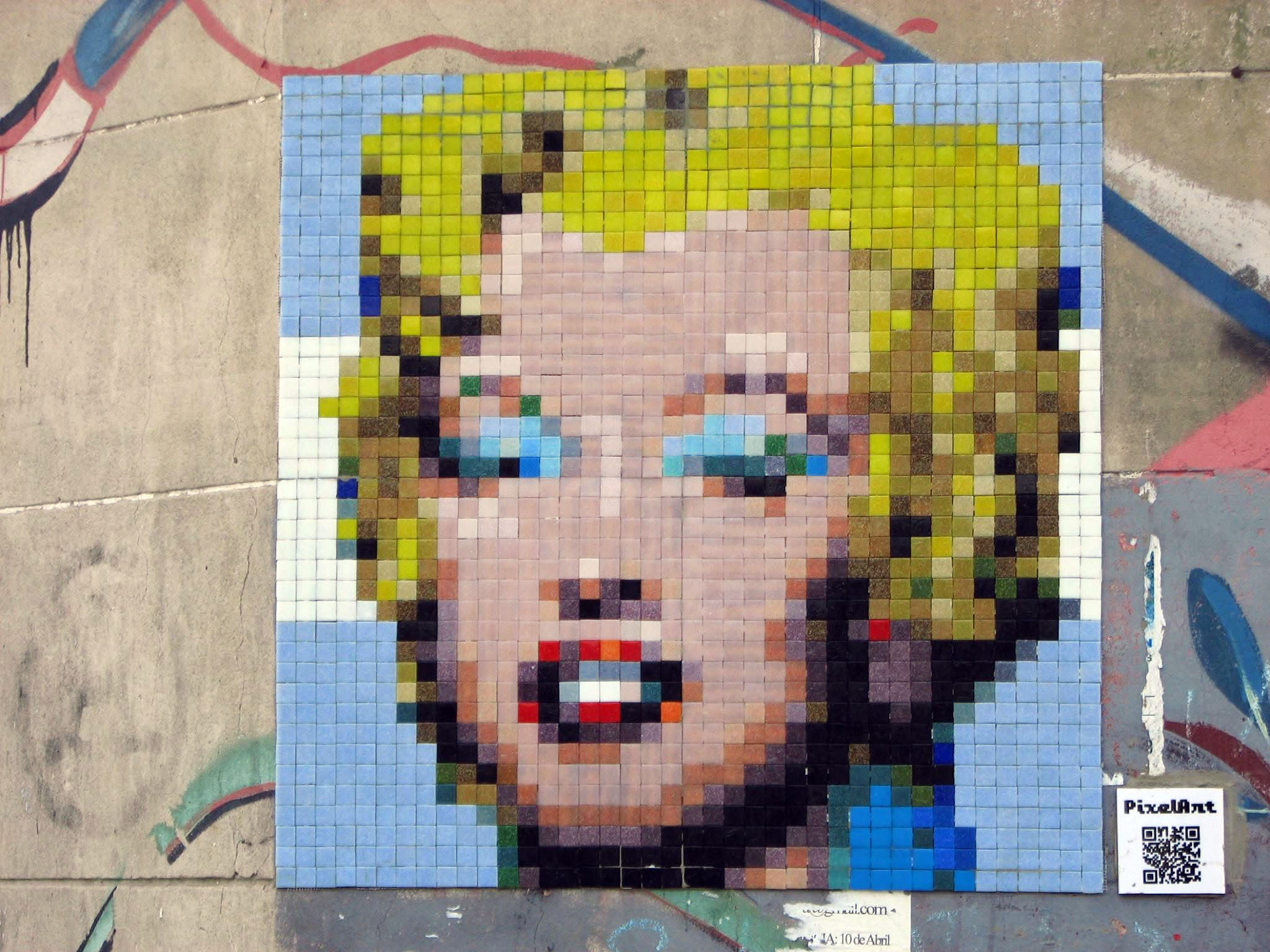
Urban mosaic intervention based on Andy Warhol’s Marilyn, installed in Buenos Aires through a chromatic structure referencing the Argentine flag. The work explores how globally circulated images acquire new local meanings, transforming a familiar pop icon into an unexpected encounter between collective memory, national identity and public space.
Installed in Buenos Aires in 2015, this mosaic reconstructs Andy Warhol’s iconic Marilyn Monroe through a handcrafted pixel structure composed of exactly 1,600 glass tesserae arranged within an 80 × 80 cm format. While maintaining the visual language of pop art, the intervention introduces a chromatic variation through the use of light blue and white tones that subtly reference the colors of the Argentine flag.
The work investigates how globally recognized images change meaning when displaced into new cultural and geographic contexts. Marilyn Monroe, one of the most reproduced faces in contemporary visual culture, becomes here a site-specific urban intervention where international pop iconography intersects with local identity and architectural space. The familiar image remains instantly recognizable while simultaneously absorbing elements of its surrounding environment.
As part of the artist’s broader exploration of distributed urban galleries, the mosaic demonstrates how handcrafted pixel systems can operate across national boundaries while retaining continuity with an ongoing body of work developed throughout South America and Europe. Through fragmentation, repetition and public installation, the intervention extends Warhol’s investigation into image reproduction into the physical language of mosaic and street art.
Positioned between pop art, urban intervention and cultural migration, Marilyn Buenos Aires reflects how images persist through constant transformation, adapting to new territories while maintaining their symbolic power and collective recognizability.