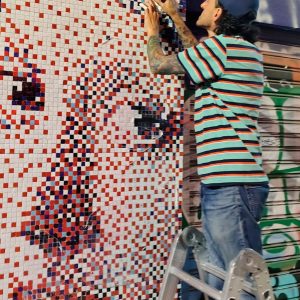
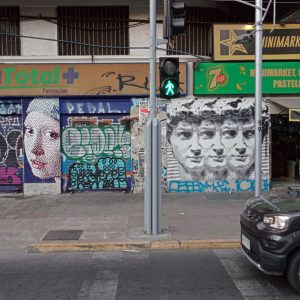
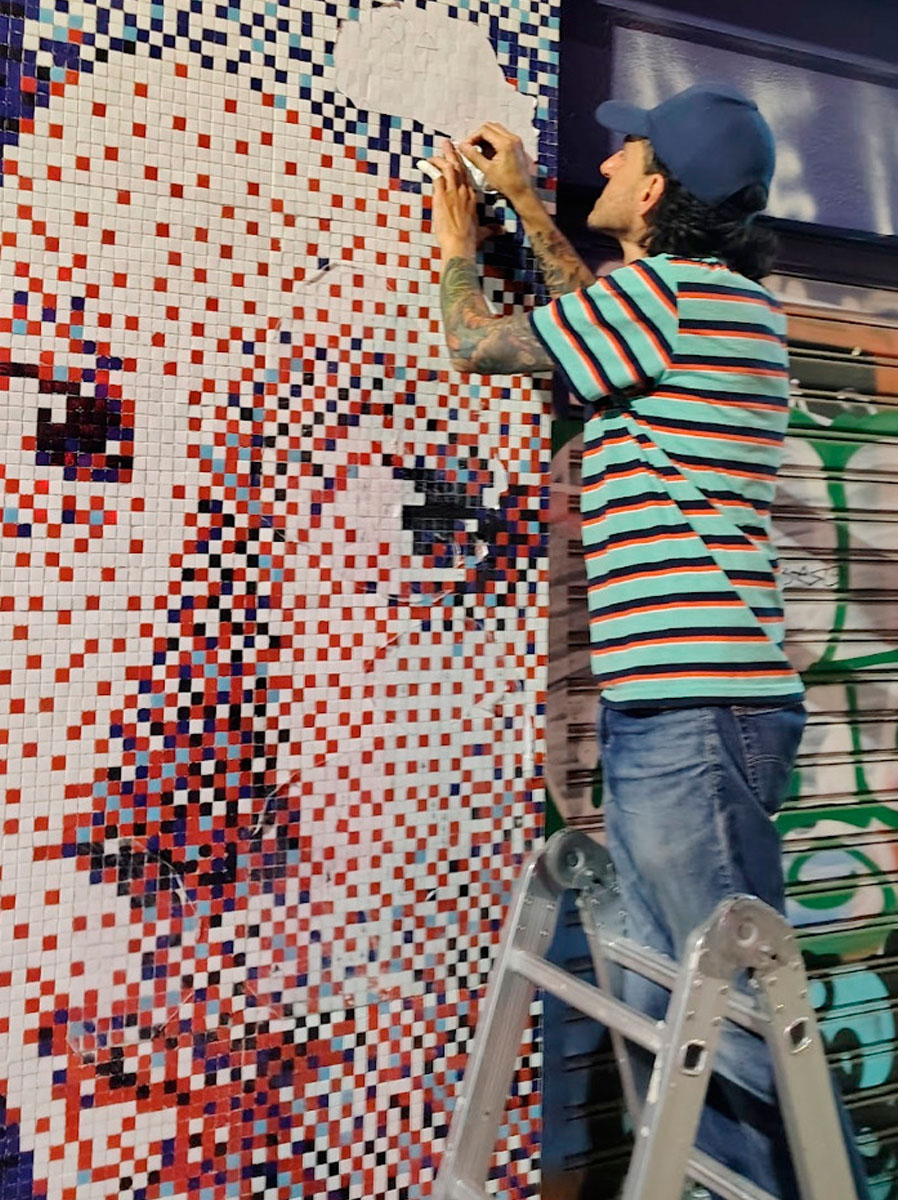
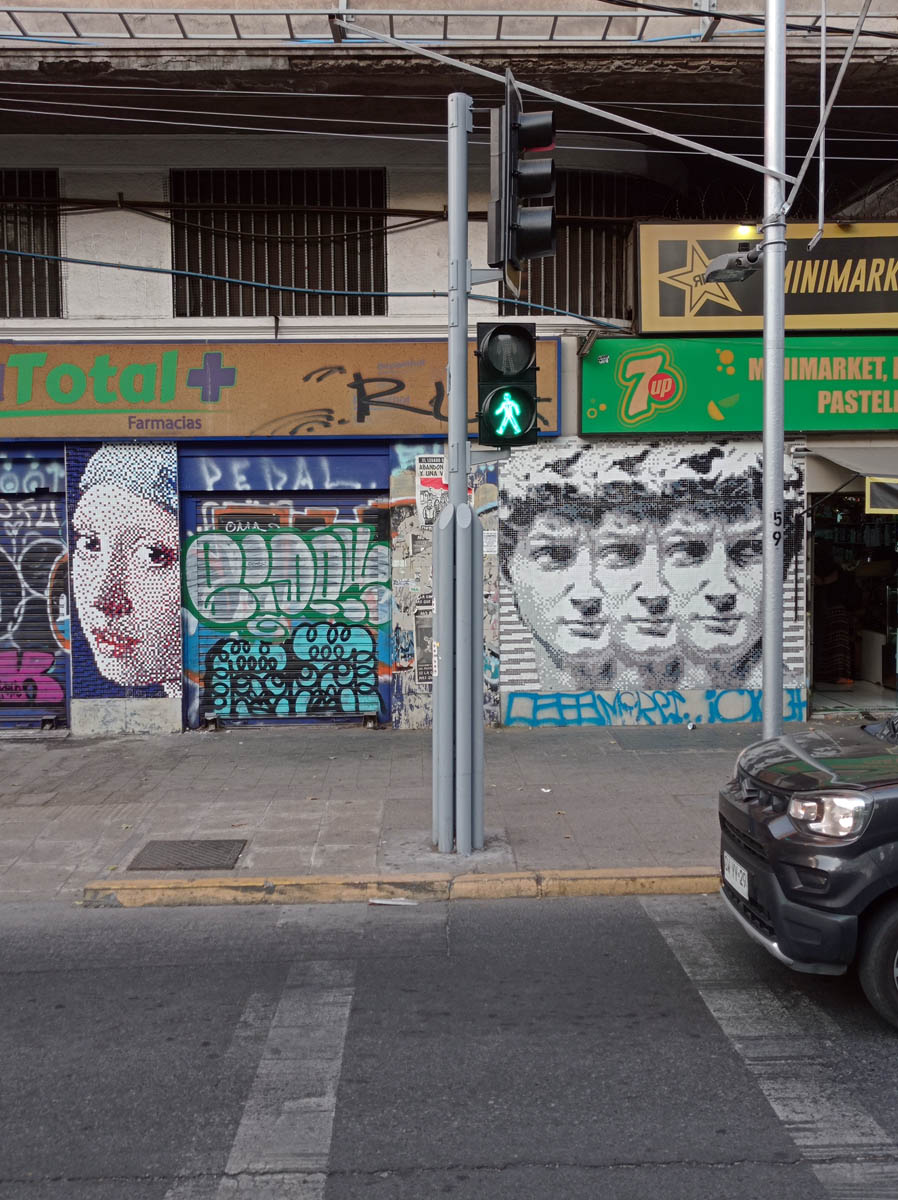
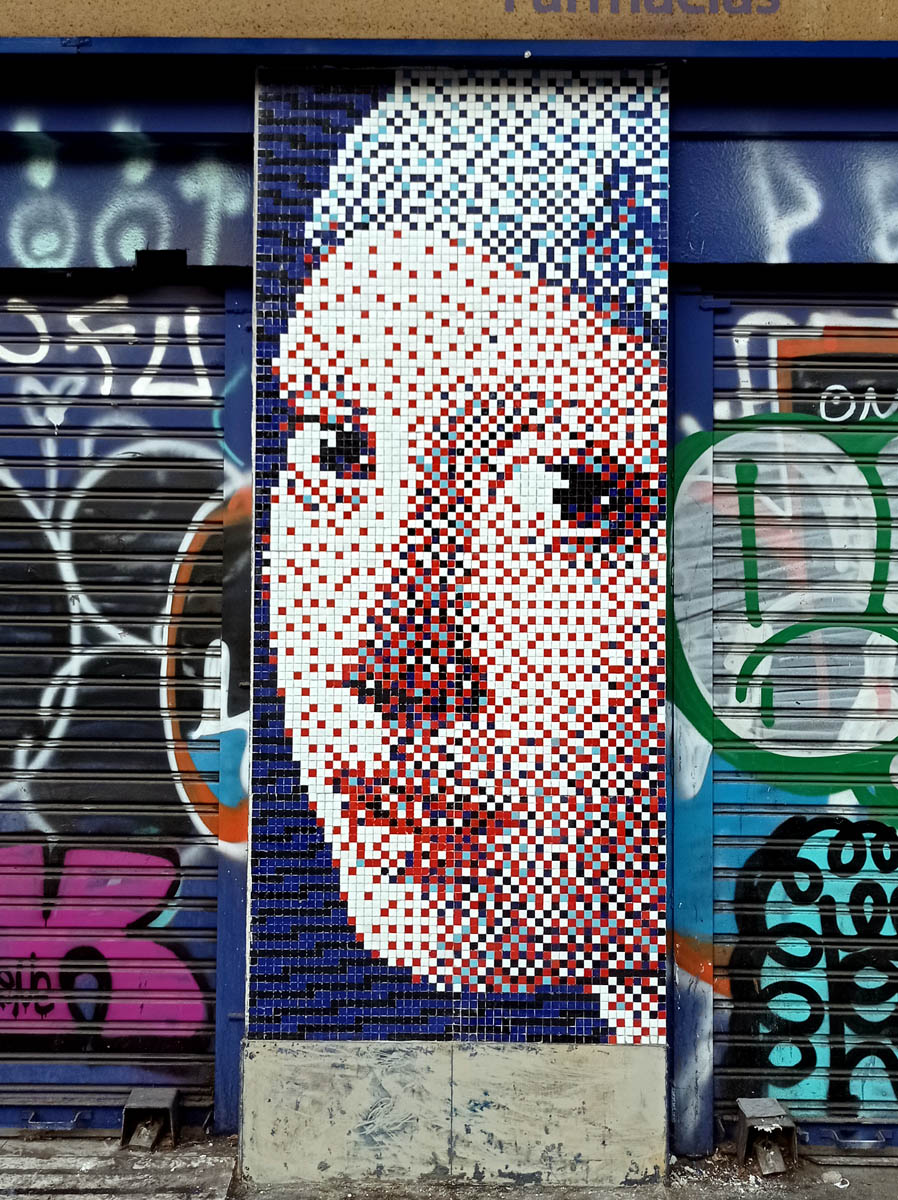
Constructed from more than 6,000 hand-placed mosaic tesserae across a 240 × 102 cm urban surface, this intervention reinterprets Vermeer’s iconic portrait through a highly reduced chromatic system of red, blue, cyan, black, and white. Rather than reproducing natural skin tones directly, the work relies on optical color mixing and viewing distance to reconstruct the image within the observer’s perception.
Installed along one of Santiago’s busiest urban corridors, the mosaic reveals itself gradually: first as a coherent portrait visible from across the avenue, then as a fragmented field of geometric color upon closer inspection. The intervention explores symbolic invocation, digital image construction, and the ability of pixel-based systems to transform simple units into complex visual experiences.