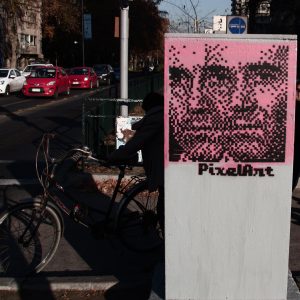
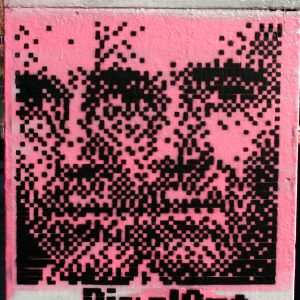
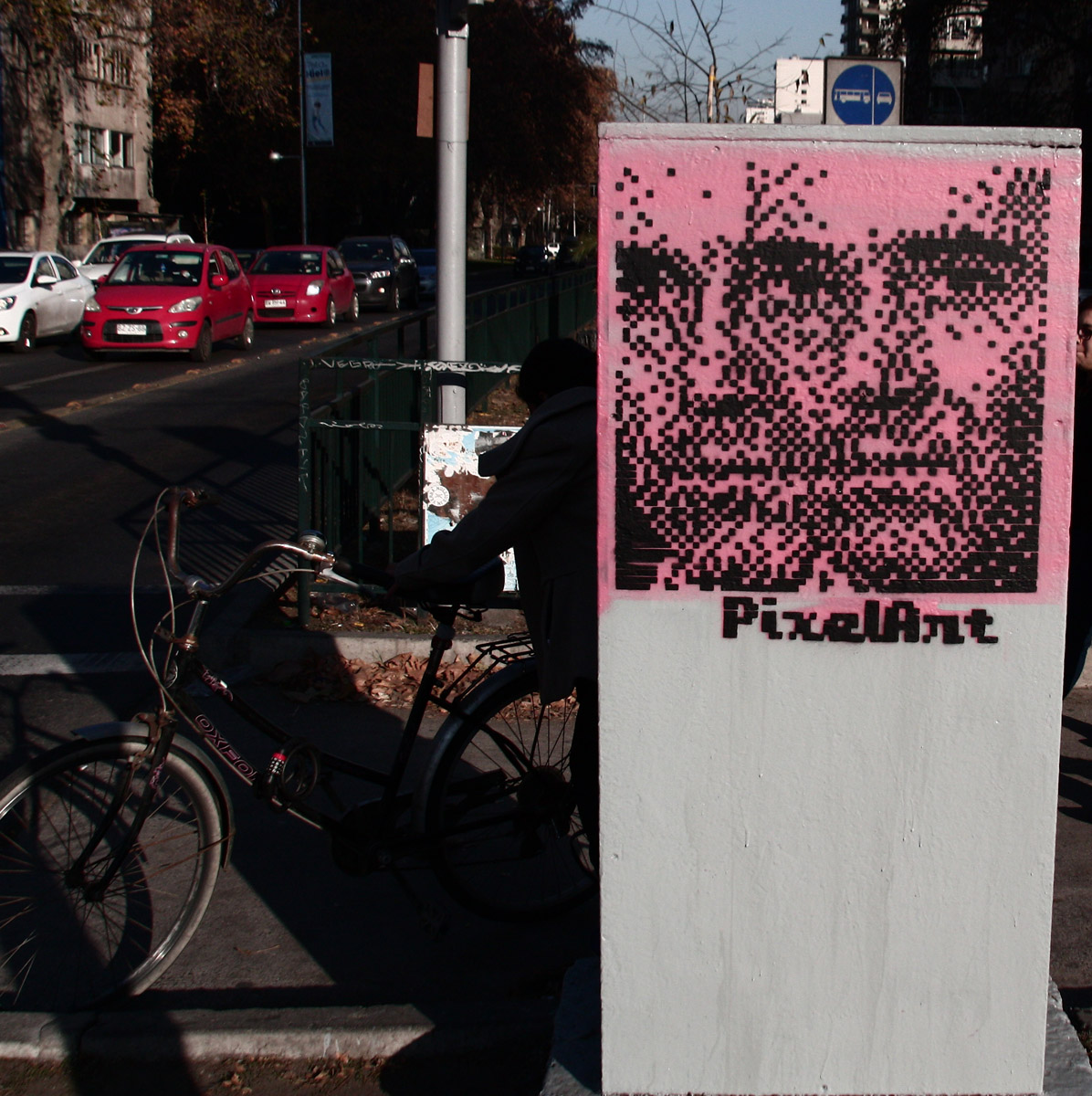
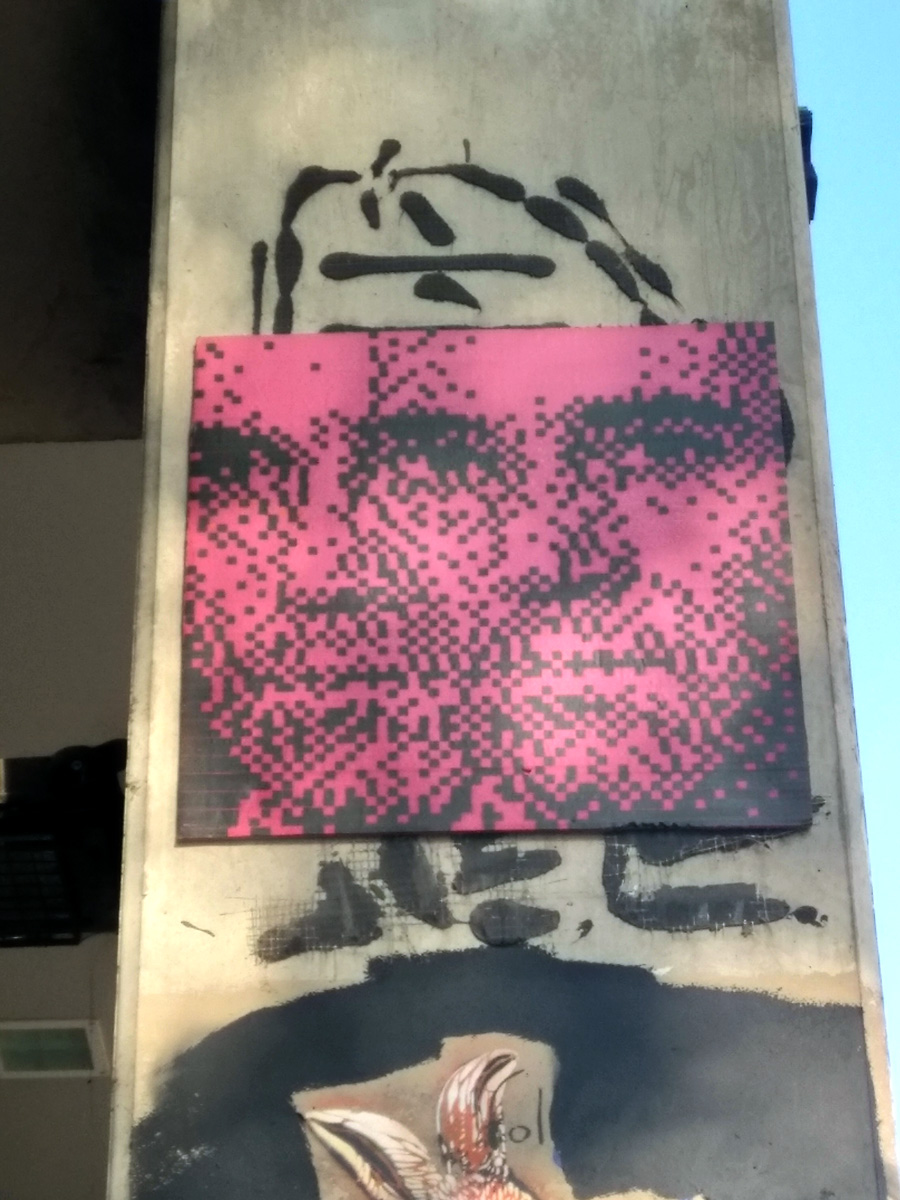
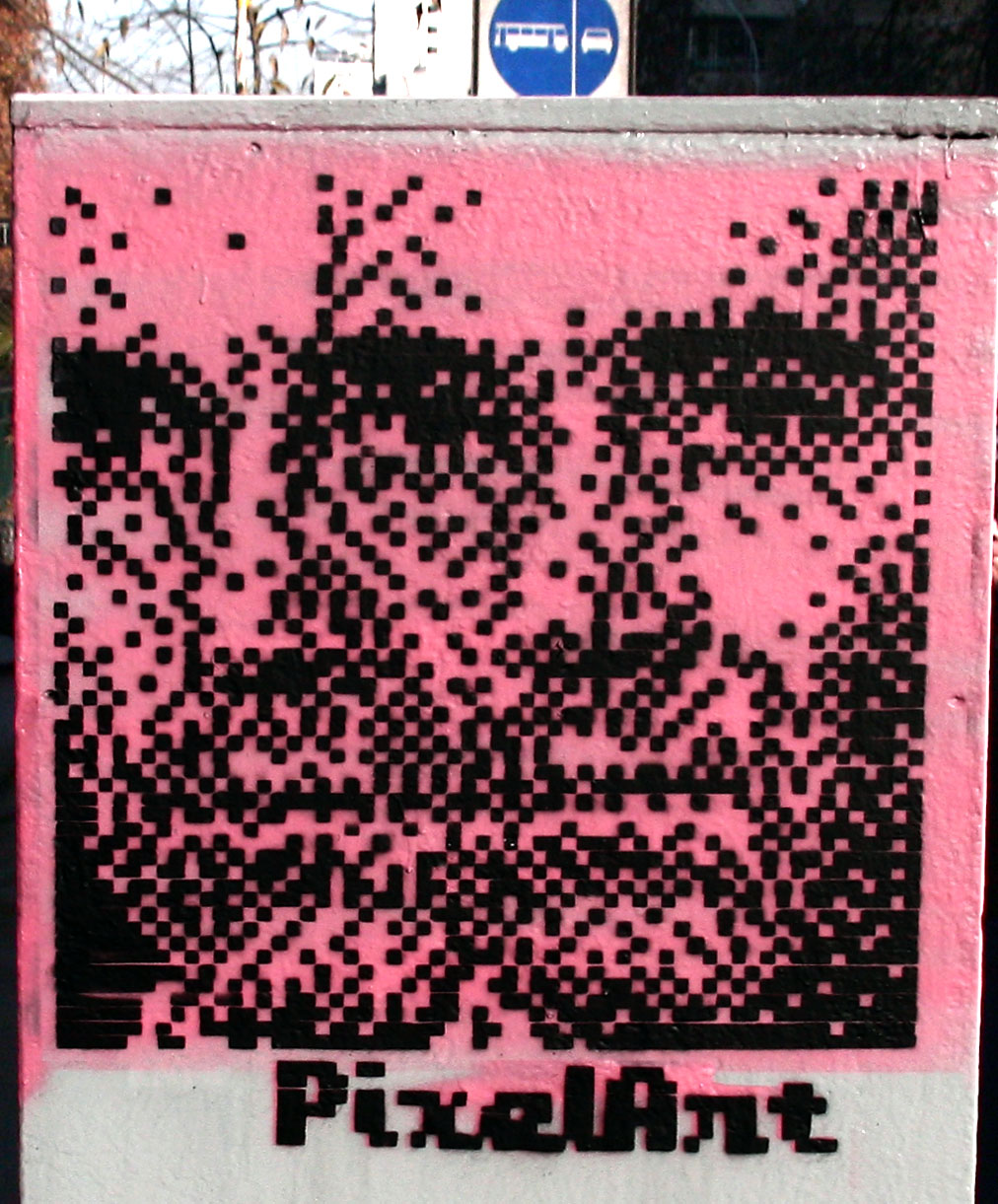
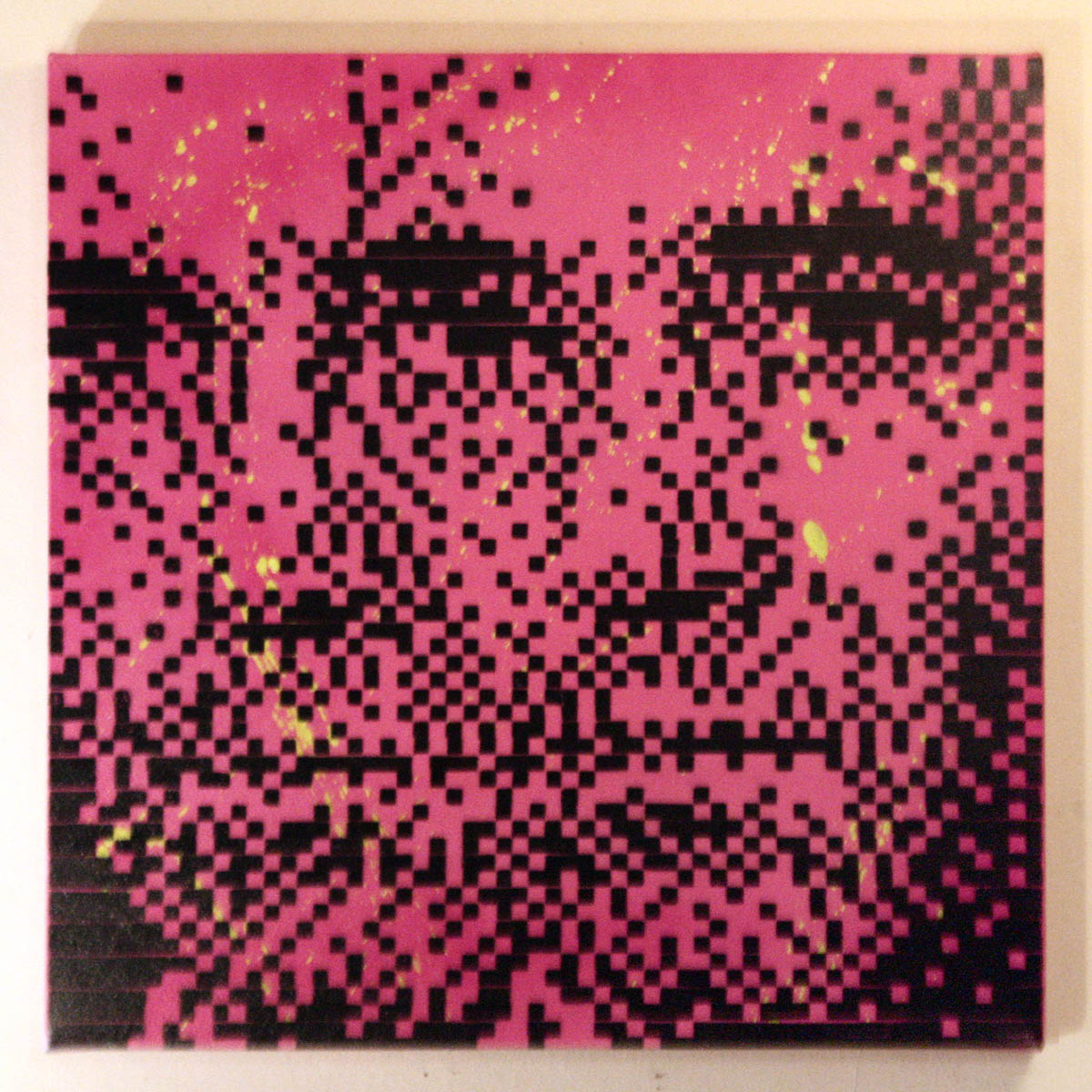
Pixelated stencil portrait based on Henry Fonda’s performance in 12 Angry Men. Developed as the first experiment in recursive image duplication, the work marks a decisive breakthrough in the artist’s practice through the invention of an original pixel-stencil system that made it possible to translate digital image structures into large-scale urban painting.
Rather than treating the pixel as a visual effect, the work approached it as a construction problem. By separating alternating rows into independent stencil layers, individual square pixels could be sprayed and reassembled with precise alignment, creating a method that transferred digital image logic directly into public space. This innovation resolved a question that had accompanied the artist’s investigation for years: whether a truly pixel-based stencil could exist beyond the screen.
Inspired by 12 Angry Men, the composition presents a fragmented portrait of Henry Fonda suspended between duplication and distortion. The repeated face merges through a central third eye, generating visual tension between identity, perception and technological reproduction. Through repetition, the portrait becomes less a representation of a person than a study of how images replicate, mutate and persist.
The work later became one of the first stencil systems developed by the artist to migrate internationally. In 2018, Angry Man was exhibited and installed in Paris, including an intervention near Le Lavo//Matik, where the pixel-stencil methodology entered direct dialogue with the city’s contemporary urban art scene. During the same period, variations of the image painted on recycled corrugated cardboard were exhibited and acquired by private collectors, extending the work’s investigation into portability, reproduction and material transformation.
More than a portrait, Angry Man represents the moment when the pixel ceased to be a screen-based unit and became a reproducible urban tool capable of circulating between street interventions, exhibitions and private collections.