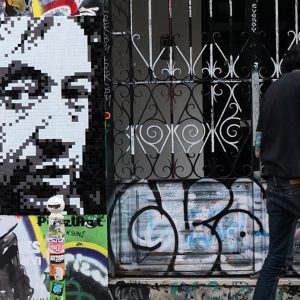
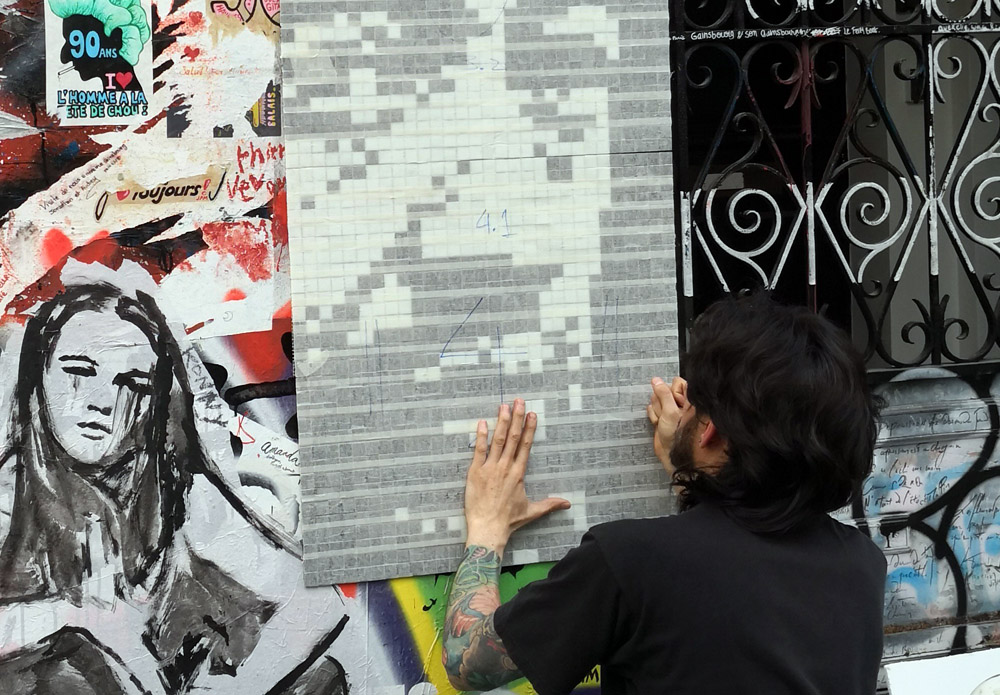
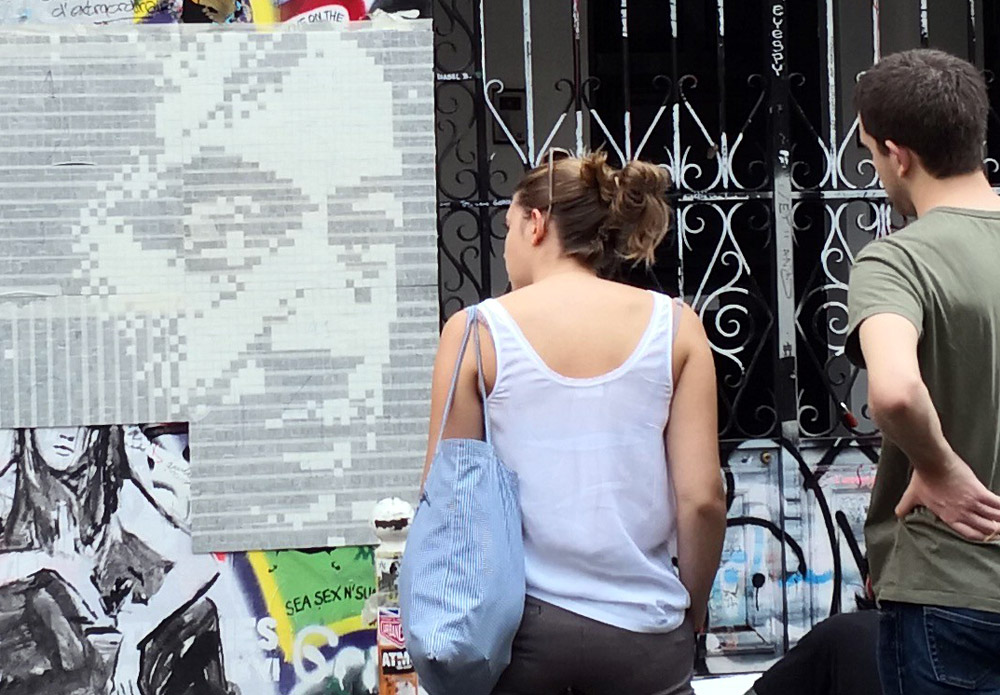
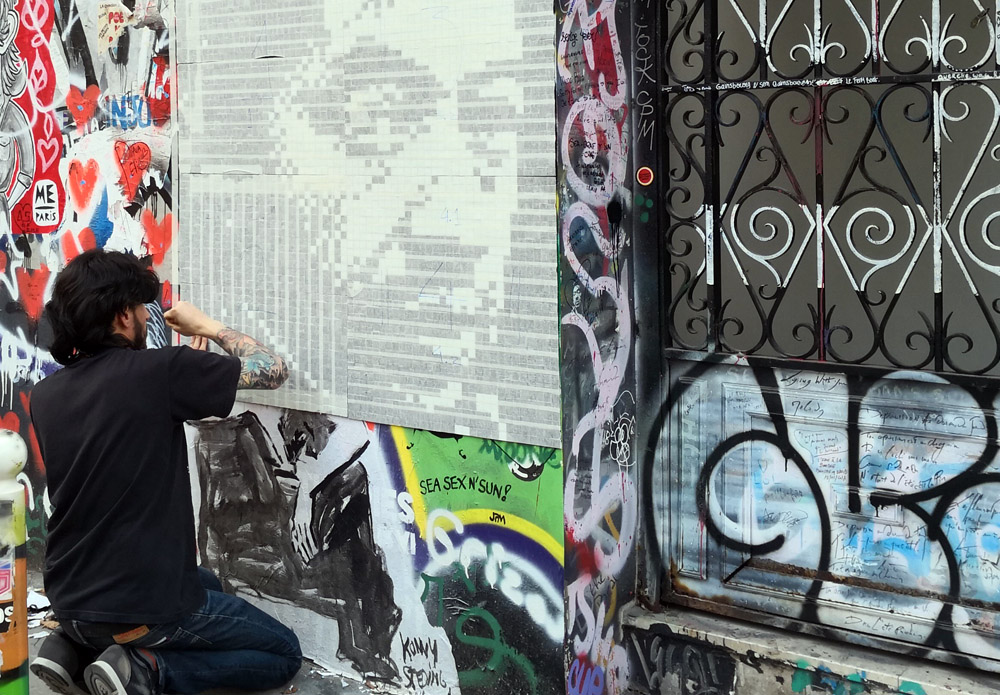
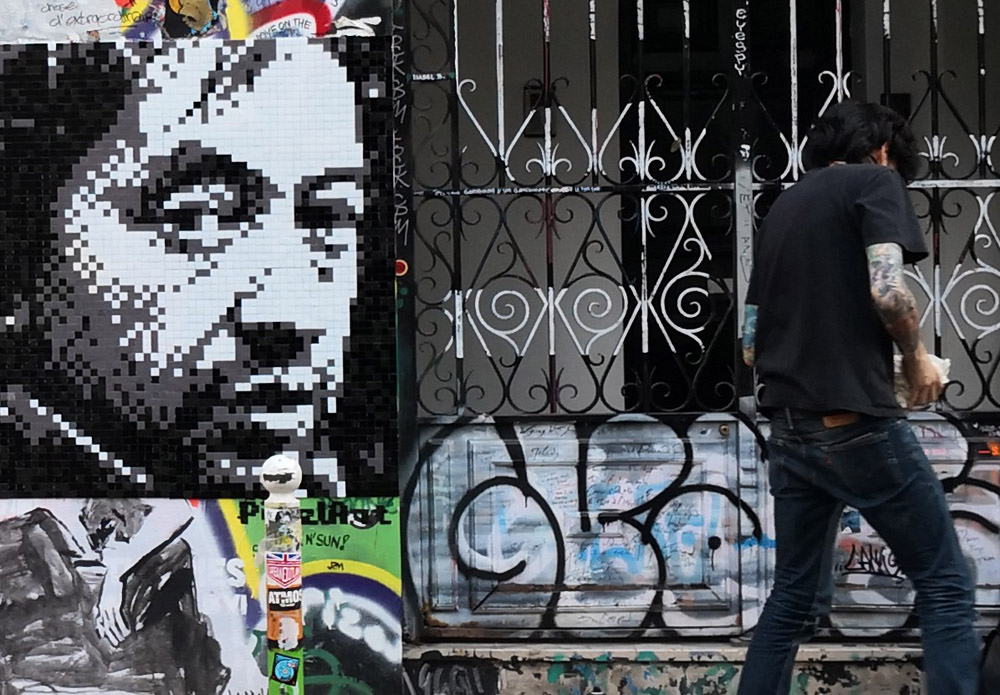
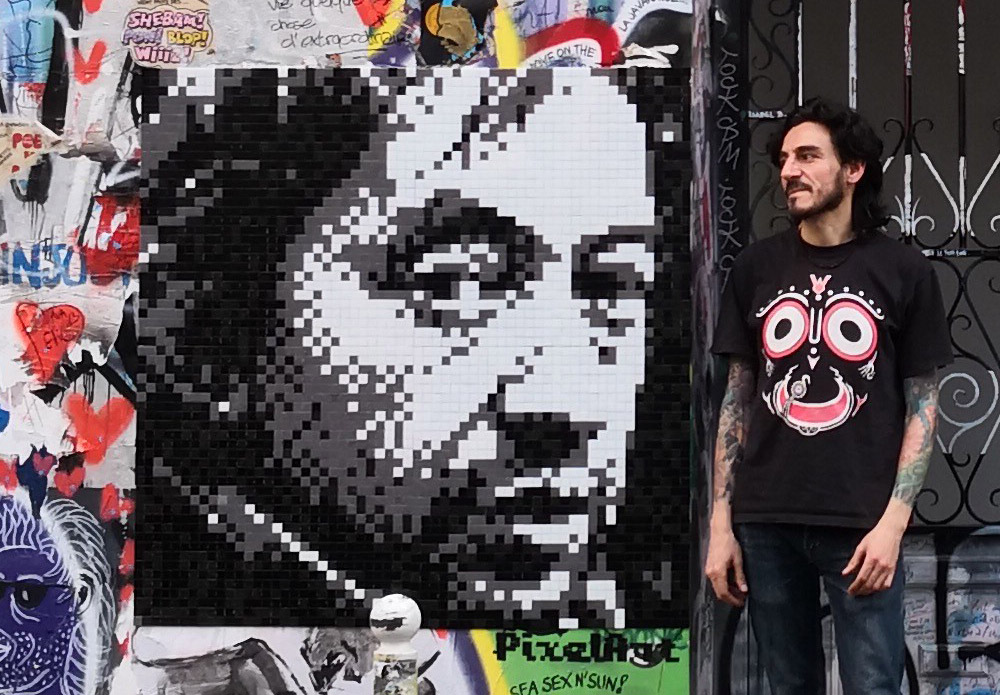
Mosaic portrait intervention reconstructing Serge Gainsbourg through handcrafted pixel structures and distributed urban surfaces, transforming cultural memory into a persistent symbolic presence within contemporary street space.
Created as part of the artist’s ongoing investigation into fragmented portraiture and public memory, this urban mosaic reinterprets Serge Gainsbourg through a system of pixel-based reconstruction and handcrafted glass tesserae. The intervention translates one of the most recognizable figures of twentieth-century French culture into a contemporary visual language where identity emerges through fragmentation, distance and perception.
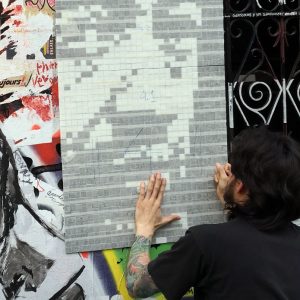
Rather than functioning as a traditional portrait, the work operates as a distributed memory structure. Thousands of individual tesserae combine to reconstruct an image that oscillates between abstraction and recognition, requiring the viewer to actively participate in the process of visual reconstruction. This dynamic reflects the way cultural figures continue to exist within collective memory: fragmented, reinterpreted and continuously reassembled across generations.
The choice of Gainsbourg is particularly significant. Known for challenging artistic conventions and moving fluidly between music, literature, cinema and visual culture, he embodies a form of creative independence that resonates with the artist’s own approach to public intervention. Installed within the urban environment, the portrait extends Gainsbourg’s symbolic presence beyond historical documentation, transforming memory into a living component of contemporary street space.
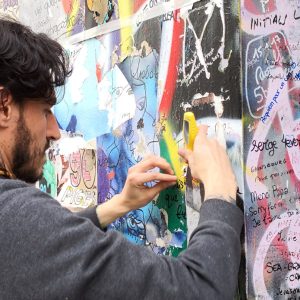
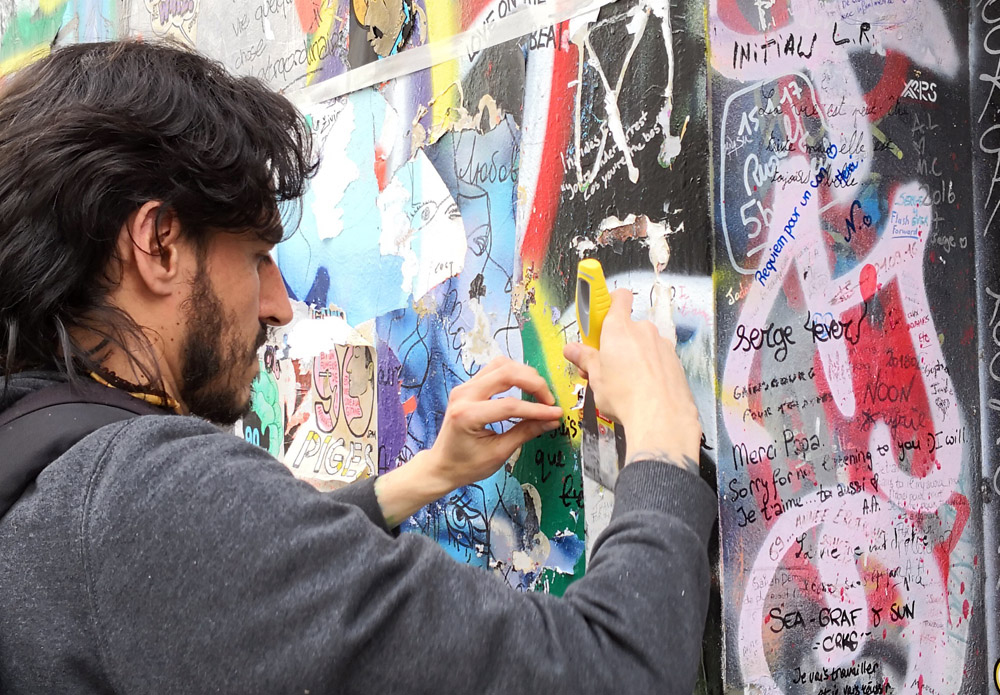
The intervention also carries a personal dimension within the artist’s trajectory. Years before working with mosaic, during a formative period living in Paris, the artist photographed Gainsbourg’s house without imagining that it would later become the site of one of his own public artworks. Returning to Paris to install a mosaic on that same façade — and later exhibiting in the city alongside Fabio Rieti — transformed the project into a symbolic closing of a creative circle, linking early aspirations with their material realization through public art.
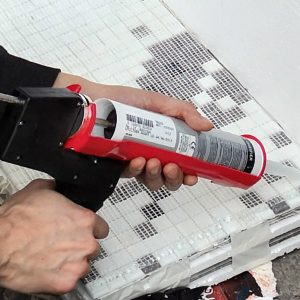
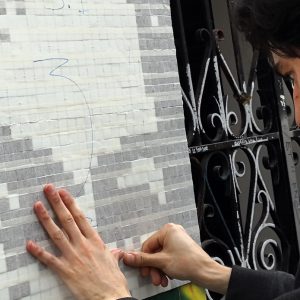
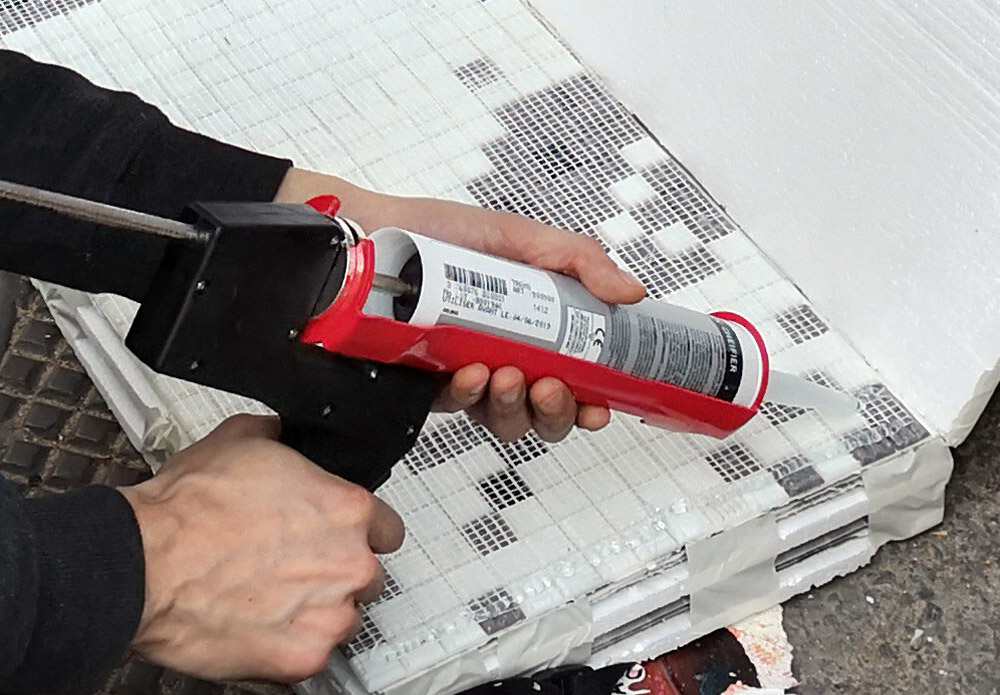
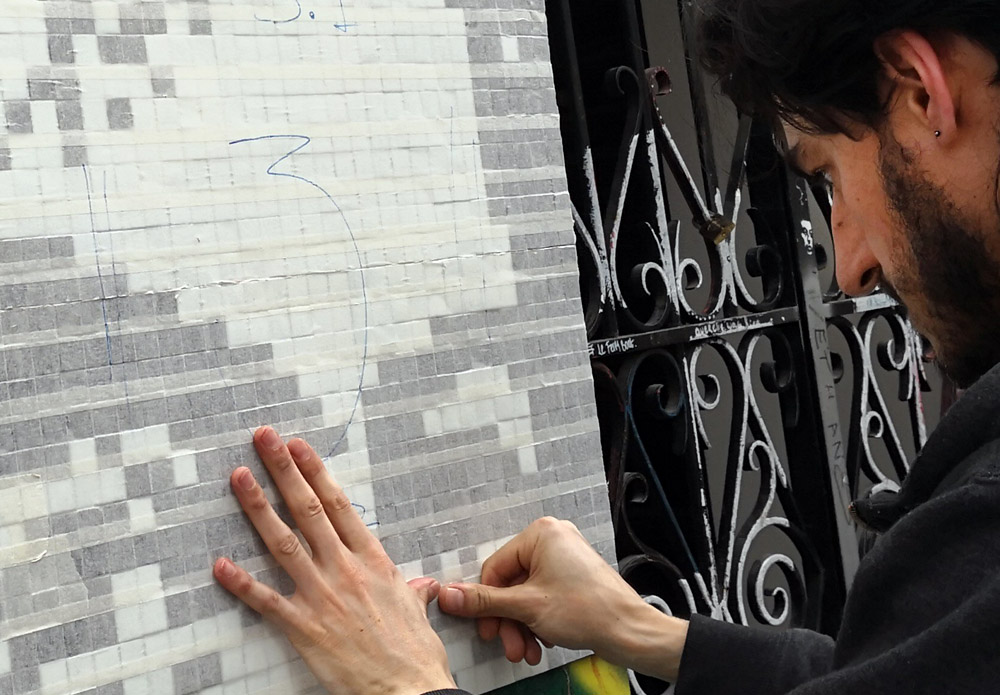
Executed through traditional indirect mosaic techniques, the intervention contributes to the artist’s broader exploration of symbolic invocation, cultural persistence and the migration of iconic figures into public architecture. Positioned between portraiture, urban archaeology and pixel-based aesthetics, the work demonstrates how fragmented images can function as durable carriers of cultural memory within the city.