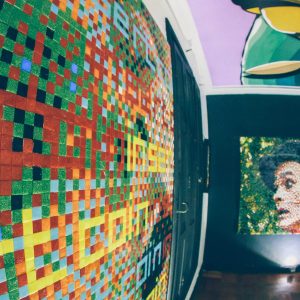
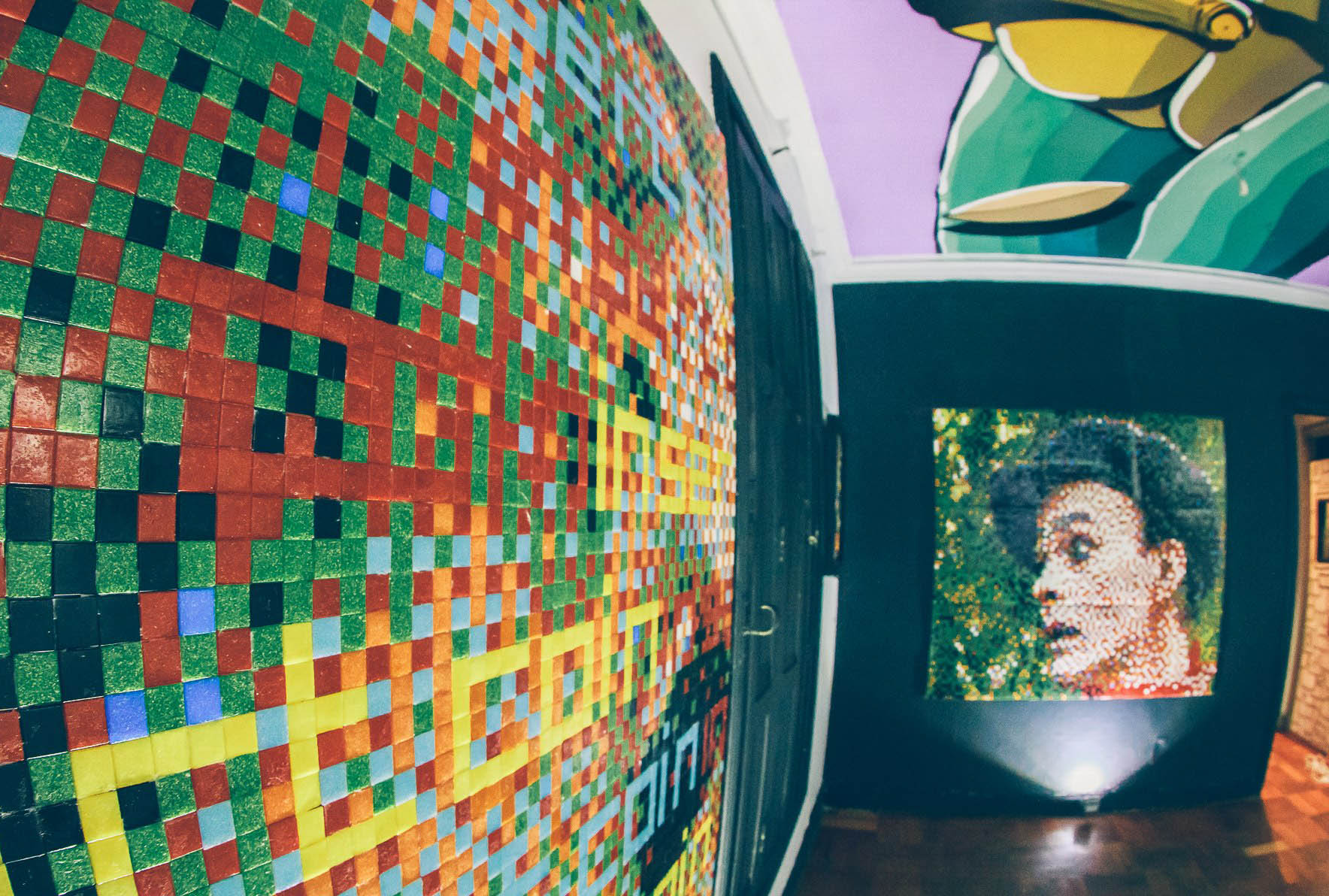
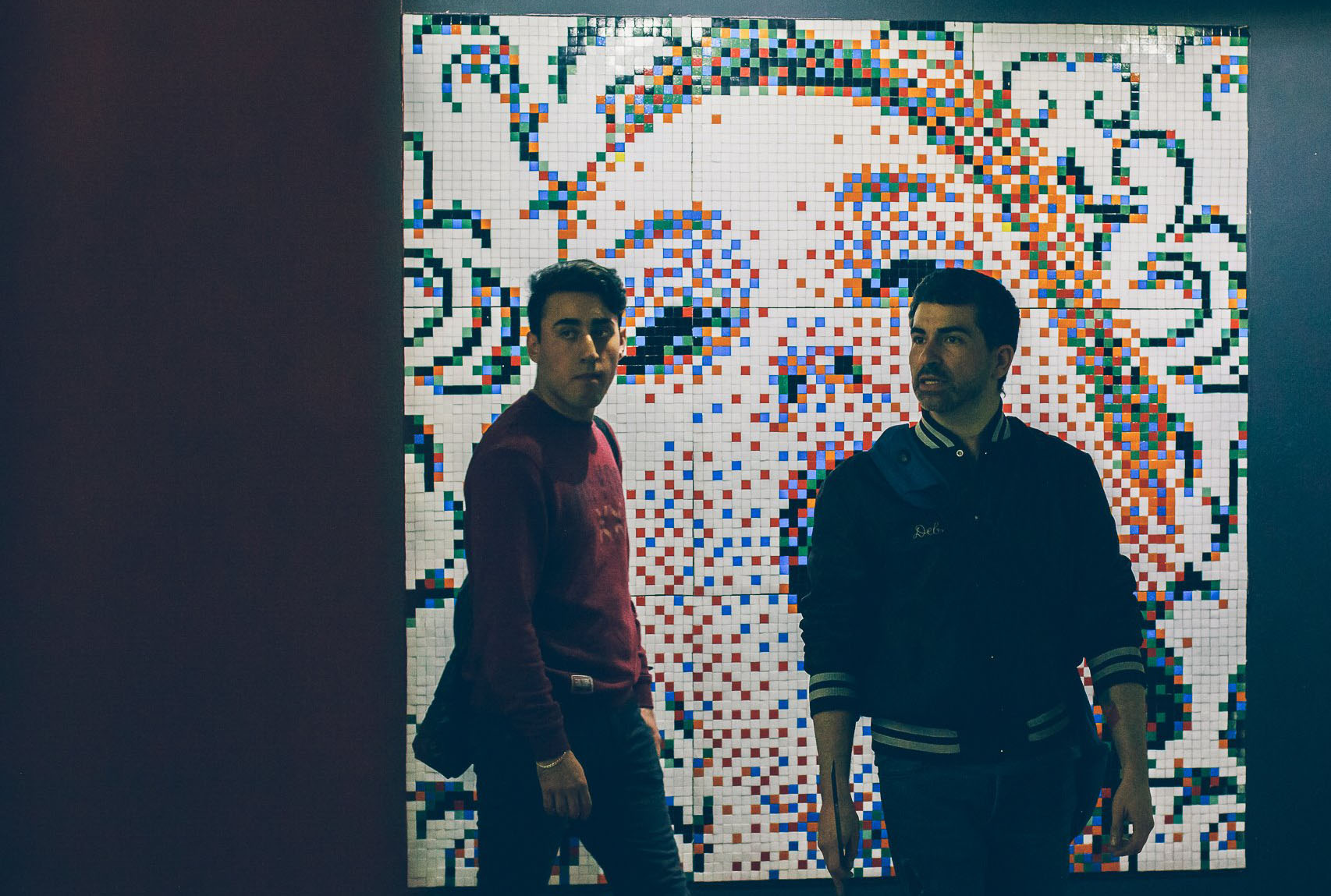
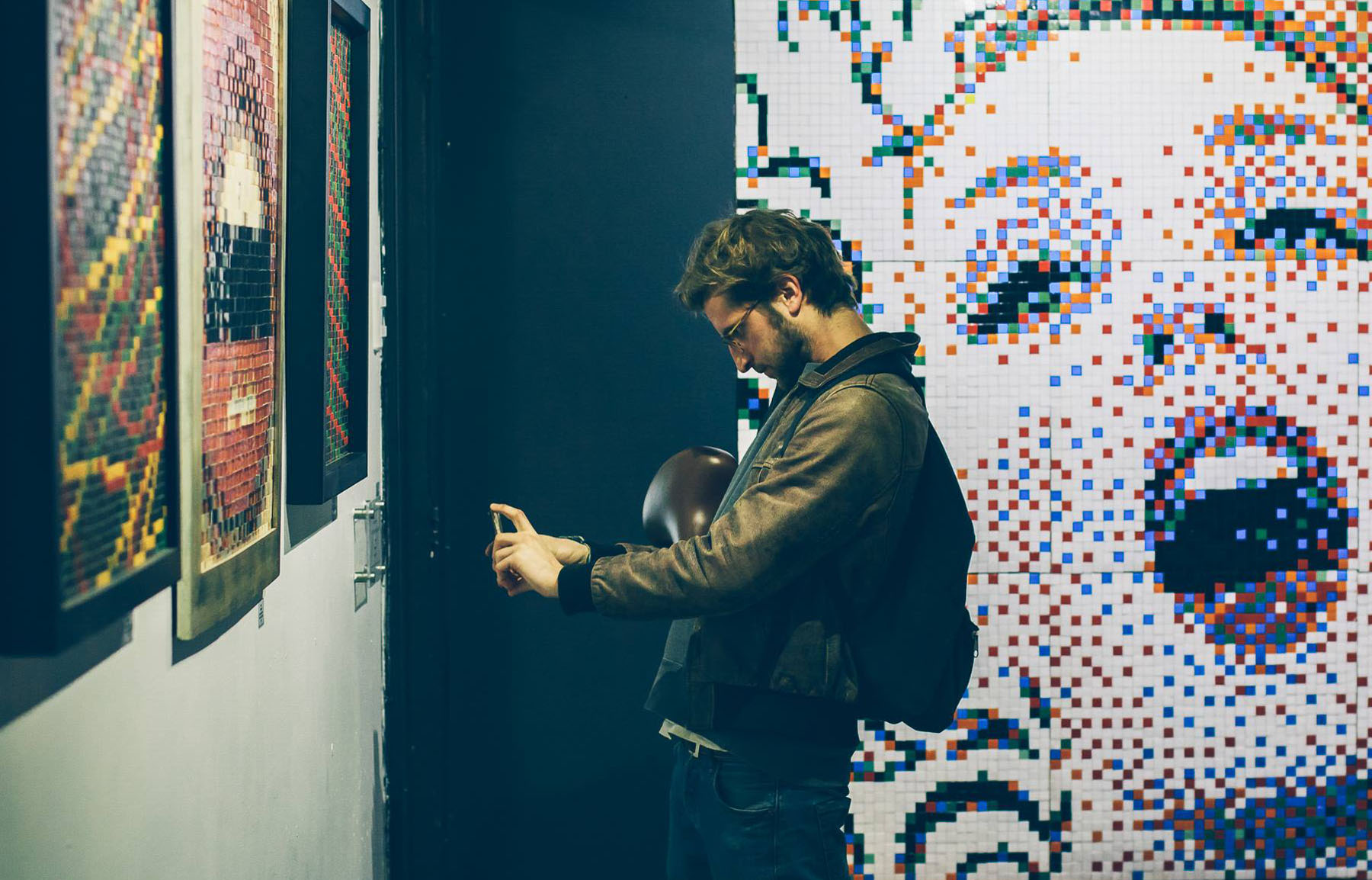
The exhibition included large-scale mosaics such as Clímax and El Aprendiz, alongside works from what would later become Fragmented Cultural Portraits and Abstract & Logic Systems. By placing these series in dialogue, the exhibition anticipated the conceptual framework that now defines the artist’s long-term practice.
Retrospectiva also marked the first public presentation of Autocensura, a work that would later become the conceptual foundation for the Autocensorship Systems series. Through physical pixelation and controlled visual obstruction, the piece introduced themes of mediated visibility, fragmented desire and digital censorship that continue to occupy a central place within PixelArt’s research.
The exhibition attracted a large audience during a period when urban art occupied a particularly visible position within Chile’s contemporary cultural landscape. Viewed today, Retrospectiva represents the moment when multiple independent investigations first revealed themselves as components of a single artistic system.
Although conceived as a retrospective, the exhibition now reads as the first comprehensive presentation of PixelArt’s research methodology. Rather than documenting a completed career, it established the conceptual relationships between abstraction, cultural appropriation and perceptual systems that continue to organize the artist’s work more than a decade later.