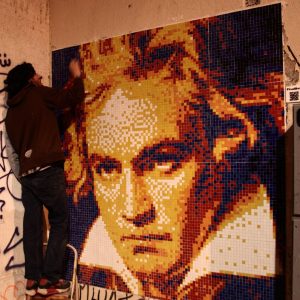
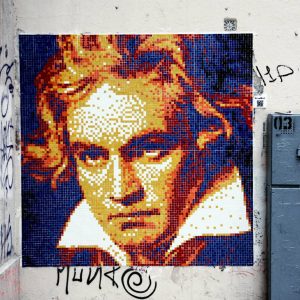
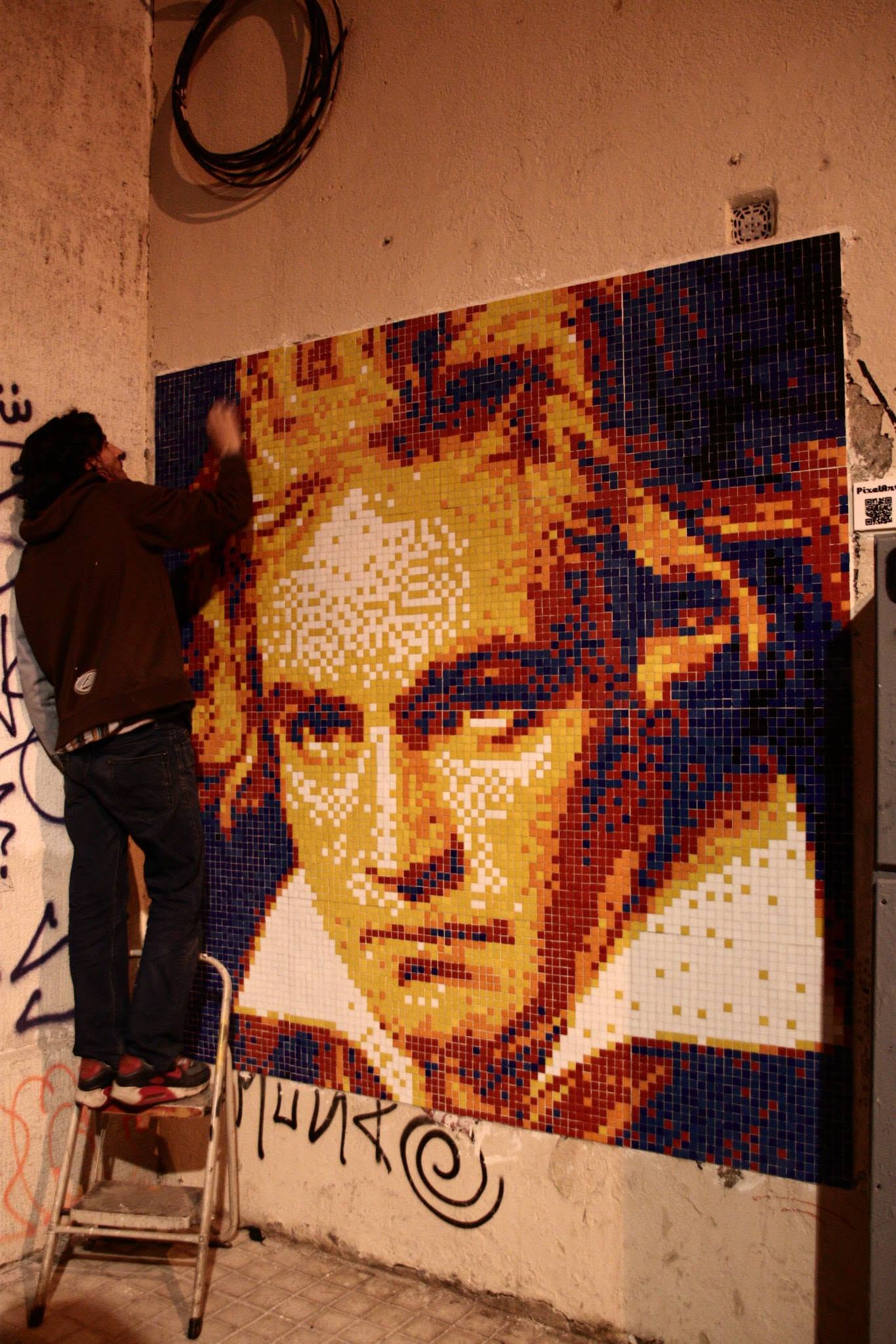
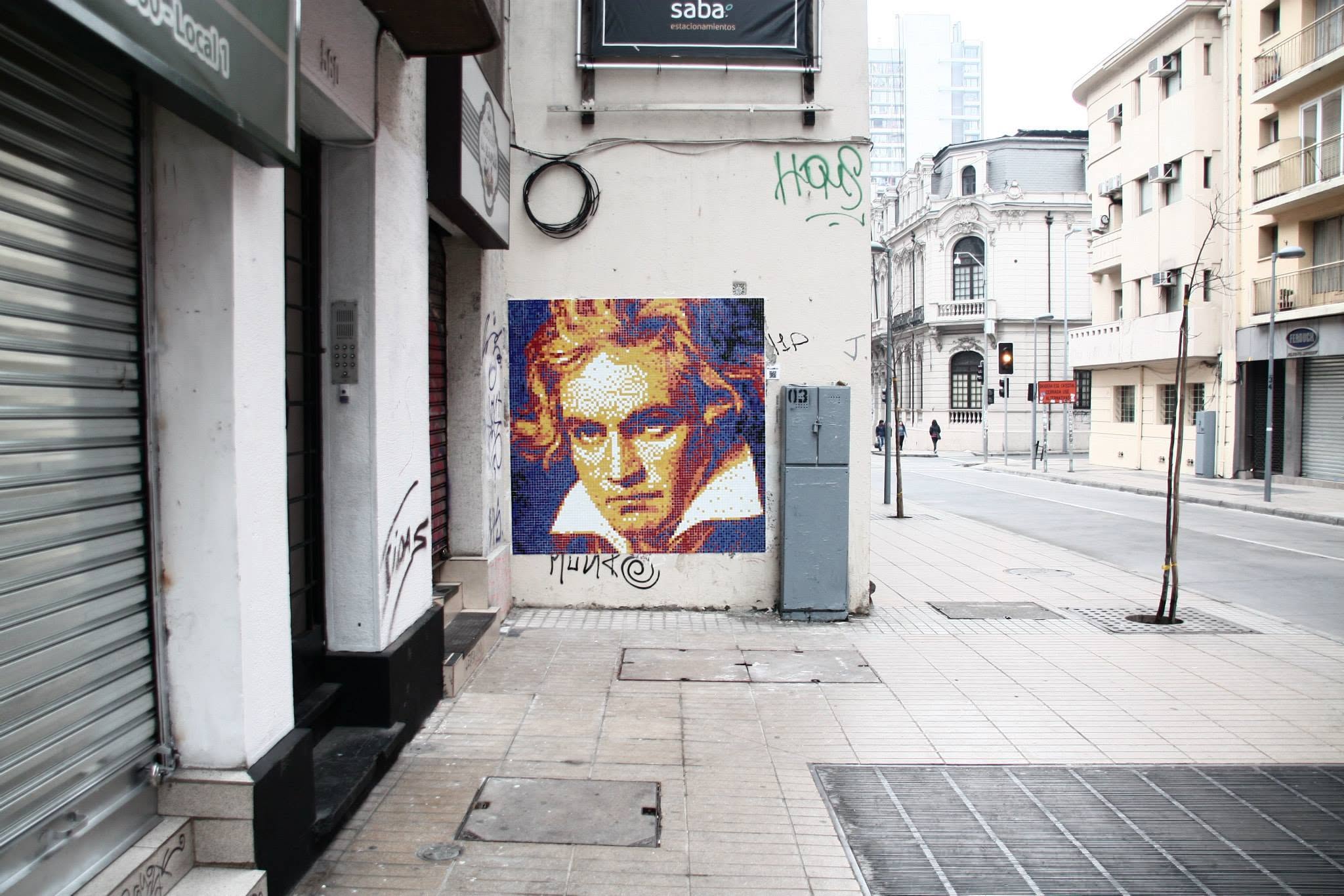
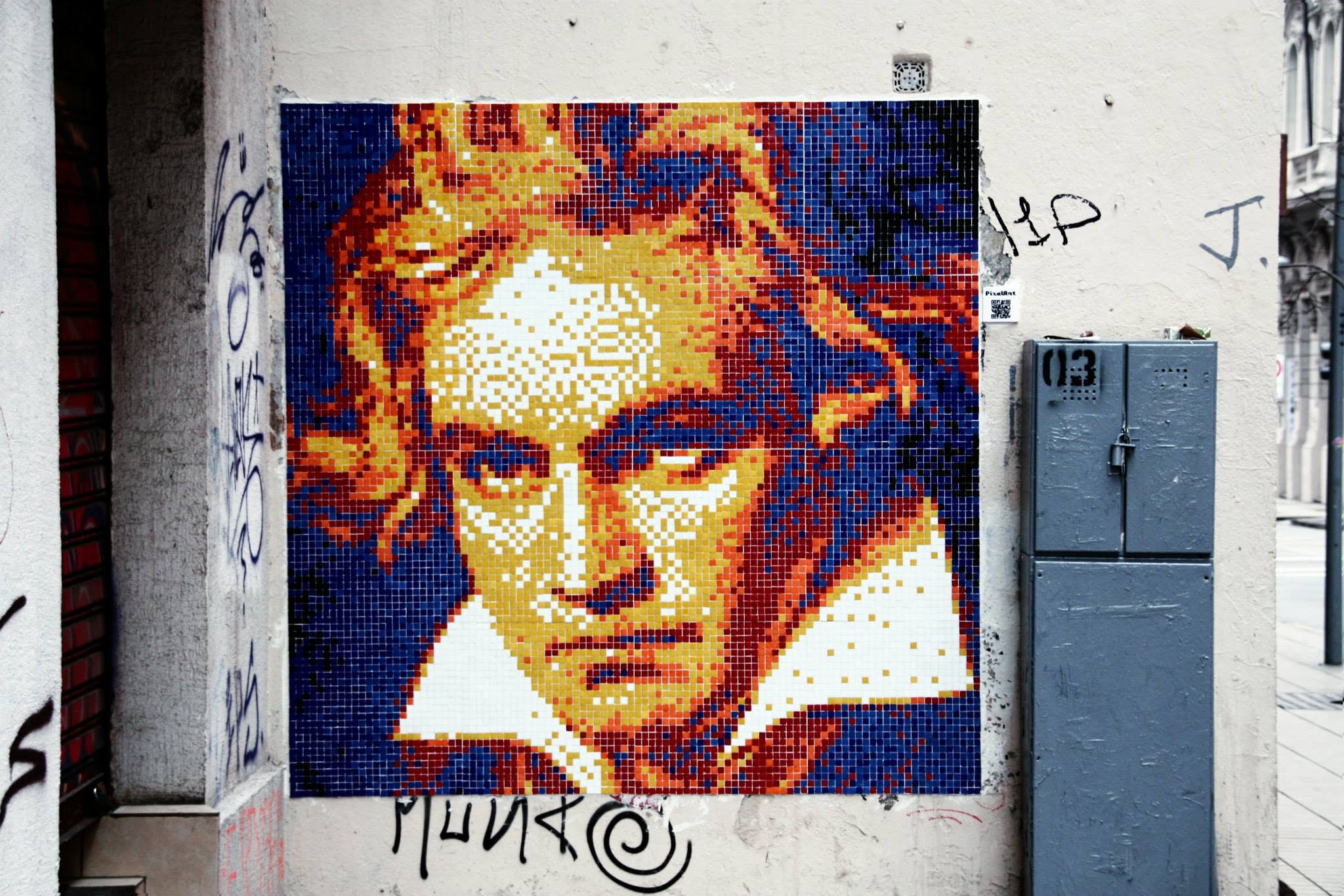
Mosaic intervention translating Ludwig van Beethoven into a high-contrast pixel structure where classical portraiture, urban memory and digital image construction converge within public space.
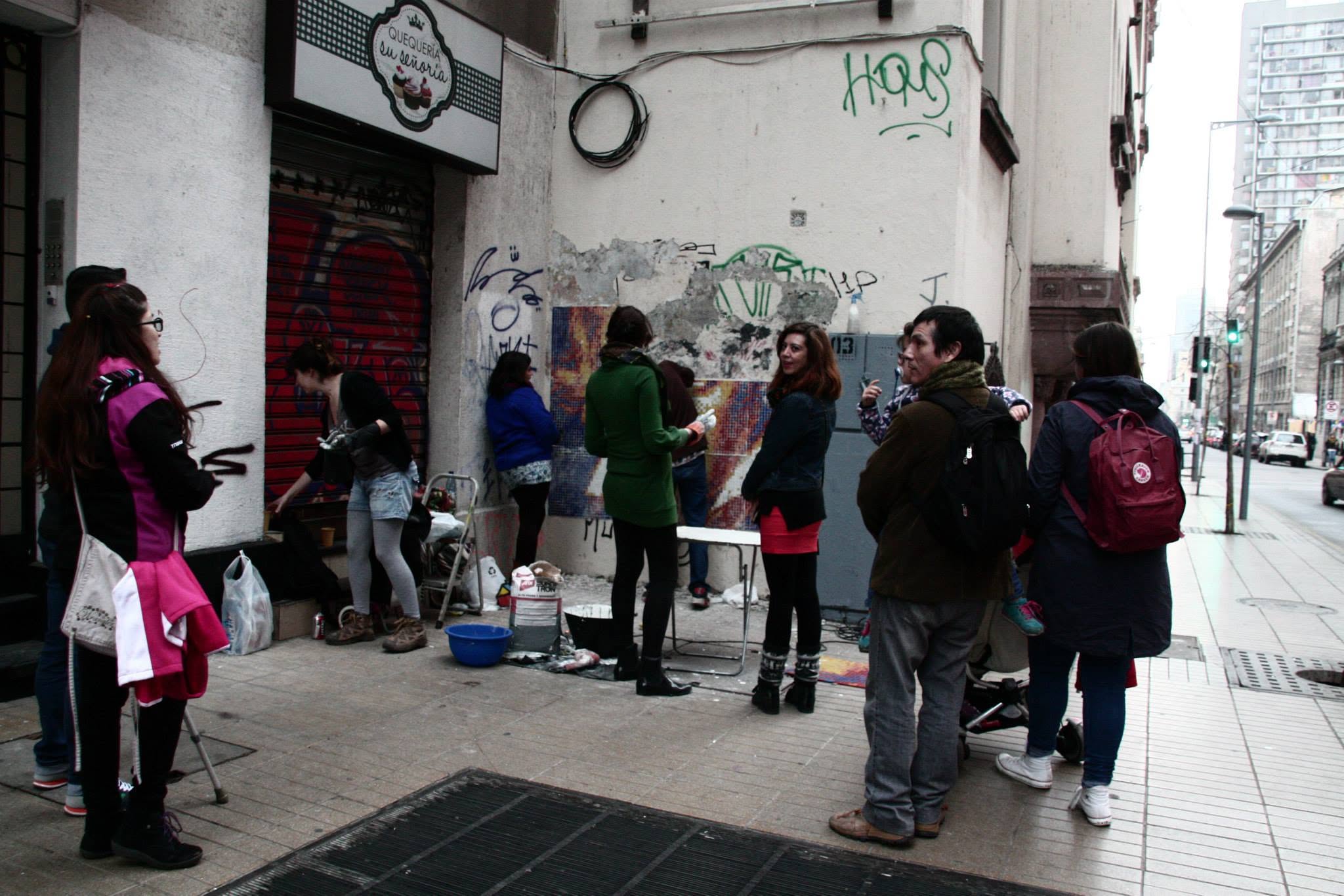
Installed in Santiago’s historic Bellas Artes district in 2015, this 2×2 meter mosaic is composed of 10,000 hand-placed glass tesserae assembled through the artist’s indirect mosaic technique. The work marks an important moment in the development of PixelArt’s visual language, introducing a distinctive chromatic system built from intense blues, reds, oranges and whites that would later influence numerous projects across his practice.
Rather than reproducing Beethoven as a historical figure, the intervention transforms the composer into a contemporary signal embedded within the city. From a distance, the portrait appears remarkably cohesive; at close range, it dissolves into a structured field of colored units that reveal the mechanics of perception itself.
More than a decade after its installation, the work continues to occupy the urban landscape, functioning as a study of image persistence, symbolic invocation and cultural memory. Through pixel-by-pixel construction, the mosaic reactivates Beethoven’s enduring message of discipline, sacrifice and devotion, translating a classical icon into the visual language of the digital age.