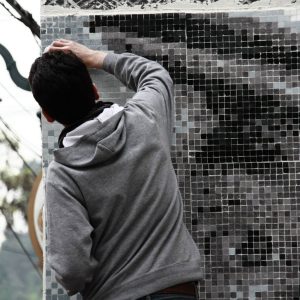
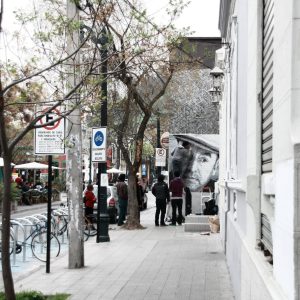
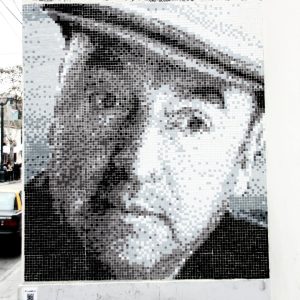
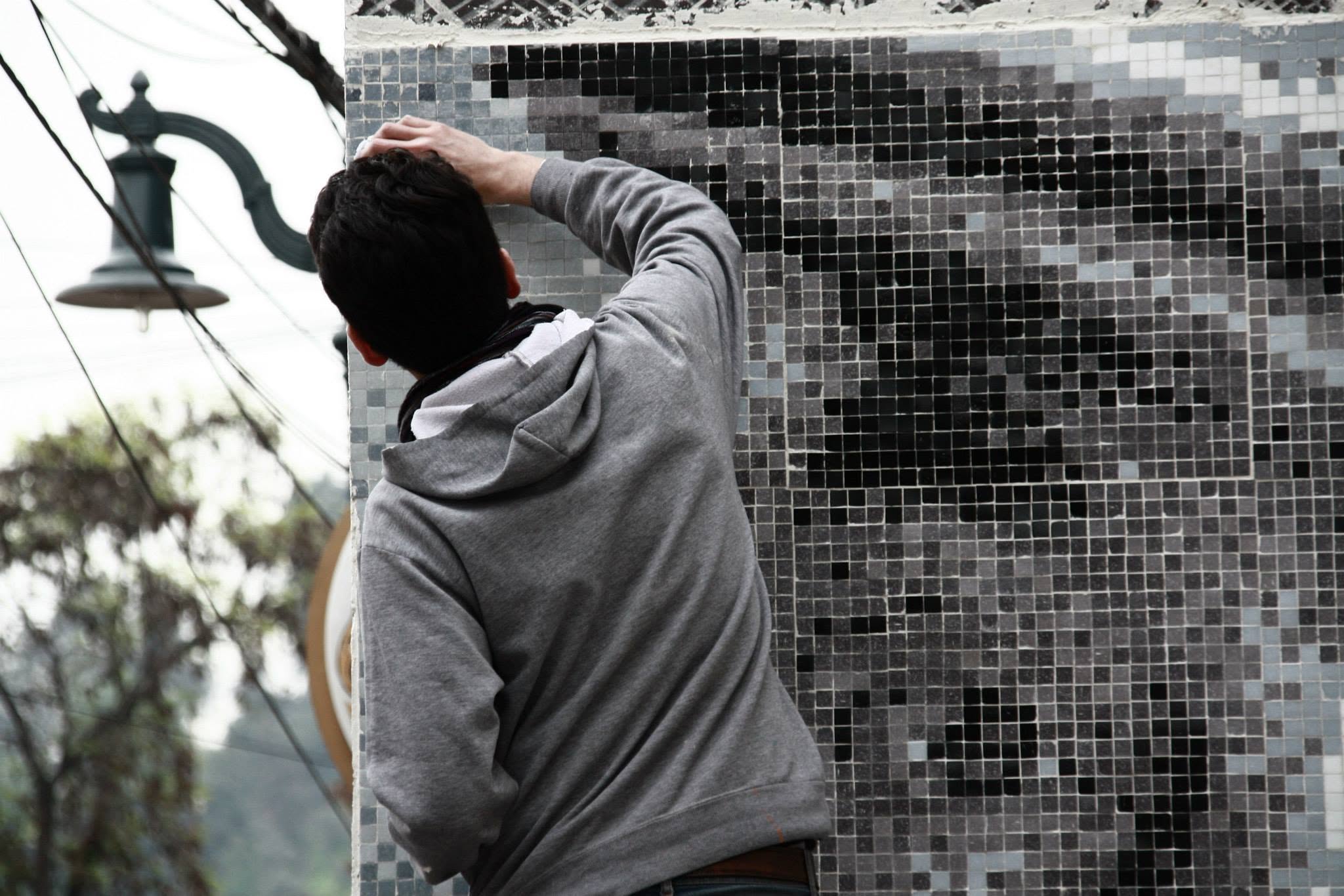
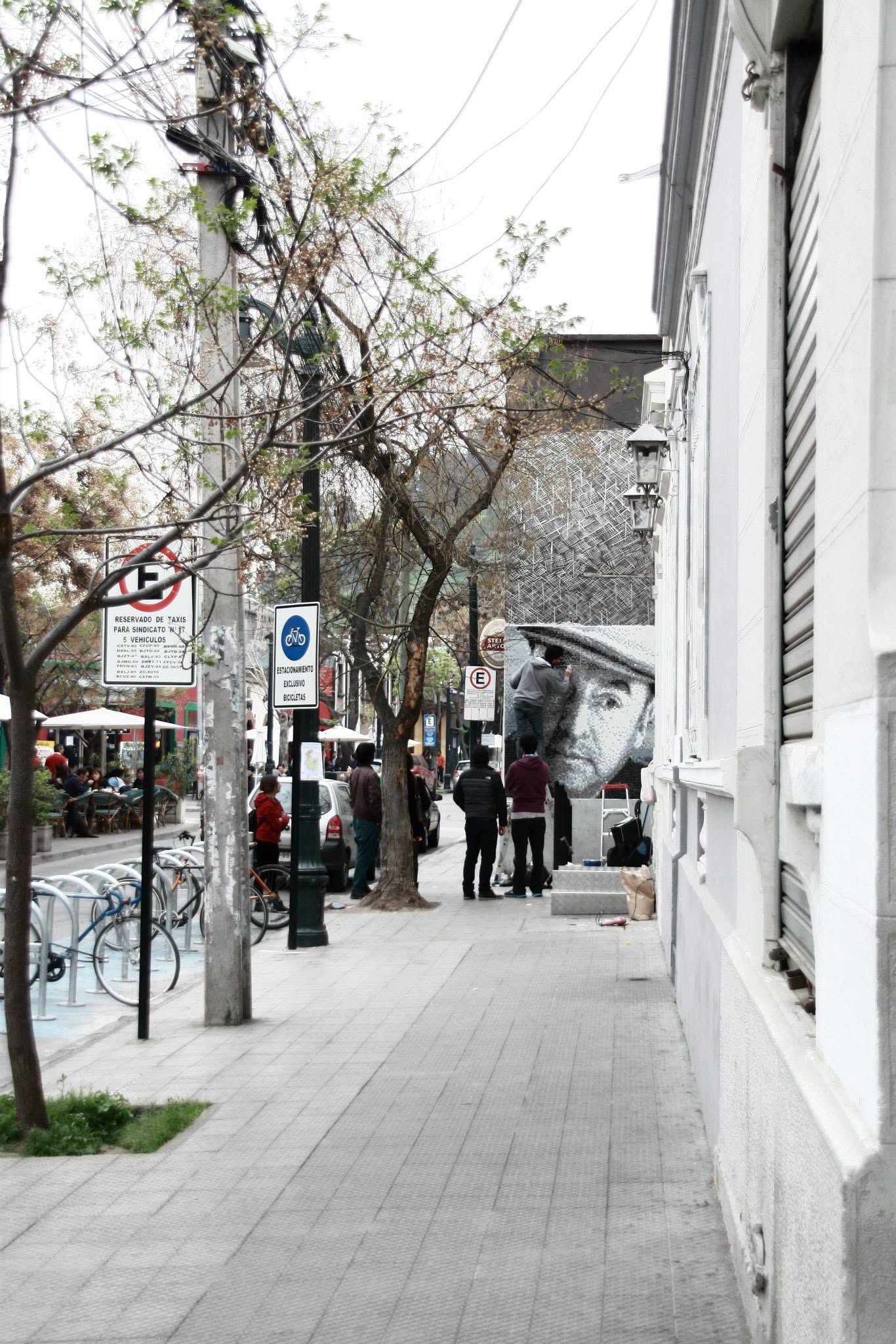
Installed in the Bellavista district of Santiago, only a short distance from Pablo Neruda’s former residence, this large-scale mosaic intervention transforms one of Chile’s most influential literary figures into a pixel-based urban monument. Measuring 220 × 180 cm and constructed tessera by tessera through traditional mosaic techniques, the work forms part of the artist’s ongoing investigation into how cultural memory can be embedded within everyday public space.
Rather than functioning as a conventional commemorative portrait, the intervention operates as a system of territorial inscription. By placing Neruda’s image within the urban environment he once inhabited, the work creates a symbolic connection between literature, place and collective memory. The fragmented structure allows the portrait to oscillate between abstraction and recognition, revealing how historical figures continue to persist through contemporary visual languages.
As part of Pixel Art’s broader urban mosaic practice, the intervention explores the migration of cultural icons into pixel systems, translating literary legacy into architectural form. Positioned between public art, cultural heritage and digital aesthetics, Neruda investigates how cities preserve, reinterpret and reactivate collective memory through image.