The publication also highlighted one of the defining characteristics of contemporary urban art: its ability to exist outside traditional institutional spaces. Streets, walls, transit corridors and everyday architectural surfaces become platforms through which images circulate and acquire new forms of cultural meaning.
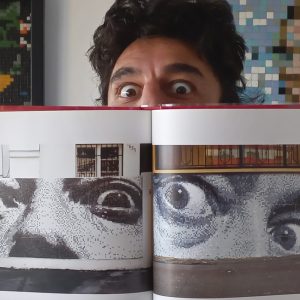
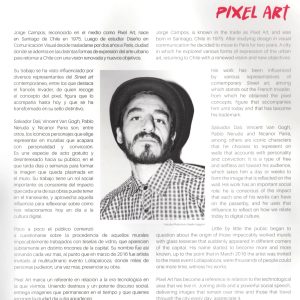
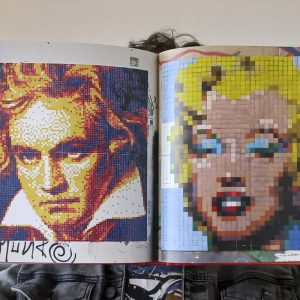
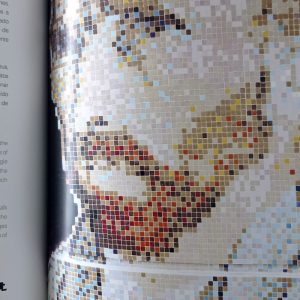
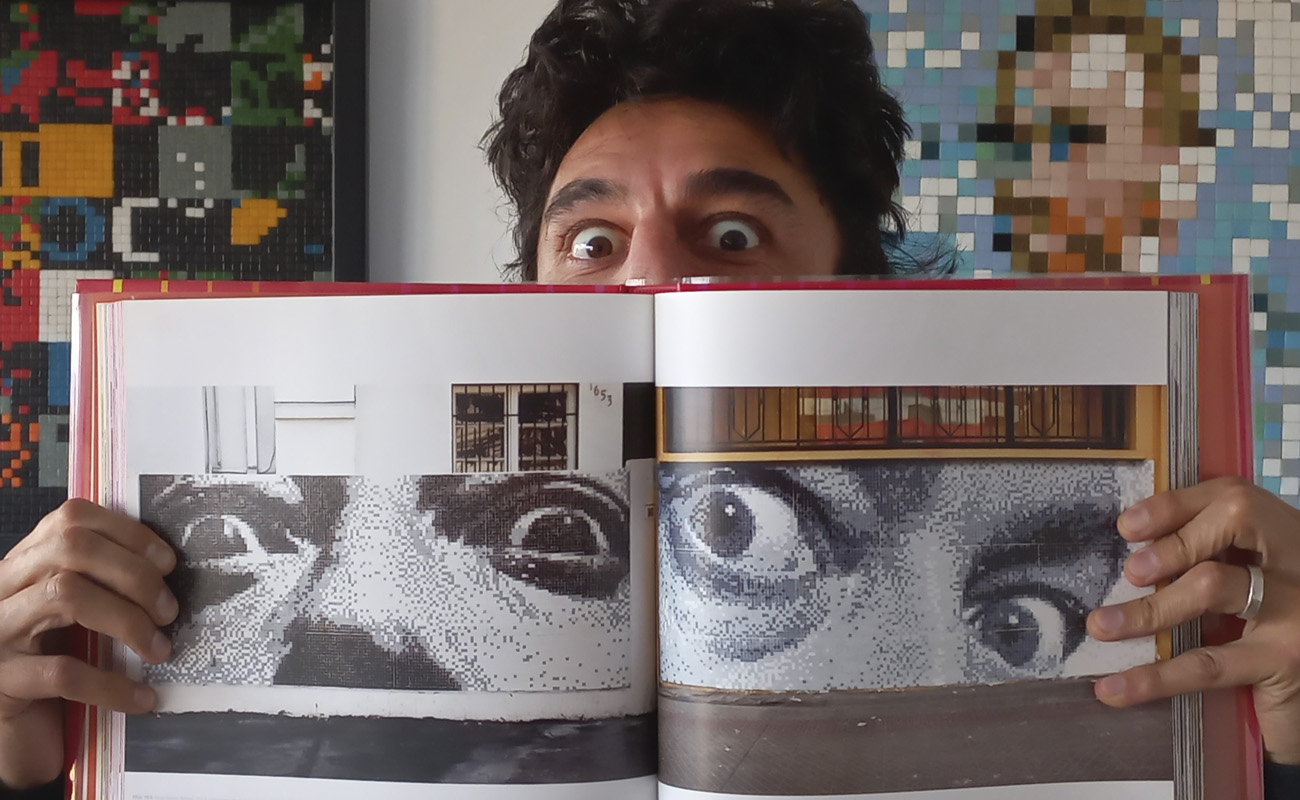
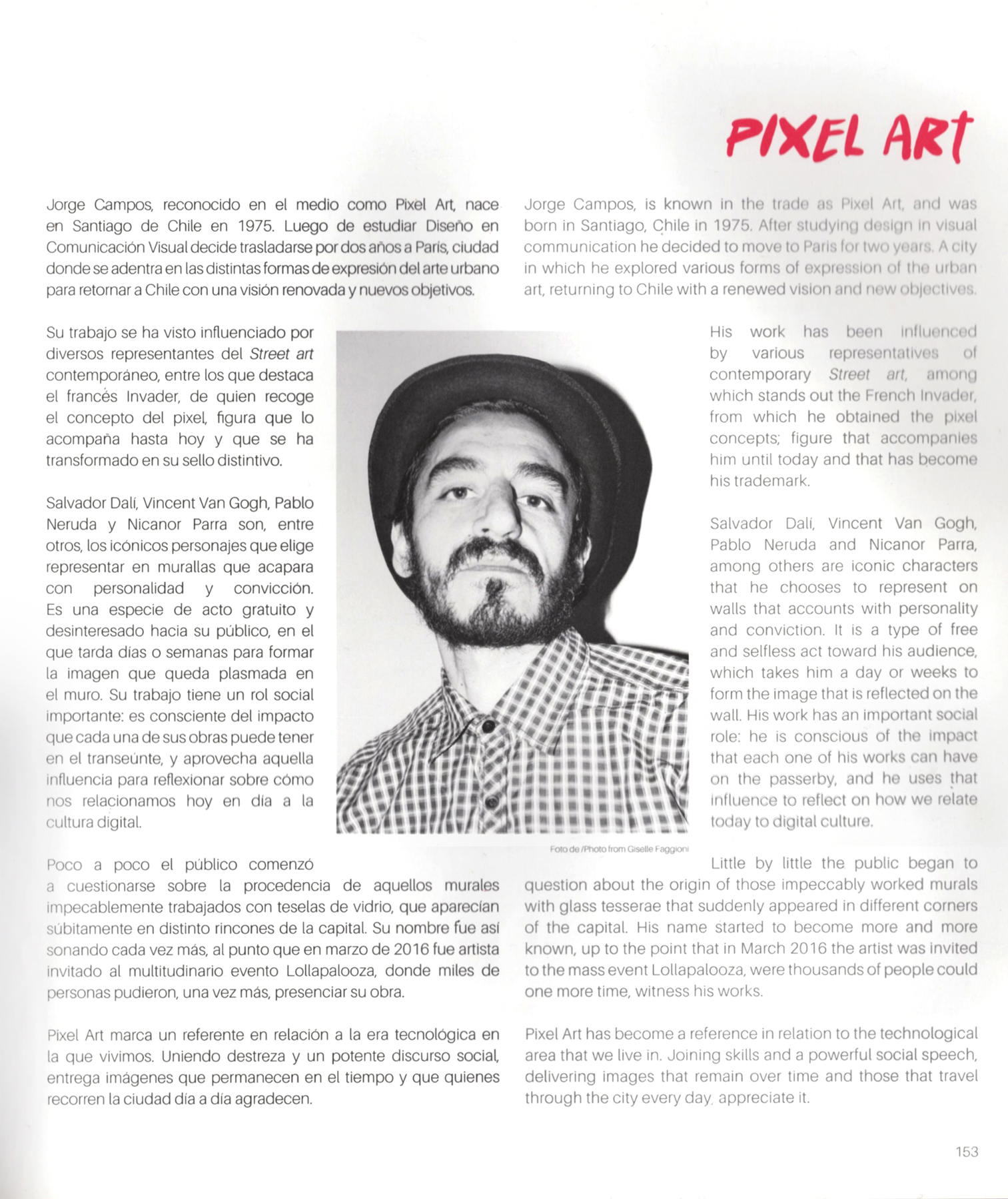
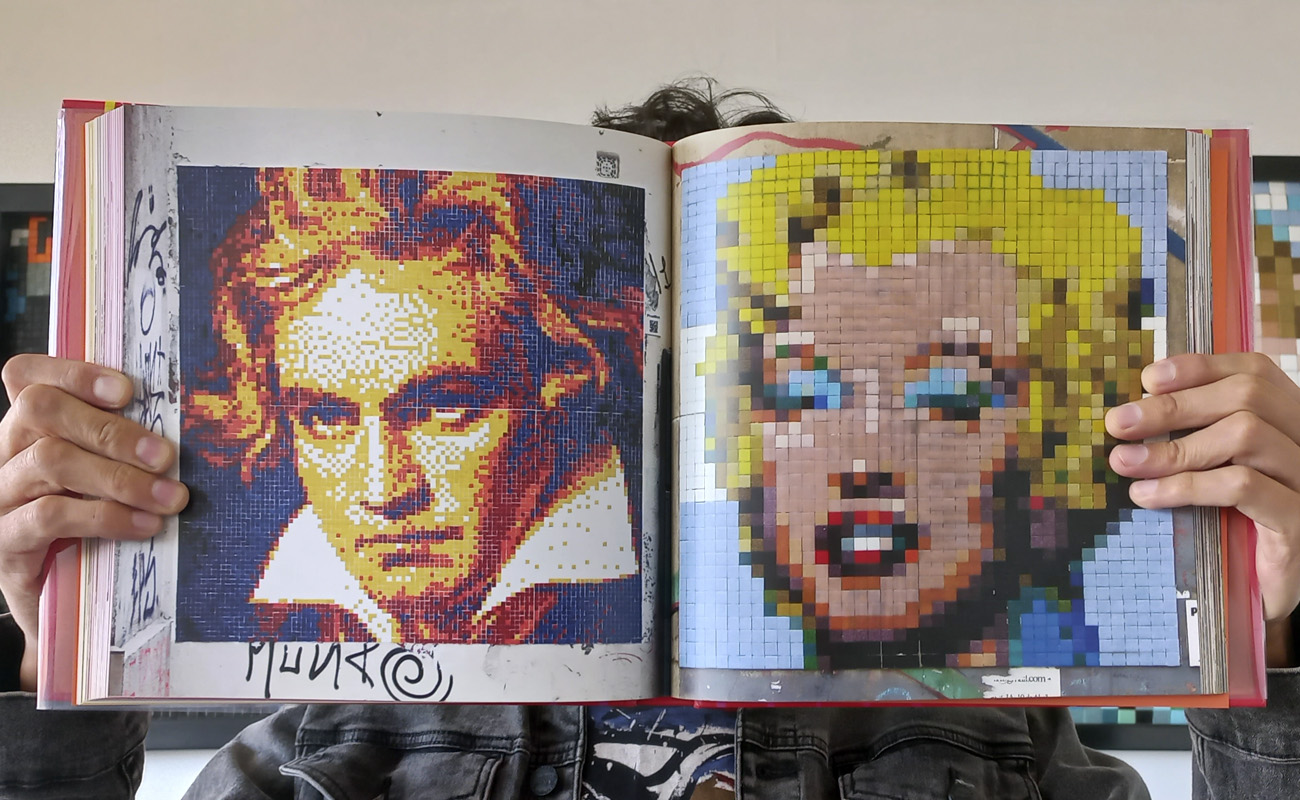
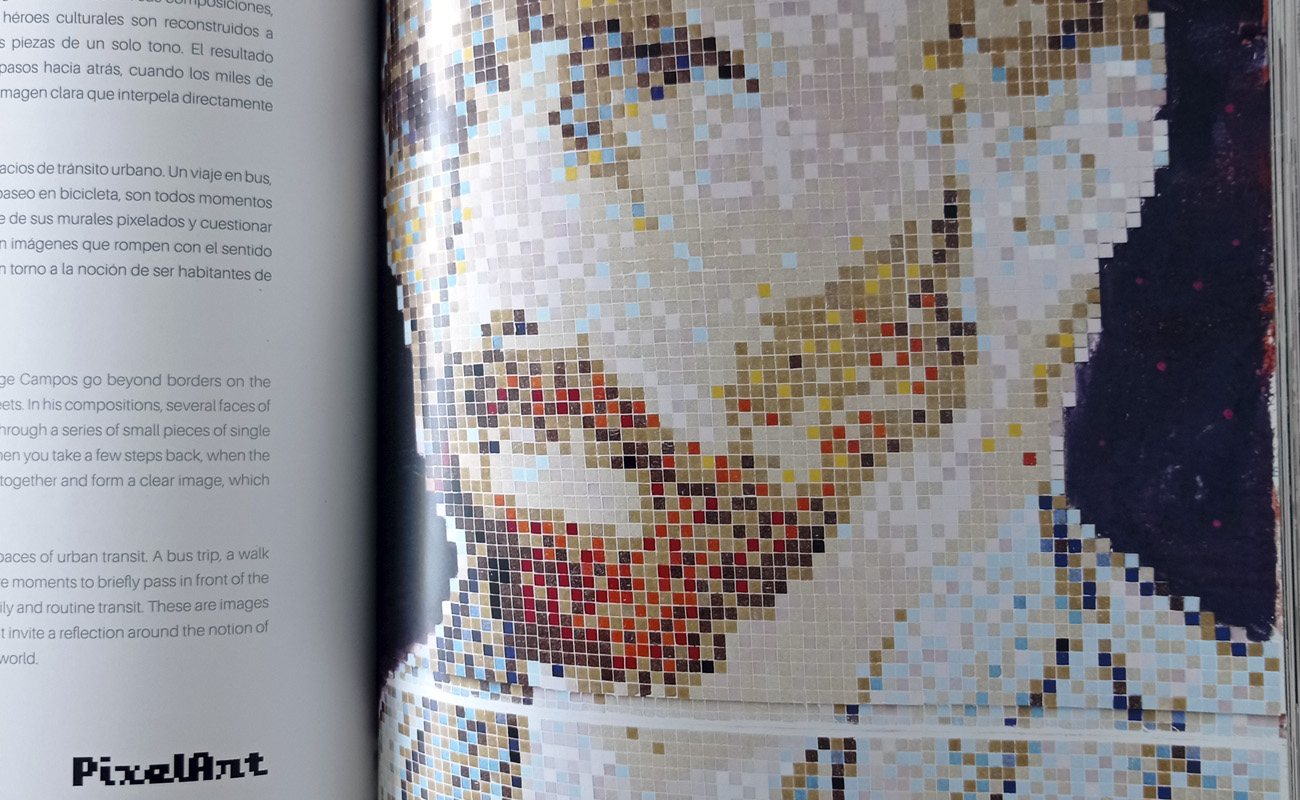
A dedicated profile within the book presented PixelArt’s urban mosaics as works that reconstruct recognizable cultural figures through thousands of individual fragments. Viewed from a distance, these dispersed elements reassemble into coherent images, creating a visual experience that moves between digital perception and physical materiality. This “pixel by pixel” logic would later become one of the central conceptual foundations of the artist’s broader body of work.
Viewed retrospectively, Latin Urban Art functions as a document of a pivotal moment in which urban art across the region was being reconsidered not merely as intervention or public expression, but as a significant form of contemporary cultural production. Within that landscape, PixelArt’s work contributed a unique perspective grounded in image persistence, digital aesthetics and the symbolic reconstruction of cultural memory within public space.
For PixelArt, inclusion in this publication represented an important milestone, situating his practice alongside some of the most recognized urban artists working throughout Latin America and reinforcing the relevance of pixel-based systems within contemporary urban discourse.
Unlike the specialized recognition later received through mosaic publications such as Mosaïque Magazine and Mosaic Art Now, Latin Urban Art positioned PixelArt within the broader field of contemporary urban art. The publication reveals how his investigations into image persistence, symbolic invocation and digital materiality operate not only within mosaic discourse, but also within larger conversations surrounding public space, cultural memory and the transformation of urban environments.