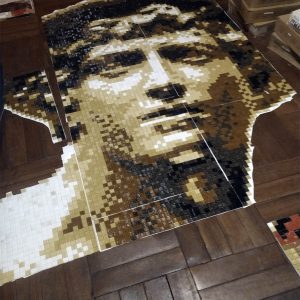
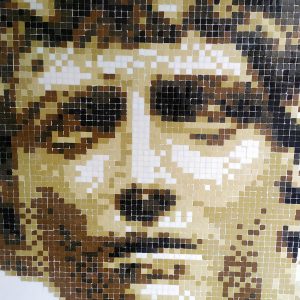
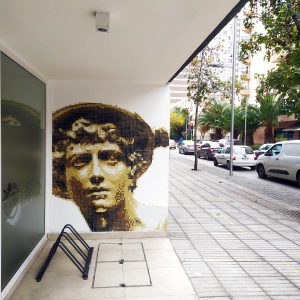
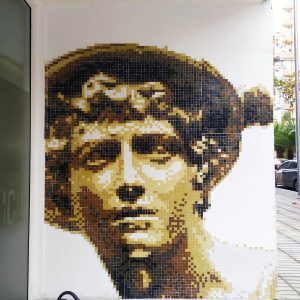
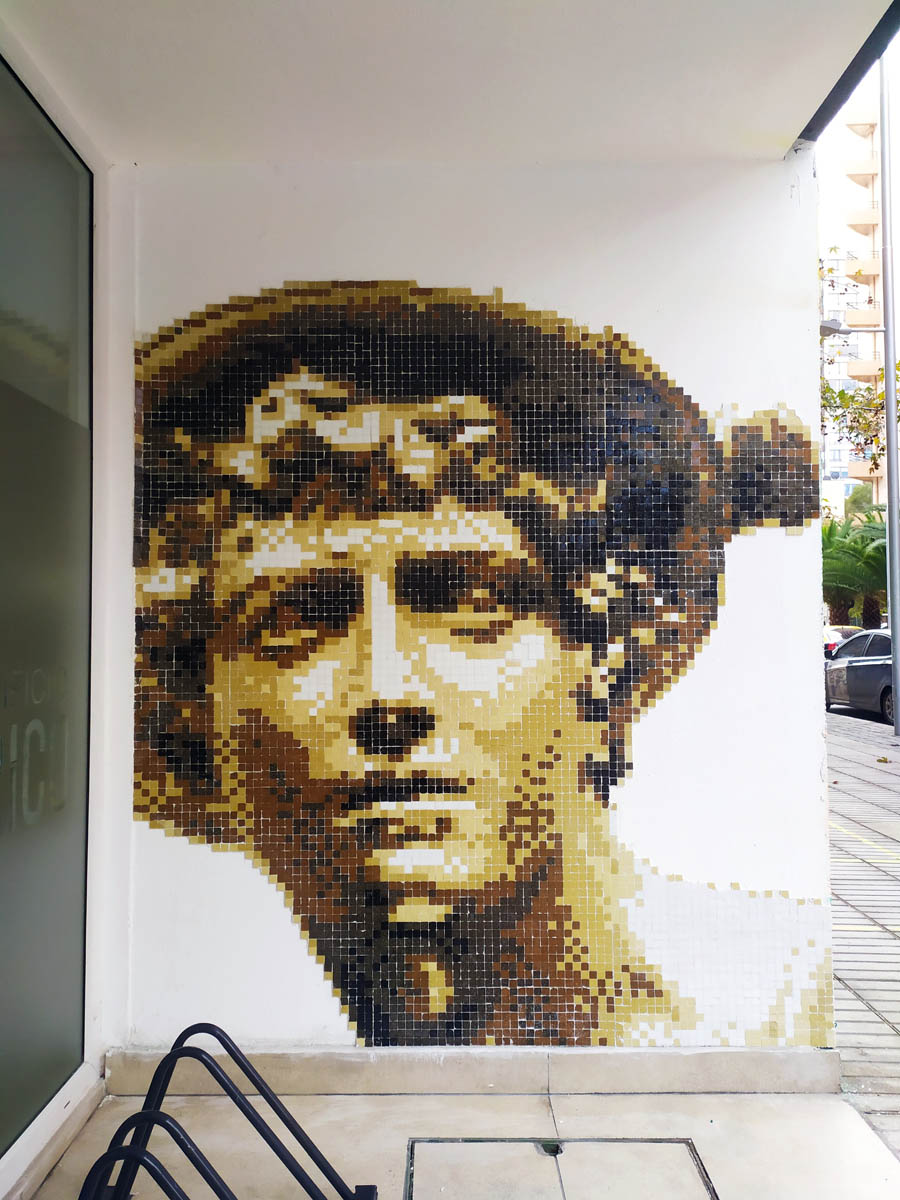
Urban mosaic intervention translating a fragment of Greek sculptural imagery into a pixel-based public structure investigating monumentality, memory and symbolic continuity within contemporary city space.
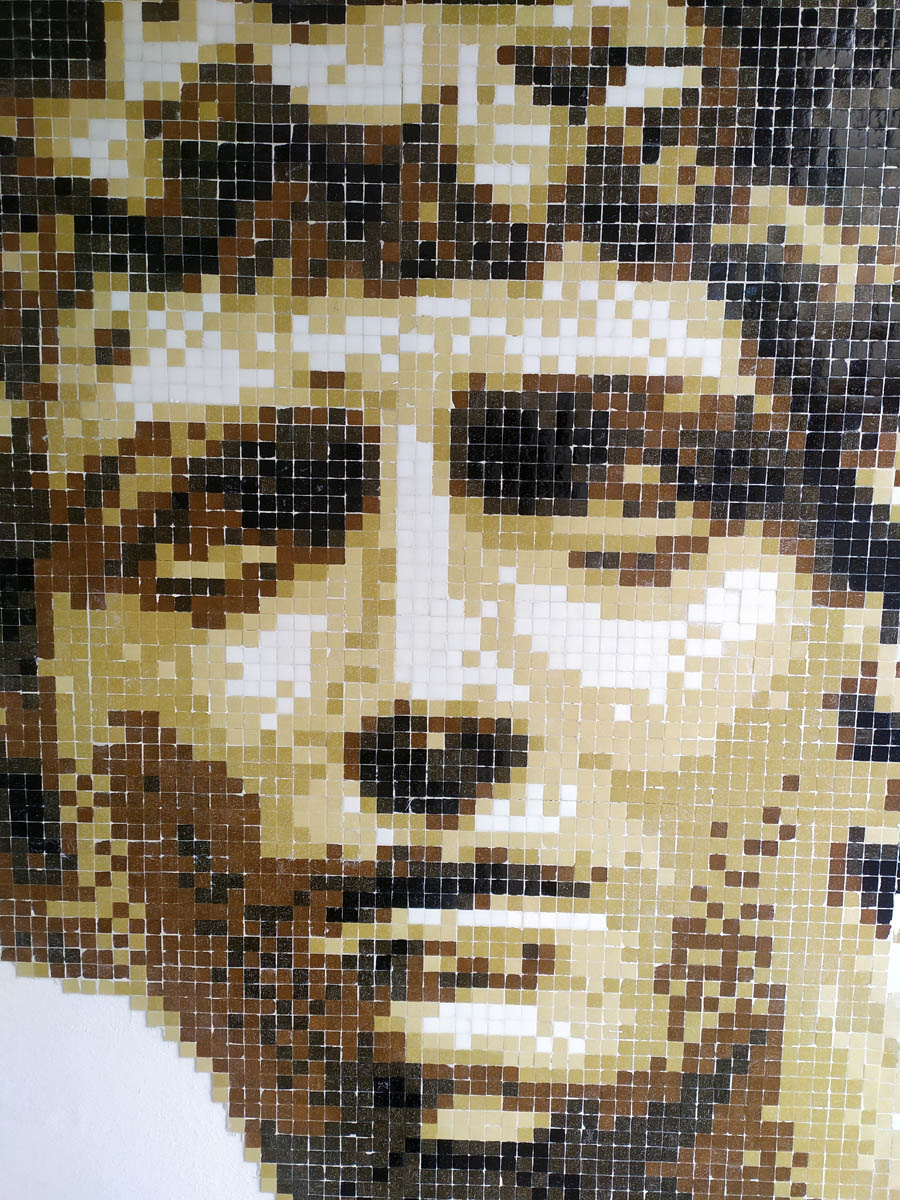
Developed from the fragmented image of a classical Greek sculpture, this large-scale mosaic intervention explores how cultural symbols survive through successive processes of translation, reproduction and technological transformation. Through the manual placement of thousands of glass tesserae, the work reconstructs an ancient sculptural fragment using the visual language of the pixel, collapsing thousands of years of image history into a single contemporary surface.
Rather than reproducing the sculpture in its entirety, the intervention embraces fragmentation as a conceptual strategy. The figure appears partially dissolved into the architecture, evoking the condition of archaeological remains while simultaneously suggesting the incomplete nature of cultural memory itself. Positioned between ruin and reconstruction, the work transforms a symbol of classical permanence into a living urban artifact.
The mosaic continues the artist’s ongoing investigation into symbolic invocation, where historical figures and cultural icons are reintroduced into public space through systems of repetition, pixelation and handcrafted execution. By translating sculptural volume into a flat mosaic grid, the intervention creates a dialogue between antiquity and digital culture, demonstrating how visual archetypes persist despite changes in medium, technology and historical context.
Installed within the contemporary city, the work functions as a monument without monumentality, quietly inserting classical memory into the rhythms of everyday urban life while extending the artist’s broader exploration of image persistence, cultural transmission and public space.