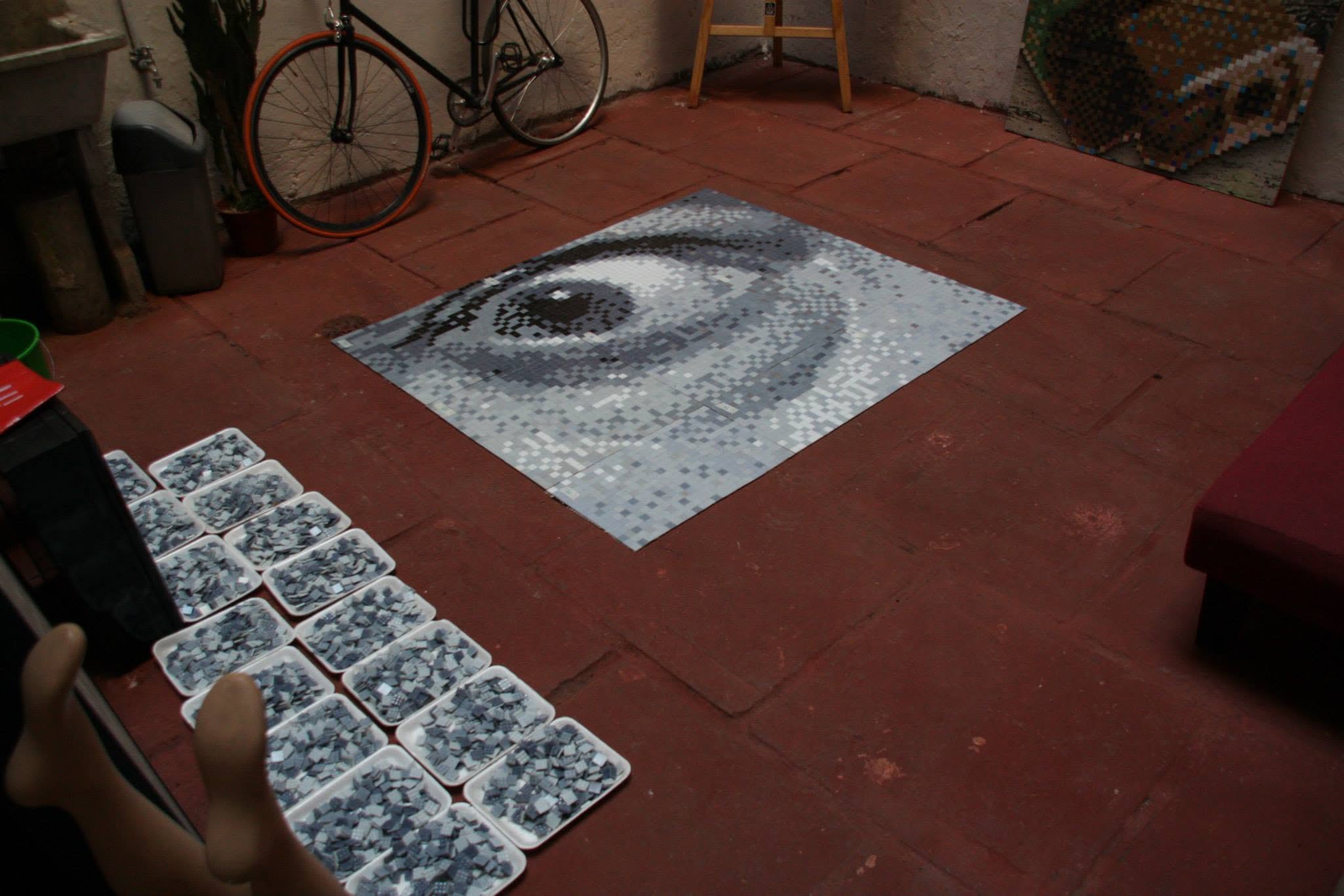
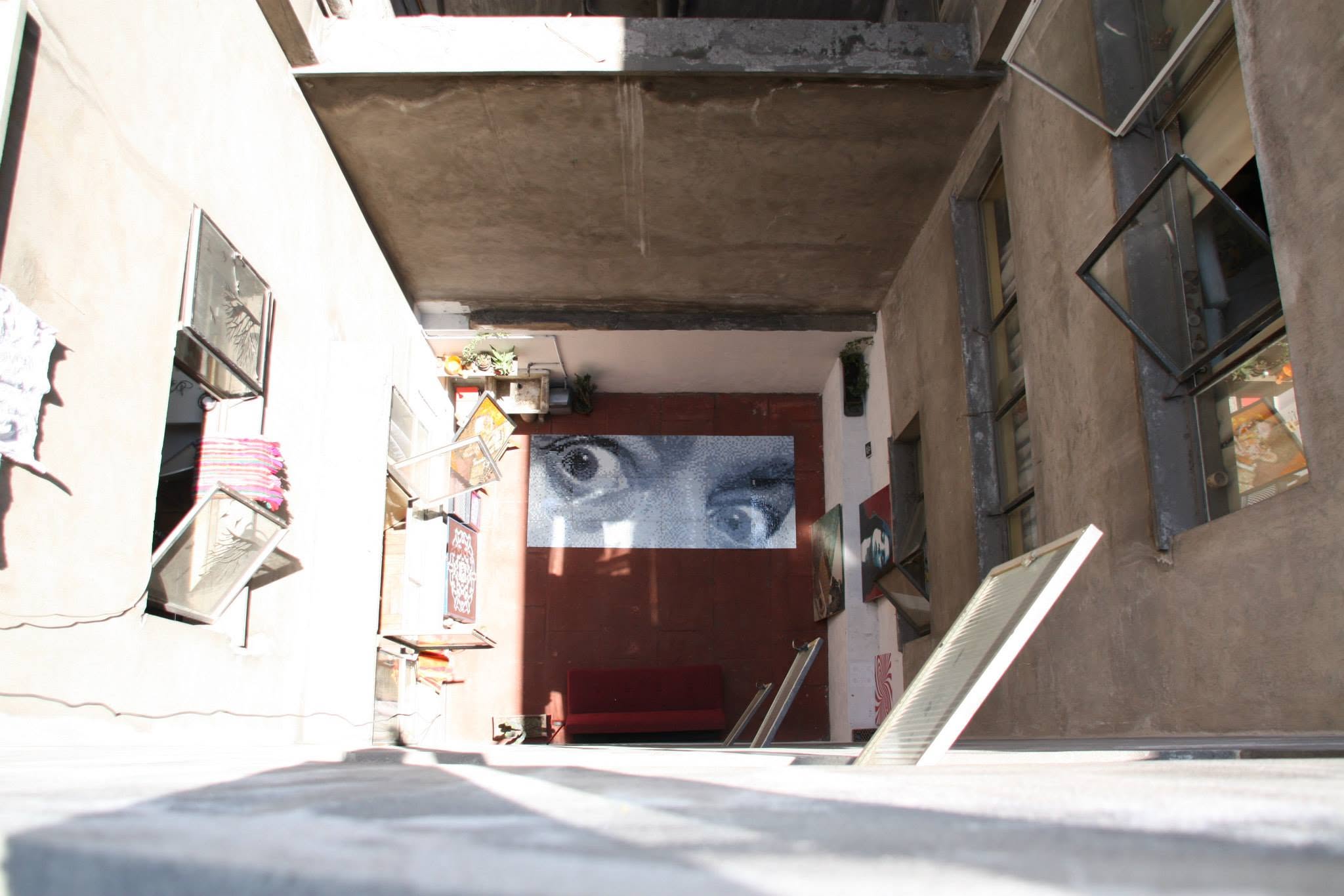
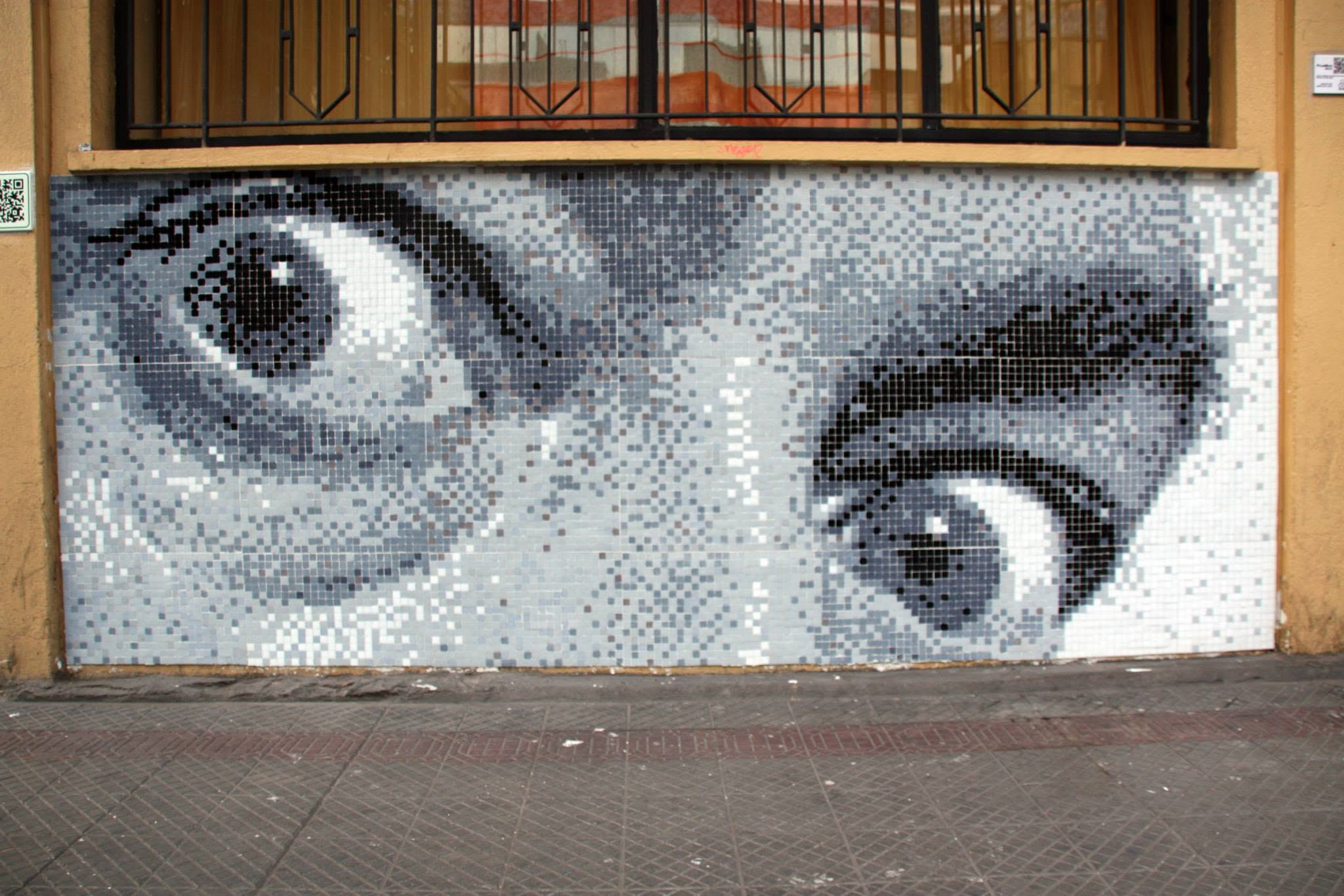
Large-scale mosaic intervention reinterpreting Salvador Dalí through handcrafted pixel systems, referencing the artist’s early optical experiments and the fragmented visual logic present in Gala Contemplating the Mediterranean Sea.
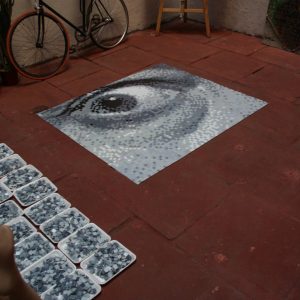
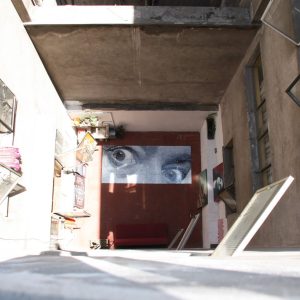
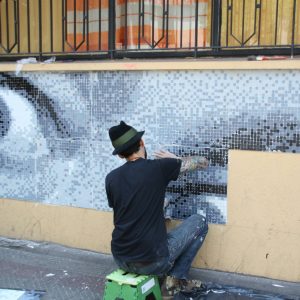
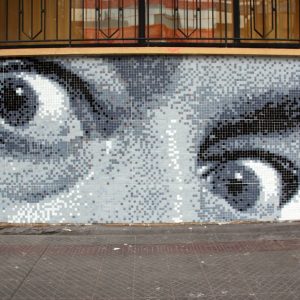
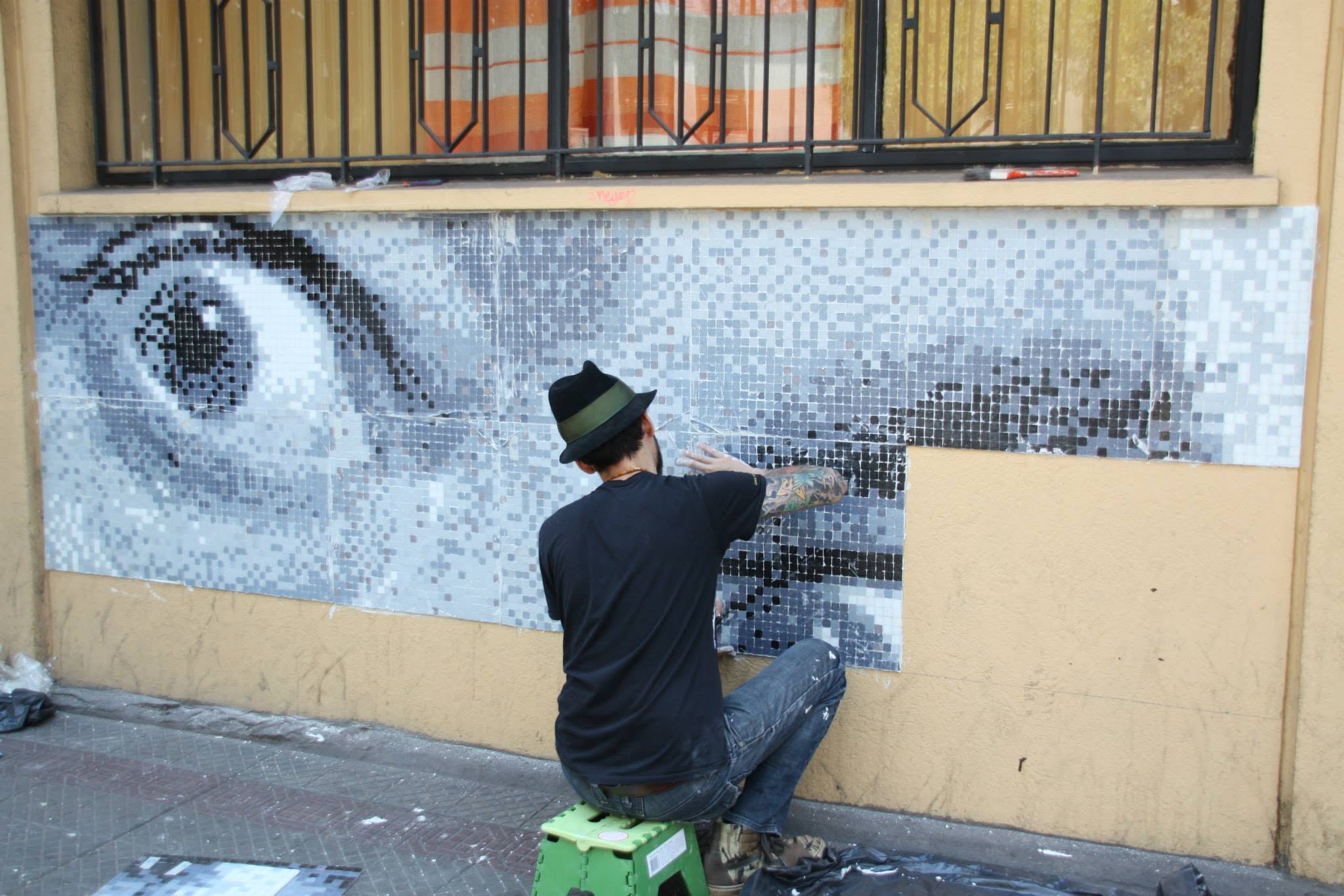
Created in 2014 and still preserved within the urban landscape of Santiago, La Mirada Alucinada marks the artist’s first sustained engagement with the figure of Salvador Dalí and introduces several conceptual directions that would later become central to his practice. Constructed through thousands of hand-placed glass tesserae, the intervention translates the surrealist master’s image into a pixel-based structure where recognition emerges through distance, optical reconstruction and perceptual participation.
The work establishes an early dialogue with Dalí’s investigations into visual ambiguity and multi-layered perception, particularly the spatial logic found in Gala Contemplating the Mediterranean Sea, where fragmented visual information resolves into a secondary image when observed from afar. Through mosaic and pixelation, the intervention transforms this principle into a permanent urban system in which the portrait oscillates between abstraction and representation depending on the viewer’s position.
Installed within public space, the mosaic also explores how historical artistic figures can be reactivated through contemporary visual languages. Rather than reproducing Dalí’s image directly, the work reconstructs his gaze through a process of digital fragmentation translated into handcrafted material form, creating a bridge between surrealist perception, pixel culture and architectural permanence.
Executed using traditional indirect mosaic techniques, La Mirada Alucinada occupies a foundational position within the artist’s urban research, anticipating later investigations into image persistence, symbolic invocation, optical instability and the reconstruction of cultural memory through pixel-based mosaic systems.