
Interior Image Systems and Spatial Identity
Located within one of Santiago’s most active cultural neighborhoods, Saloon2 operates at the intersection of design, fashion, contemporary art and music. Frequented by artists, musicians, actors and cultural producers, the space functions not only as a commercial venue but also as an environment shaped by creative exchange and visual identity.
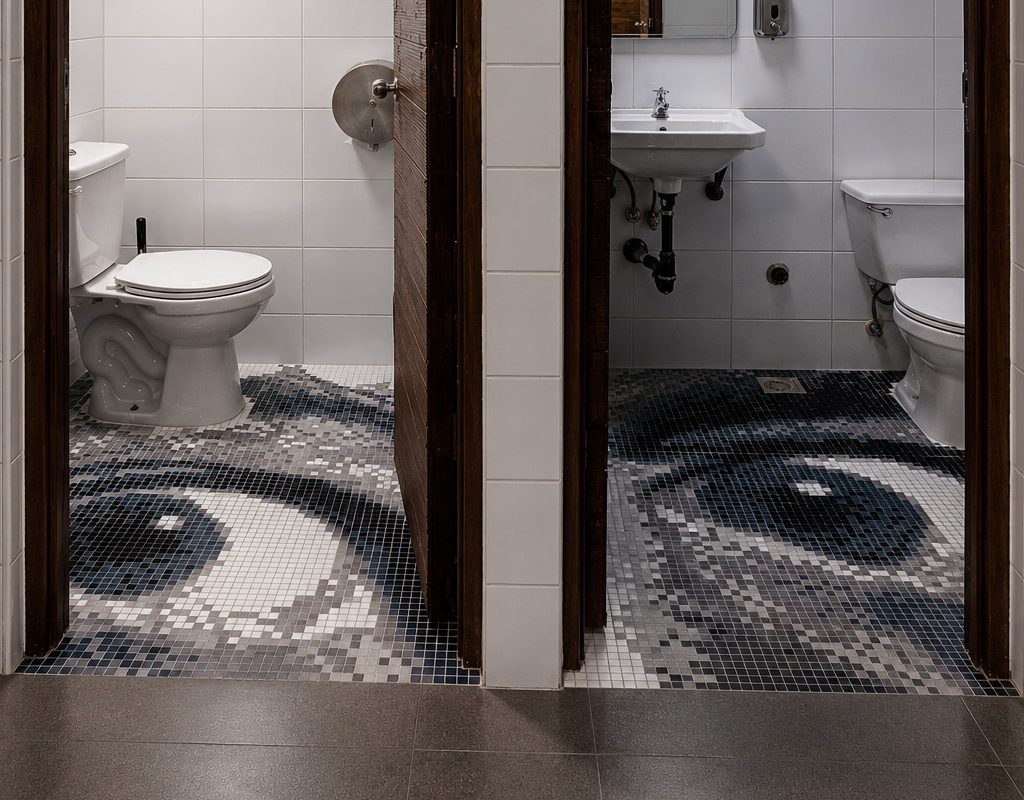
The intervention was conceived as an architectural image embedded directly into the circulation areas of the interior. Rather than occupying walls as a conventional artwork, the mosaic was integrated into the floor plane, allowing the image to emerge progressively through the visitor’s movement across the space.
Constructed in Venetian mosaic, the composition reinterprets the iconic gaze of Salvador Dalí through a pixel-based visual language. The image reveals itself gradually from different viewing distances, oscillating between abstraction and recognition while establishing a direct relationship between the body, architecture and perception.
Within the broader context of PixelArt’s practice, the project investigates how image systems can operate as components of interior design rather than isolated artworks. The mosaic functions simultaneously as flooring, visual landmark and spatial identity device, dissolving traditional boundaries between architecture, design and image construction.
The work also demonstrates the adaptability of pixel-based systems across scales and contexts. While many of the artist’s projects occupy public space, urban environments or architectural façades, Saloon2 explores the potential of image integration within luxury interiors, hospitality environments and commercial spaces where visual identity becomes part of the built experience itself.
Rather than decorating a surface, the project transforms the surface into the image.
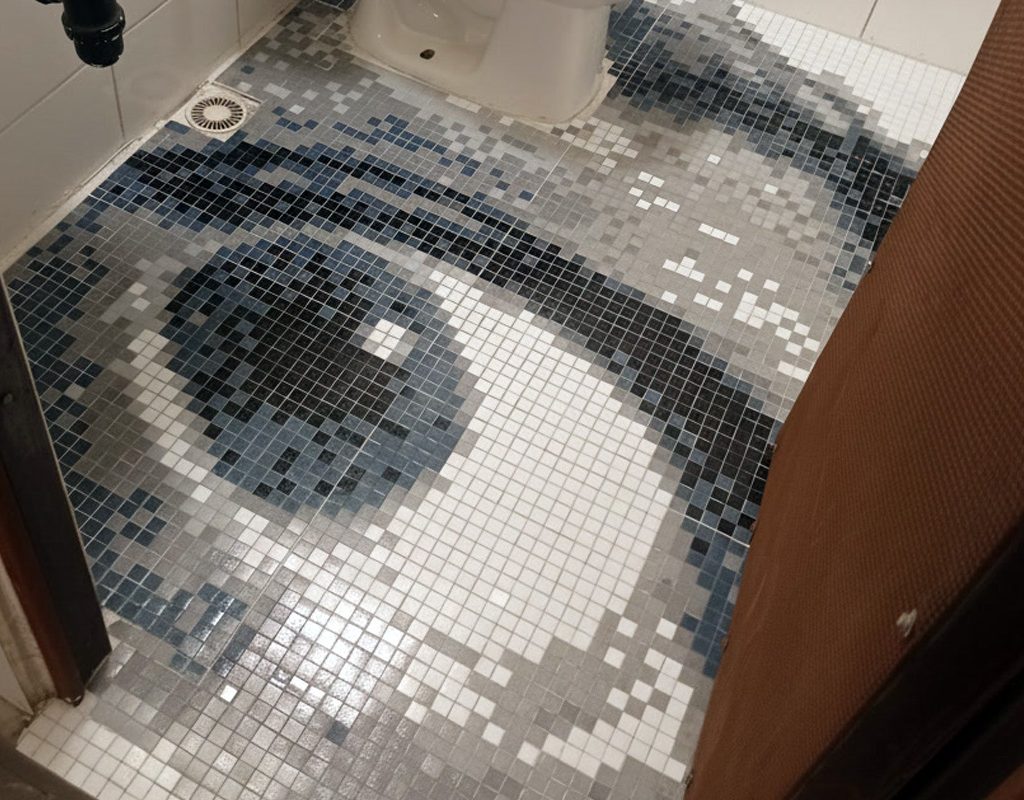
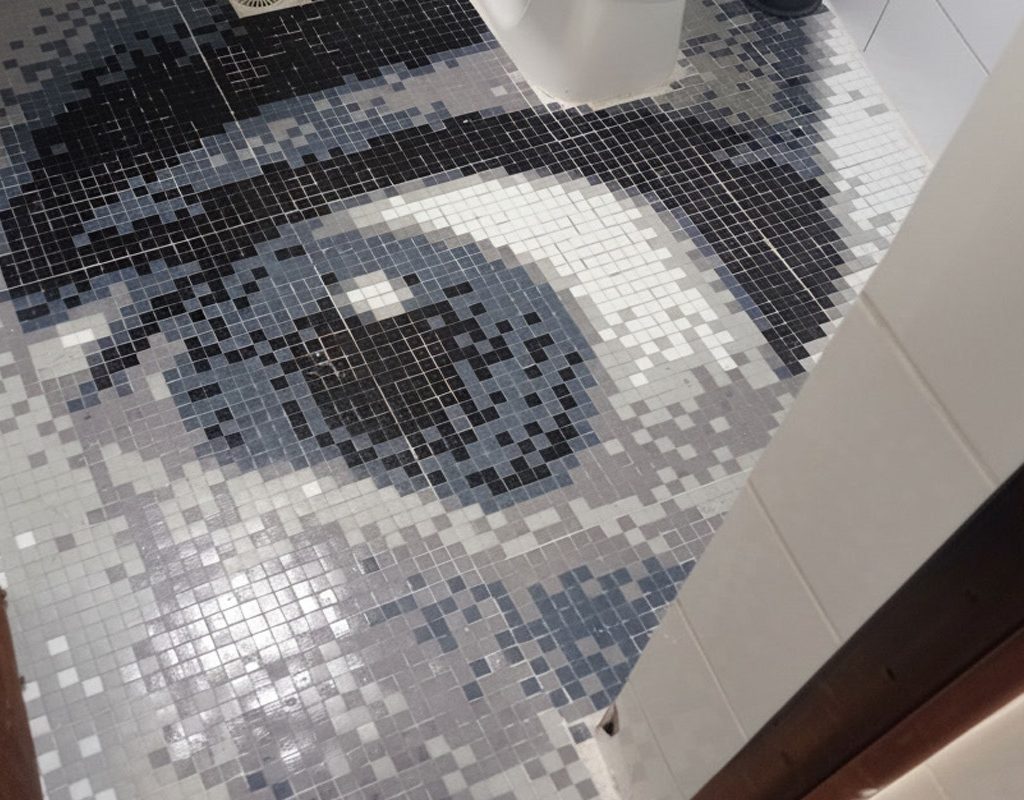
Saloon2 represents a shift from public intervention toward spatial design. Here, the image no longer functions as an object placed within architecture but as architecture itself. The floor becomes a carrier of visual information, demonstrating how mosaic systems can operate at the scale of interior environments while maintaining the conceptual rigor of pixel-based image construction.