
Exhibition Identity and Transgenerational Image Systems
Hommage à Fabio Rieti — Paris 2019
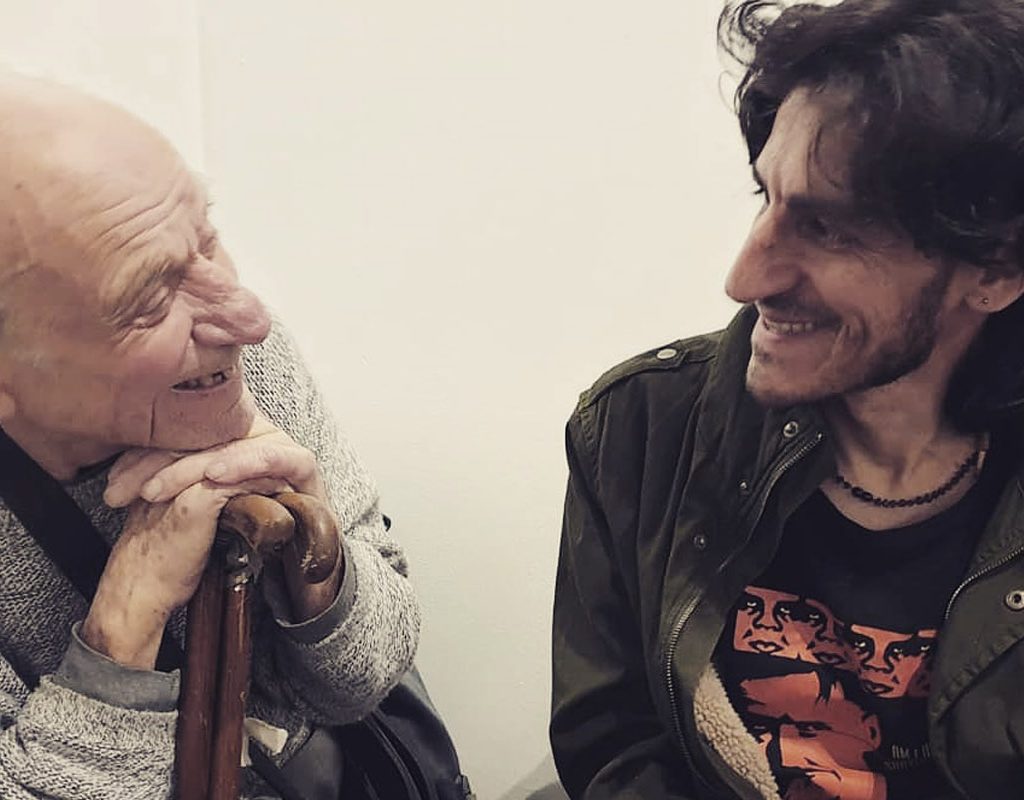
The project originated through a collaboration with French artist Fabio Rieti, whose work occupies a significant place within the history of public art in Paris.
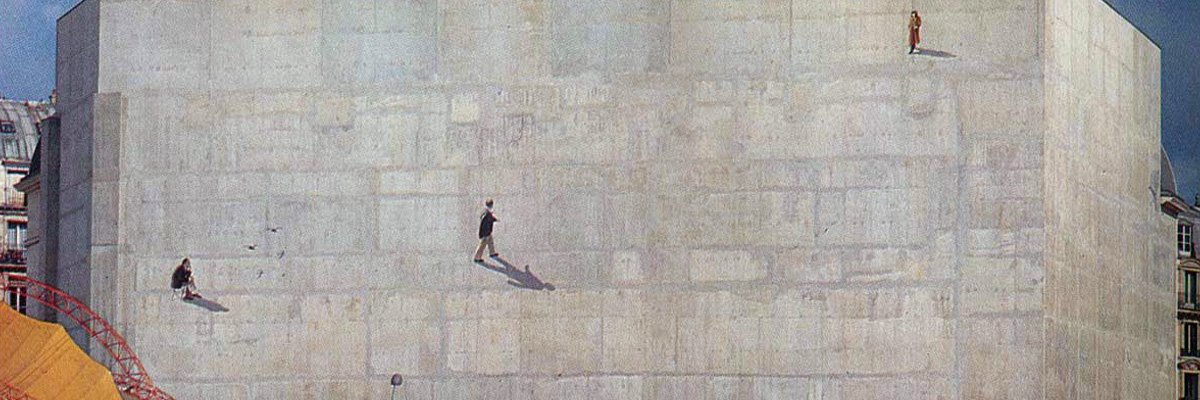
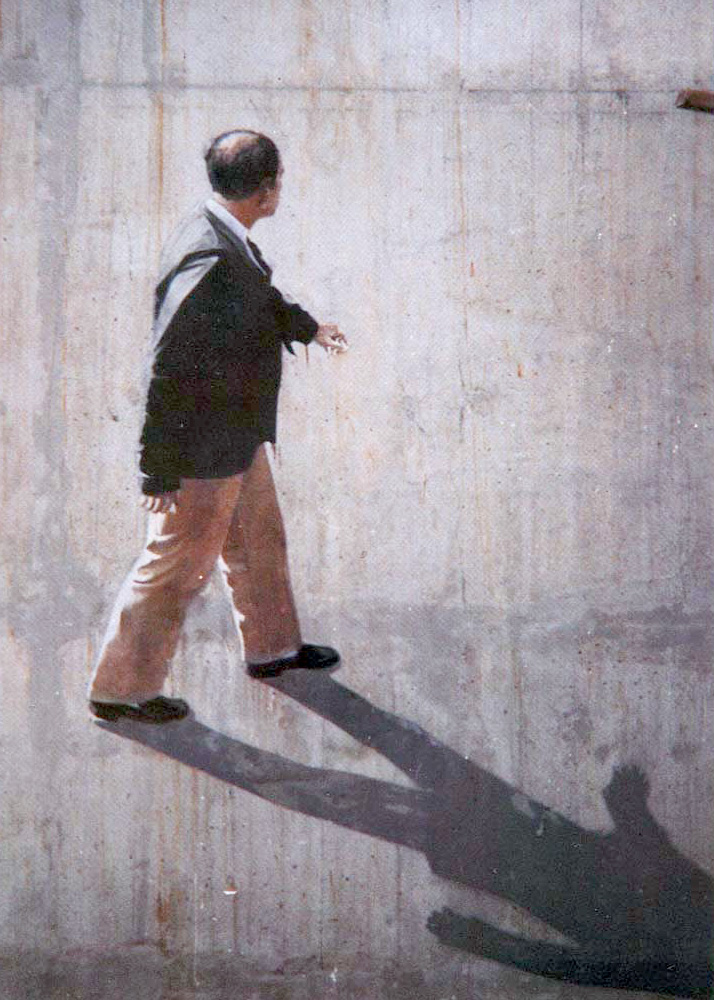
Central to the exhibition was Le Piéton des Halles, a monumental self-portrait installed by Rieti in the historic Les Halles district during the 1970s.
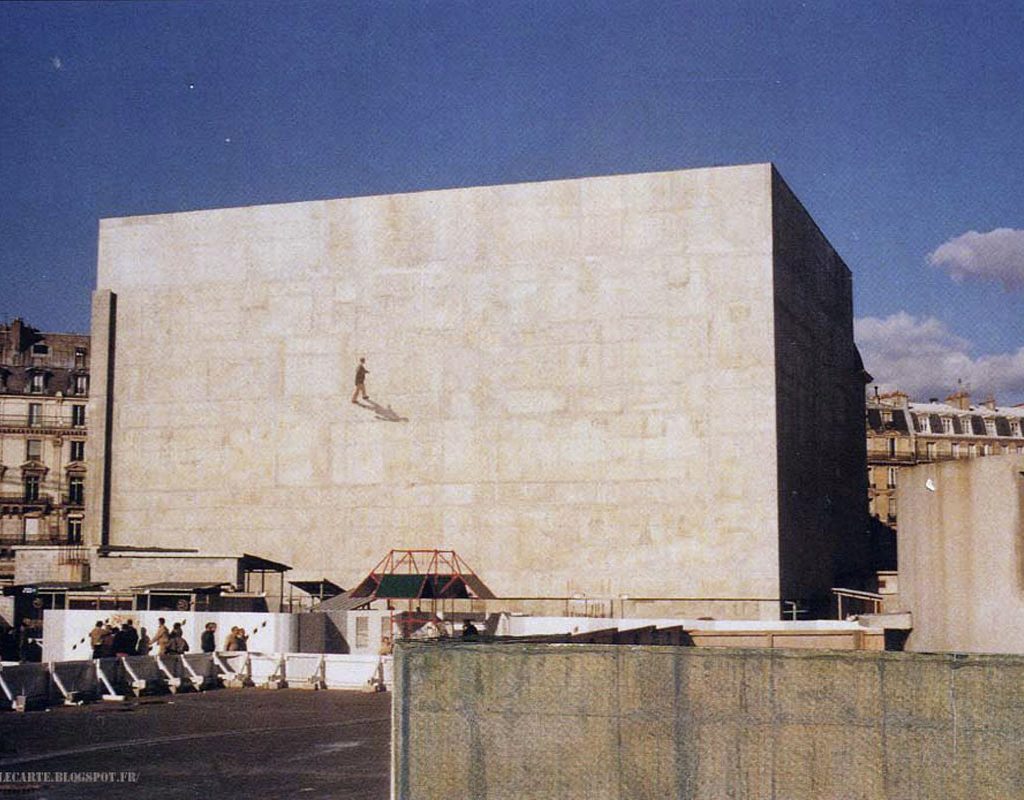
Created under severe budget limitations, the original intervention proposed a remarkably simple gesture: rather than attempting a grand architectural composition, Rieti represented himself walking across the wall.
Over time, the figure became one of the most recognizable urban artworks in Paris, acquiring an almost mythical status within the city’s visual memory.
Although the original work eventually disappeared during the redevelopment of Les Halles, its image continued circulating as a symbol of a particular moment in the history of public art.
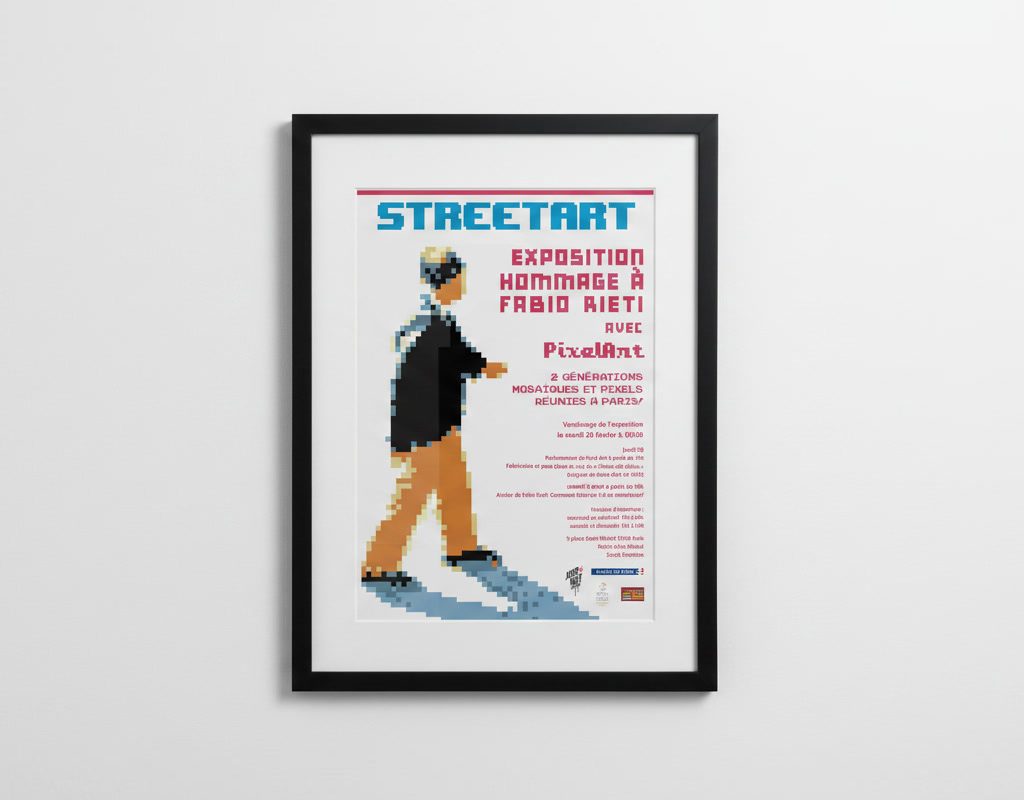
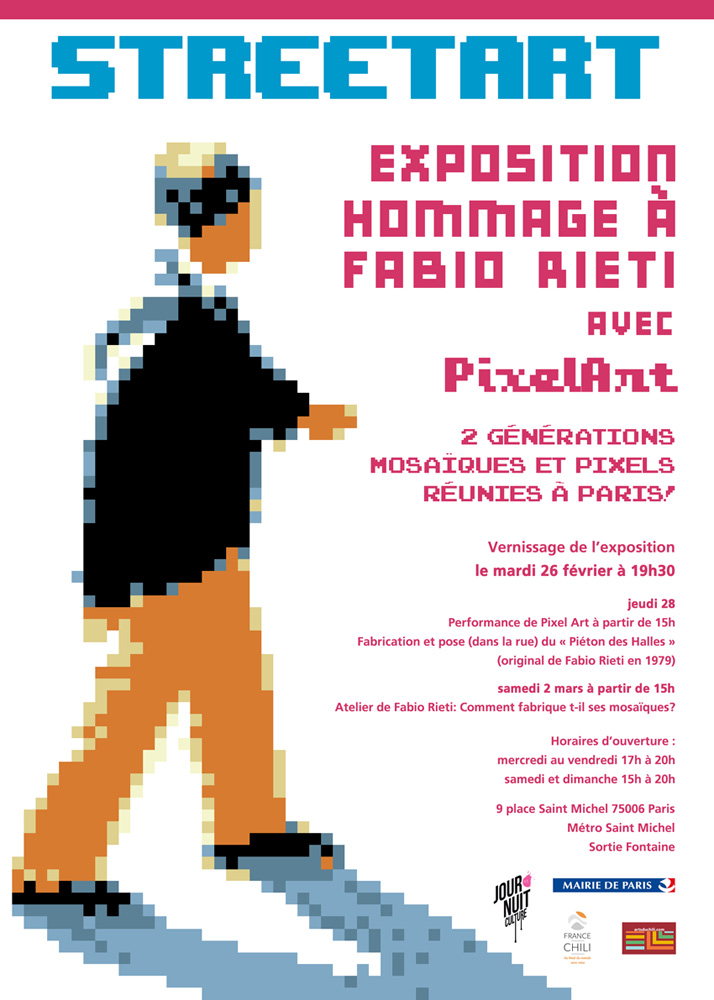
For the exhibition, PixelArt developed a new interpretation of Le Piéton des Halles through a strictly pixel-based reconstruction. Rather than reproducing the original painting, the figure was translated into a contemporary digital language while preserving its essential structure, posture and symbolic presence. The project transformed the historic pedestrian into a new image system capable of operating simultaneously within physical and digital environments.
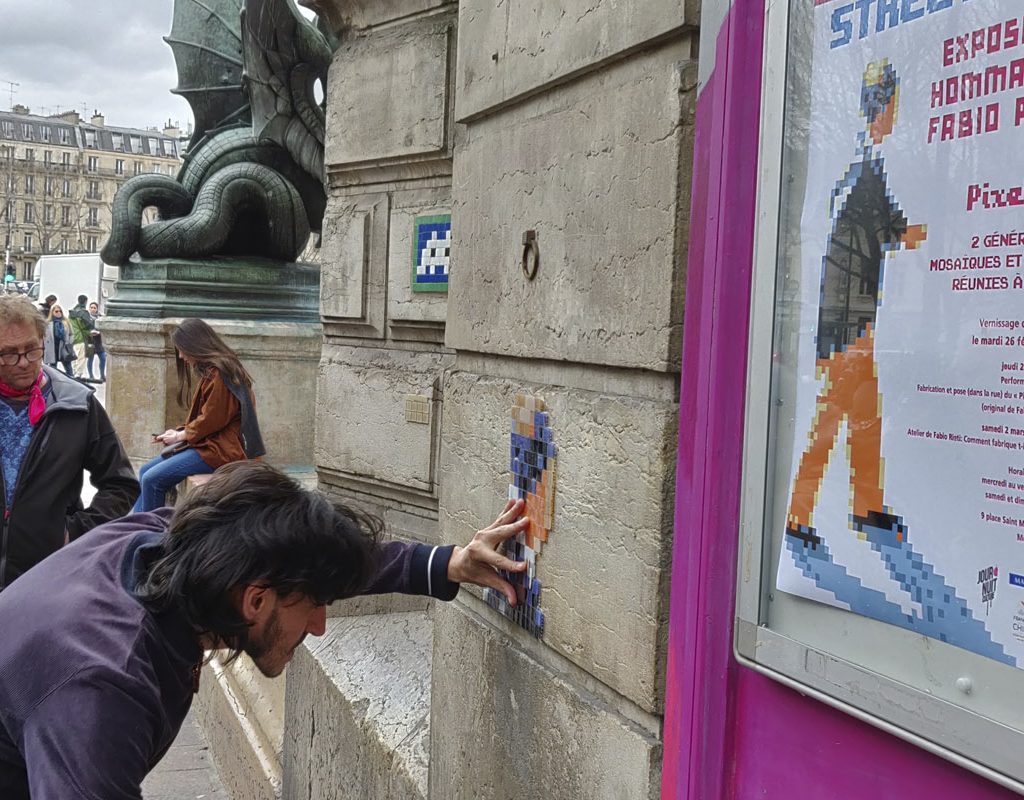
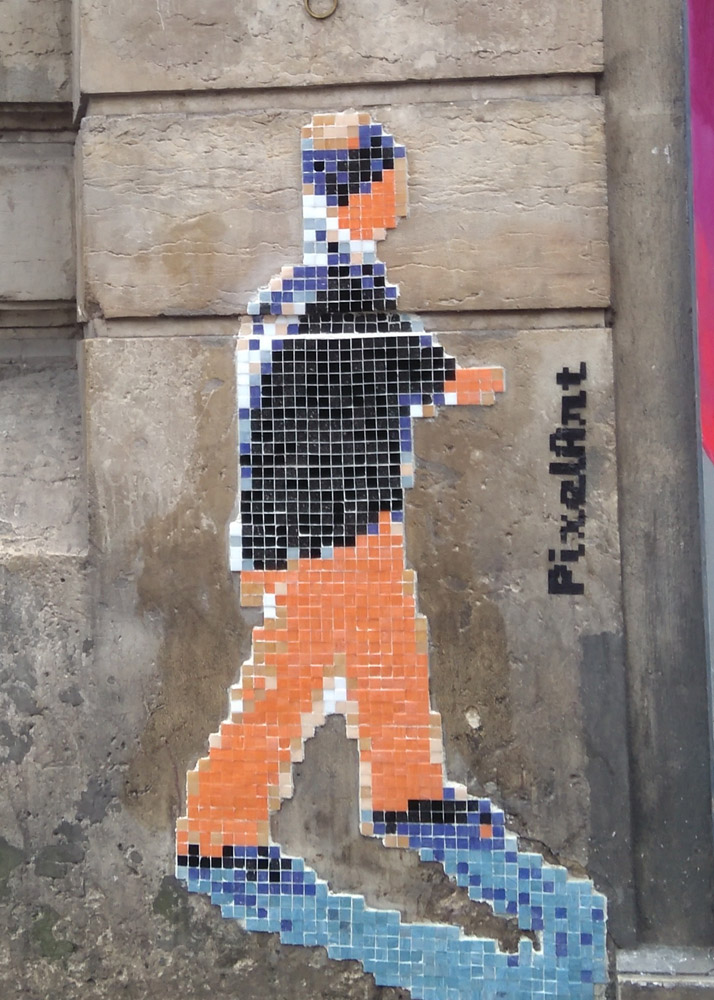
The resulting figure became the central element of the exhibition identity. Constructed through a limited pixel matrix, the image was deployed across posters, promotional materials and exhibition graphics, functioning as a visual bridge between the practices of both artists. The same image was later materialized as a mosaic intervention installed in the Saint-Michel district of Paris, extending the exhibition beyond the gallery space and returning the figure to the streets where its history originally began.
Operating between homage, reinterpretation and translation, the project examined how images survive through transformation. Rather than treating the original artwork as a fixed historical object, the exhibition proposed that images remain alive precisely because they can migrate across generations, technologies and material systems.
Within the broader context of PixelArt’s practice, Hommage à Fabio Rieti represents one of the clearest examples of image migration as a curatorial strategy.
A figure originally conceived as a mural painting in the 1970s reappears decades later as a pixel construction, a communication system, an exhibition identity and a new urban intervention. The image changes form, material and context, yet its cultural memory remains intact.
The project also established a symbolic dialogue between two artists separated by generation, geography and technique but connected through a shared interest in modular image construction. If Rieti’s work explored the possibilities of mosaic within public space, PixelArt’s interpretation extended those questions into the age of pixels, digital culture and contemporary image circulation.
Hommage à Fabio Rieti occupies a unique position within the artist’s body of work because it is simultaneously an exhibition project, a public intervention and an act of historical translation. More than a tribute, the project investigates how images persist through reinterpretation, demonstrating that cultural memory is not preserved through replication but through continuous transformation.
SYSTEM 01
ORIGINAL URBAN ICON
Created in Paris during the 1970s, Le Piéton des Halles became one of the most recognizable figures in the visual memory of the city. Originally conceived as a monumental public artwork, the image survived long after the disappearance of the original intervention.
SYSTEM 02
PIXEL TRANSLATION
For the exhibition, the historical figure was reconstructed through a strictly pixel-based system. Rather than reproducing the original mural, the image was translated into a contemporary digital language while preserving its essential structure and symbolic presence.
SYSTEM 03
PUBLIC REINSERTION
The translated image returned to public space as a new urban intervention. Migrating from mural painting to pixel-based reconstruction and ultimately to mosaic, the figure continued its trajectory across generations, technologies and cultural contexts.