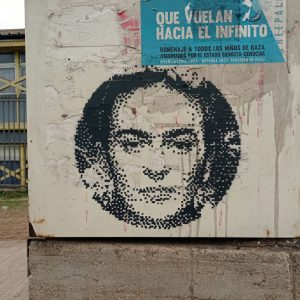
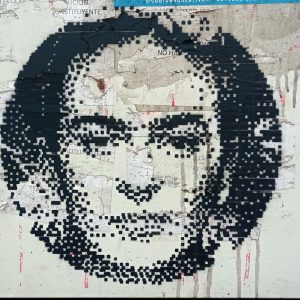
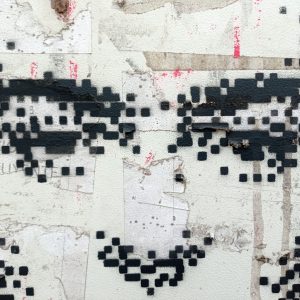
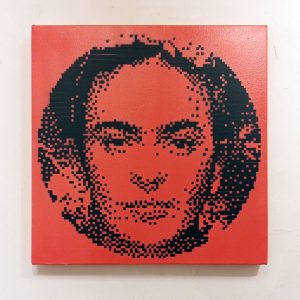
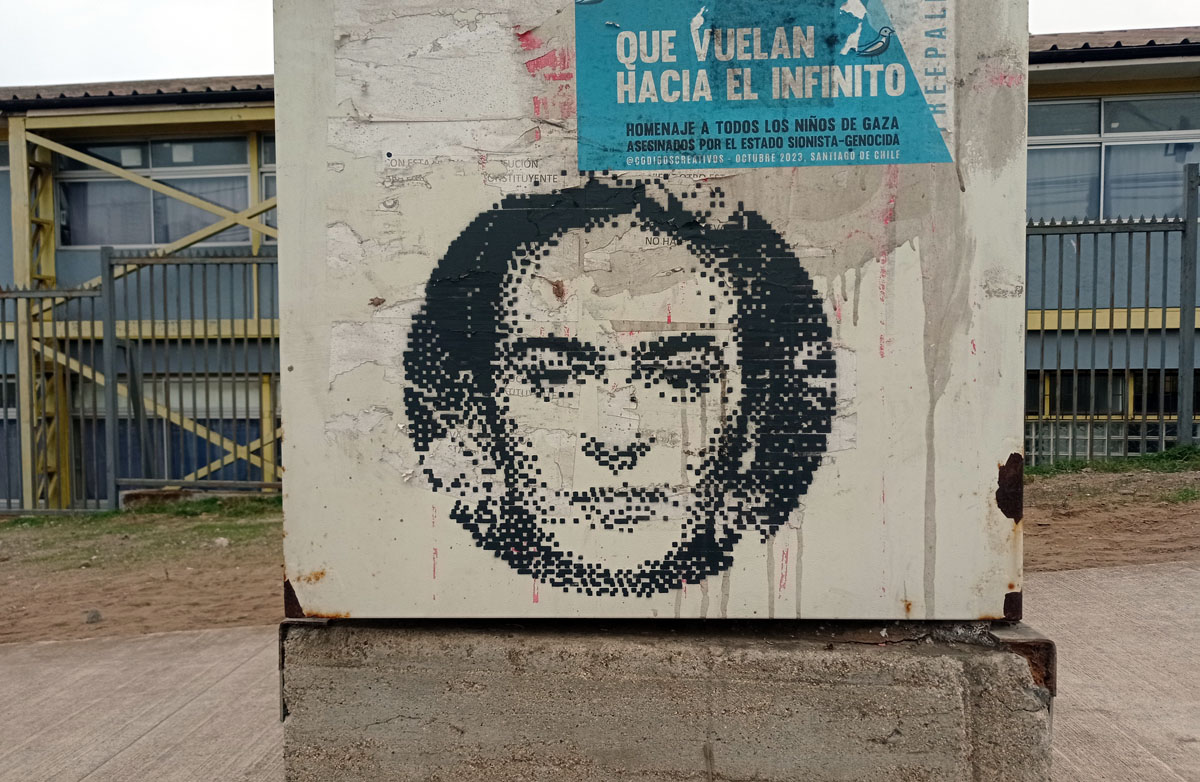
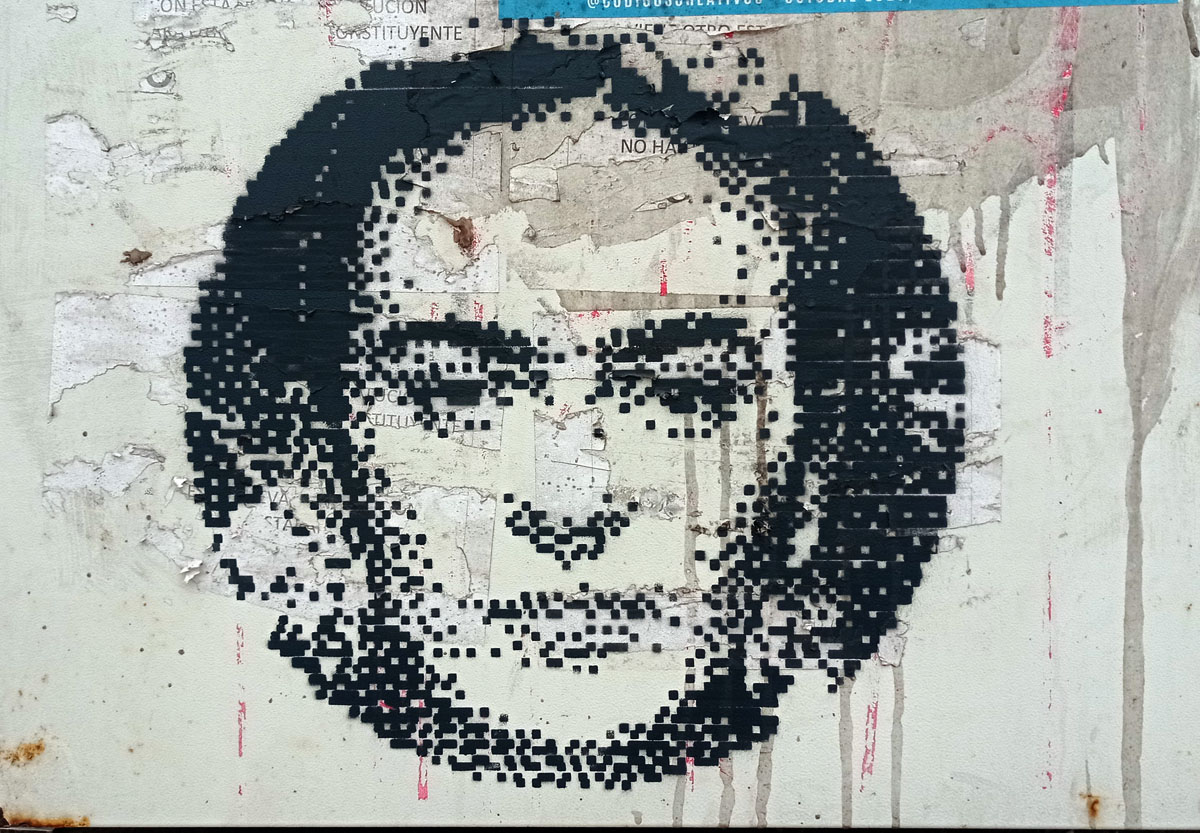
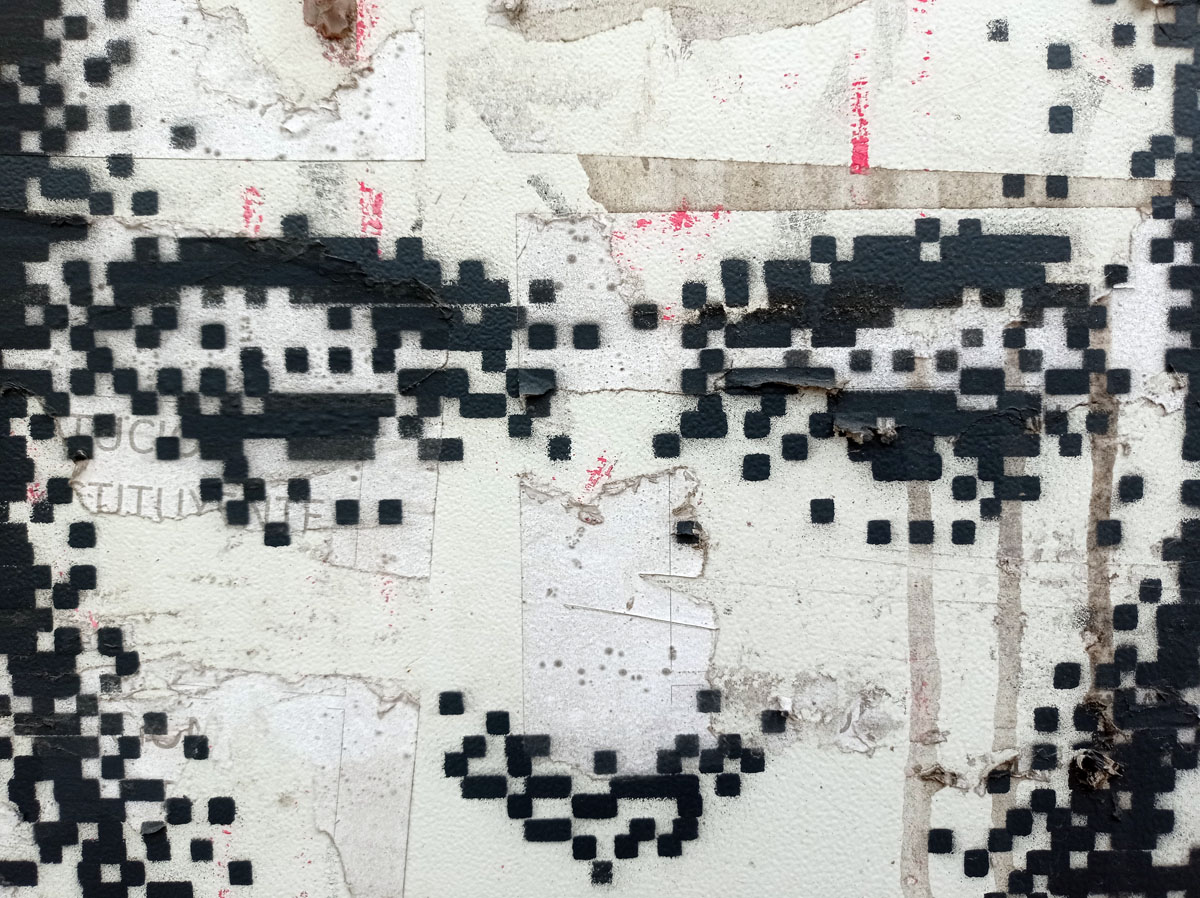
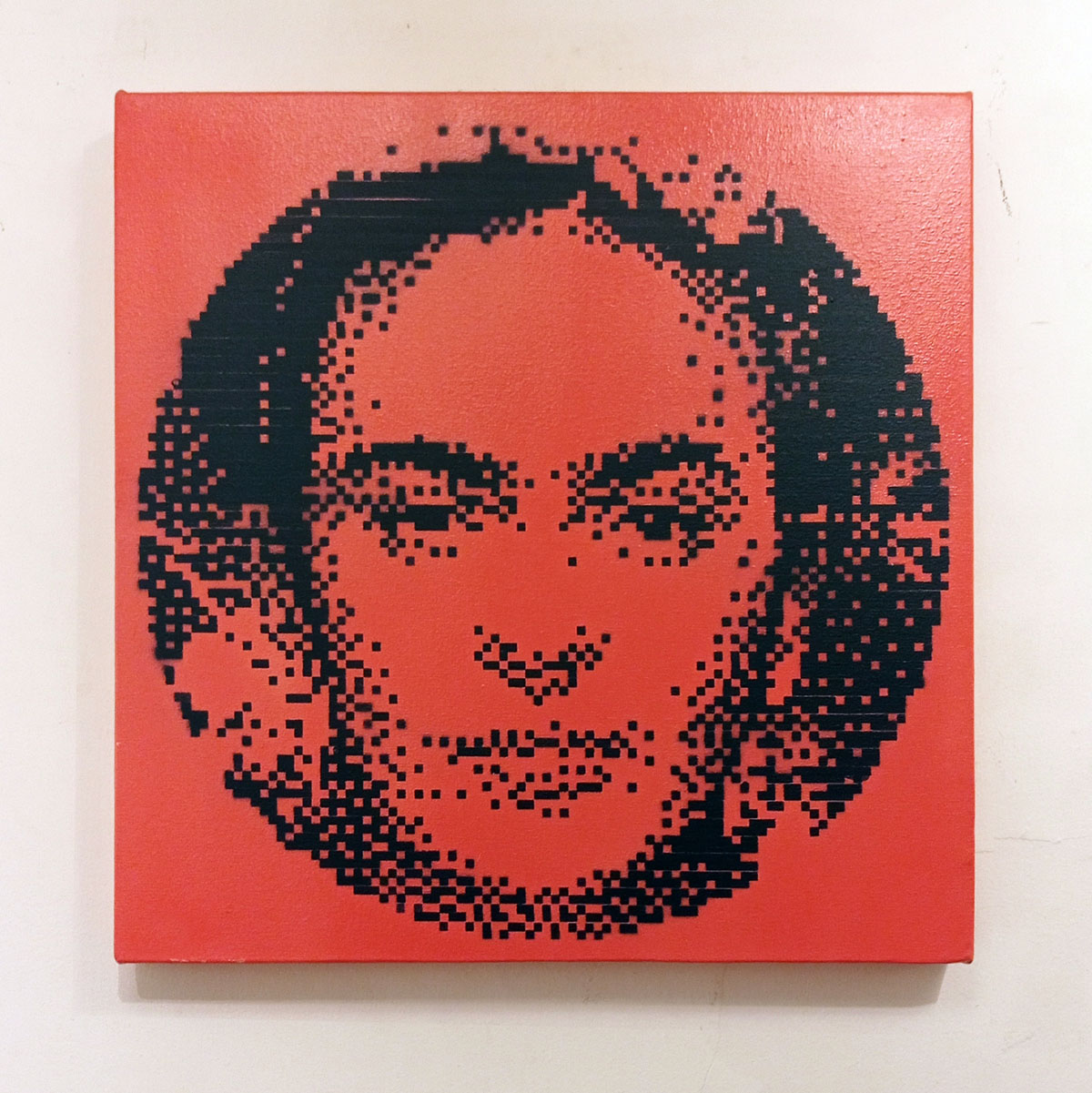
Stencil intervention developed through a binary image-generation process, translating Frida Kahlo into a highly condensed visual system composed exclusively of black and negative space. Produced from a digitally optimized 100 × 100 pixel structure and executed through plotter-cut stencil technology, the work marks a transition from handcrafted stencil production toward generative image construction.
Installed on small-scale urban infrastructure, the intervention investigates how cultural icons can occupy overlooked spaces through maximum visual efficiency and minimal graphic resources. The portrait emerges from an economy of information in which identity remains recognizable despite radical reduction, transforming the image into a study of perception, memory and symbolic compression.
As part of the Urban Transfer Systems series, the work reflects the artist’s ongoing exploration of how digital image logic migrates into physical space. By combining computational image simplification, stencil replication and urban insertion, Frida operates simultaneously as portrait, visual code and experiment in the persistence of cultural imagery within contemporary cities.