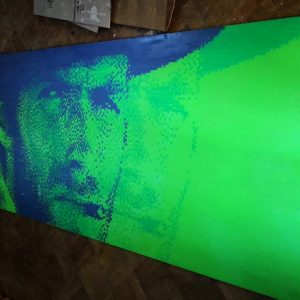
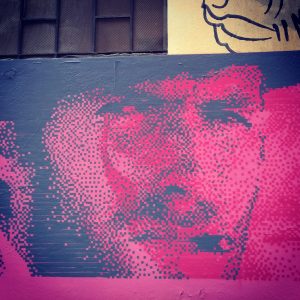
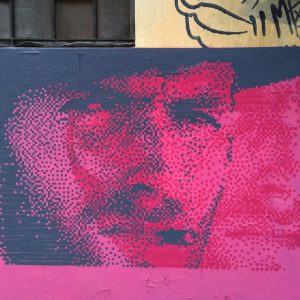
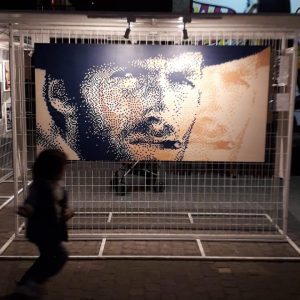
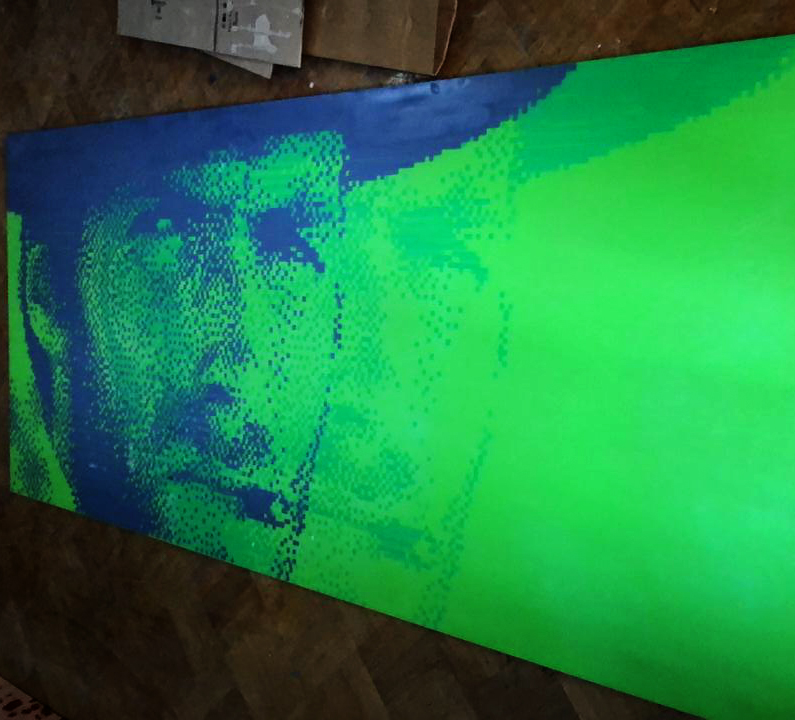
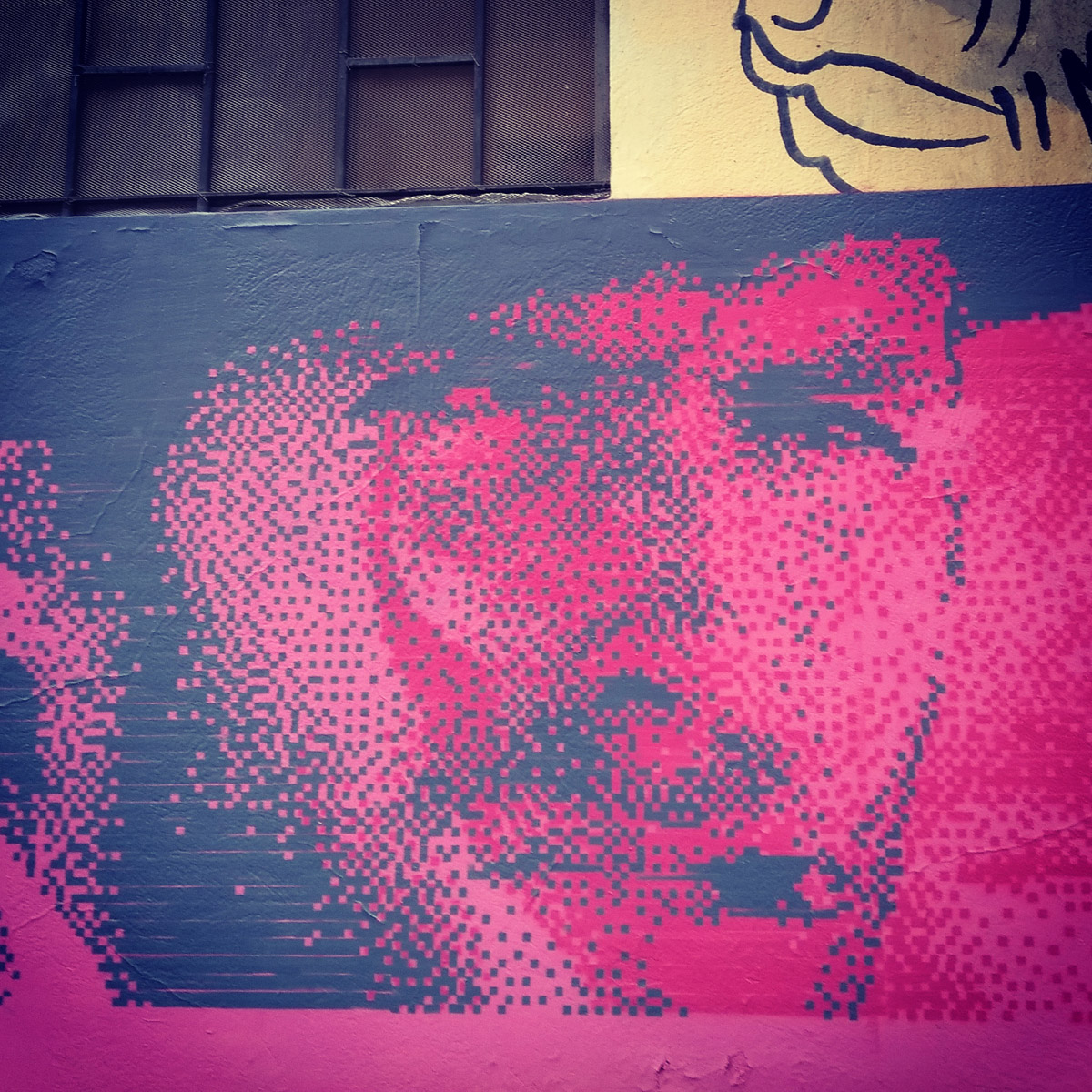
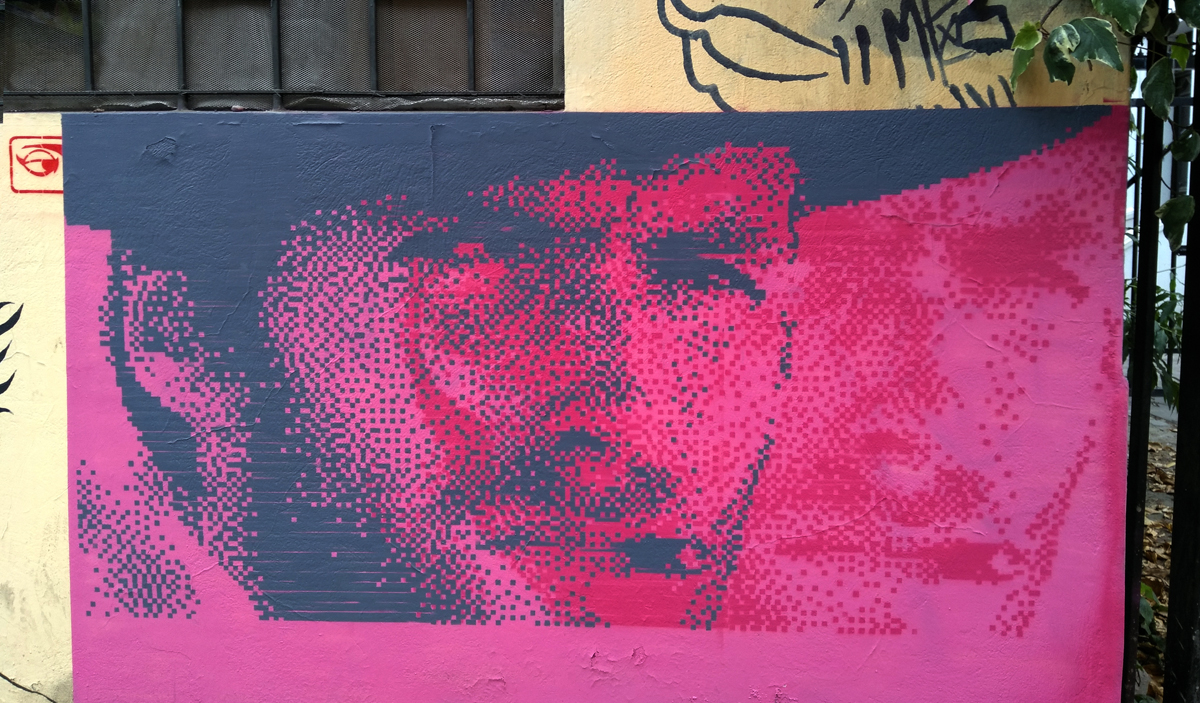
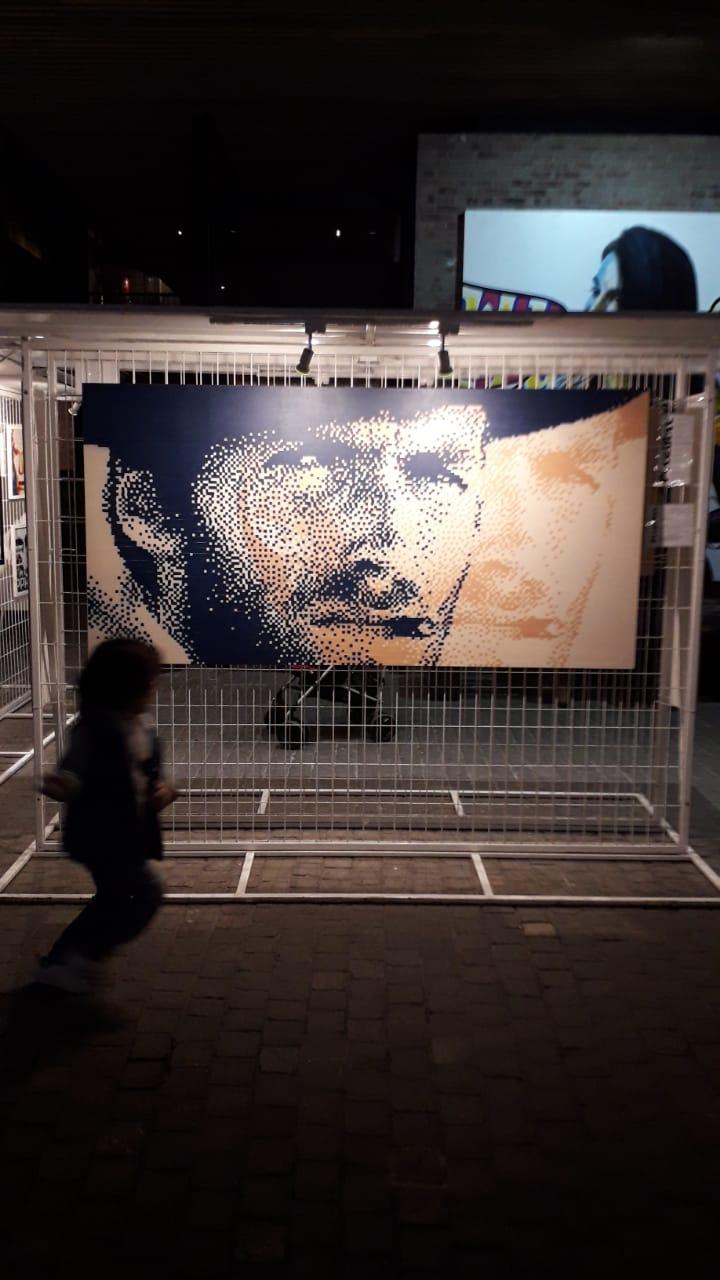
Large-scale stencil intervention derived from Clint Eastwood’s iconic character in The Good, the Bad and the Ugly. Constructed through layered stencil systems and executed directly within public space, the work investigates how cinematic iconography can be translated into scalable visual structures capable of migrating between urban environments, studio production and collectible formats.
Installed in 2018 and still preserved after years of environmental exposure, the intervention functions as a long-term observation of material endurance and image persistence within the city. Its protected location has allowed the work to remain largely intact, revealing how stencil-based interventions can operate simultaneously as ephemeral gestures and durable public artifacts.
The project also became part of the artist’s ongoing research into image transfer systems, expanding beyond the street through the production of large-scale canvas editions. By moving between public walls and portable supports, The Bounty Hunter explores the circulation of visual symbols across different contexts while maintaining the same underlying image matrix. Positioned between cinema, urban intervention and reproducible visual culture, the work reflects on scalability, permanence and the migration of iconic imagery through contemporary image systems.