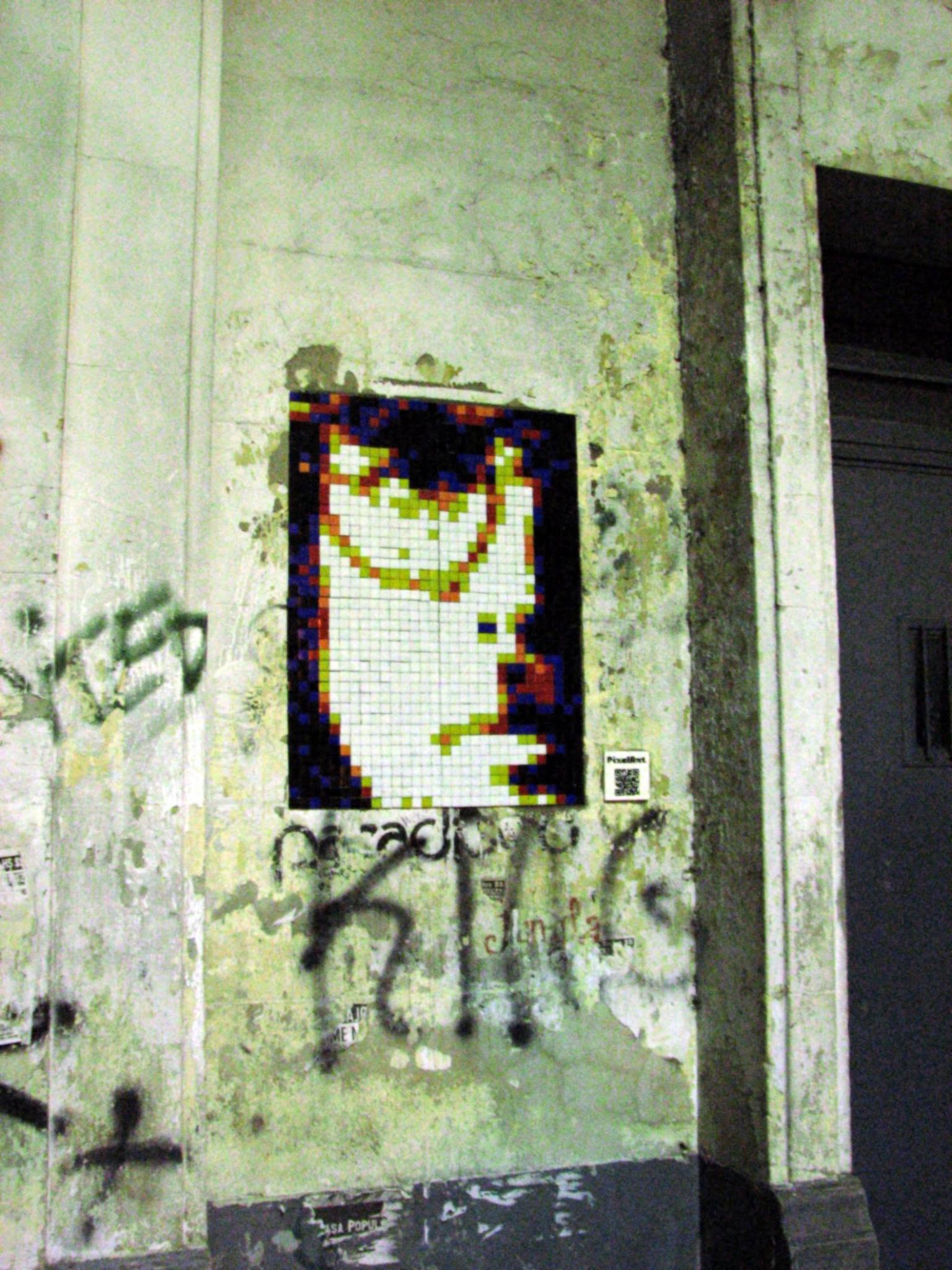
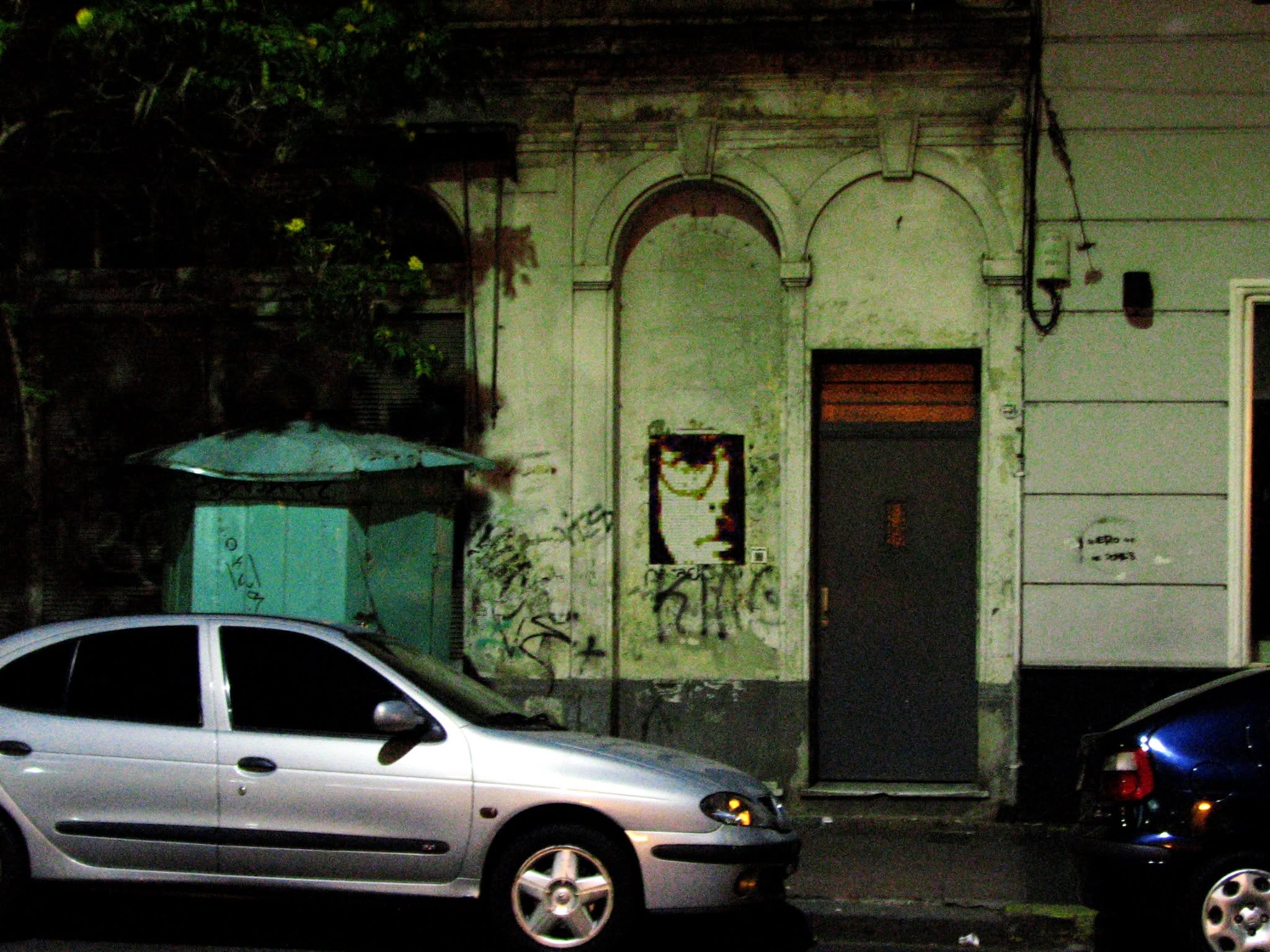
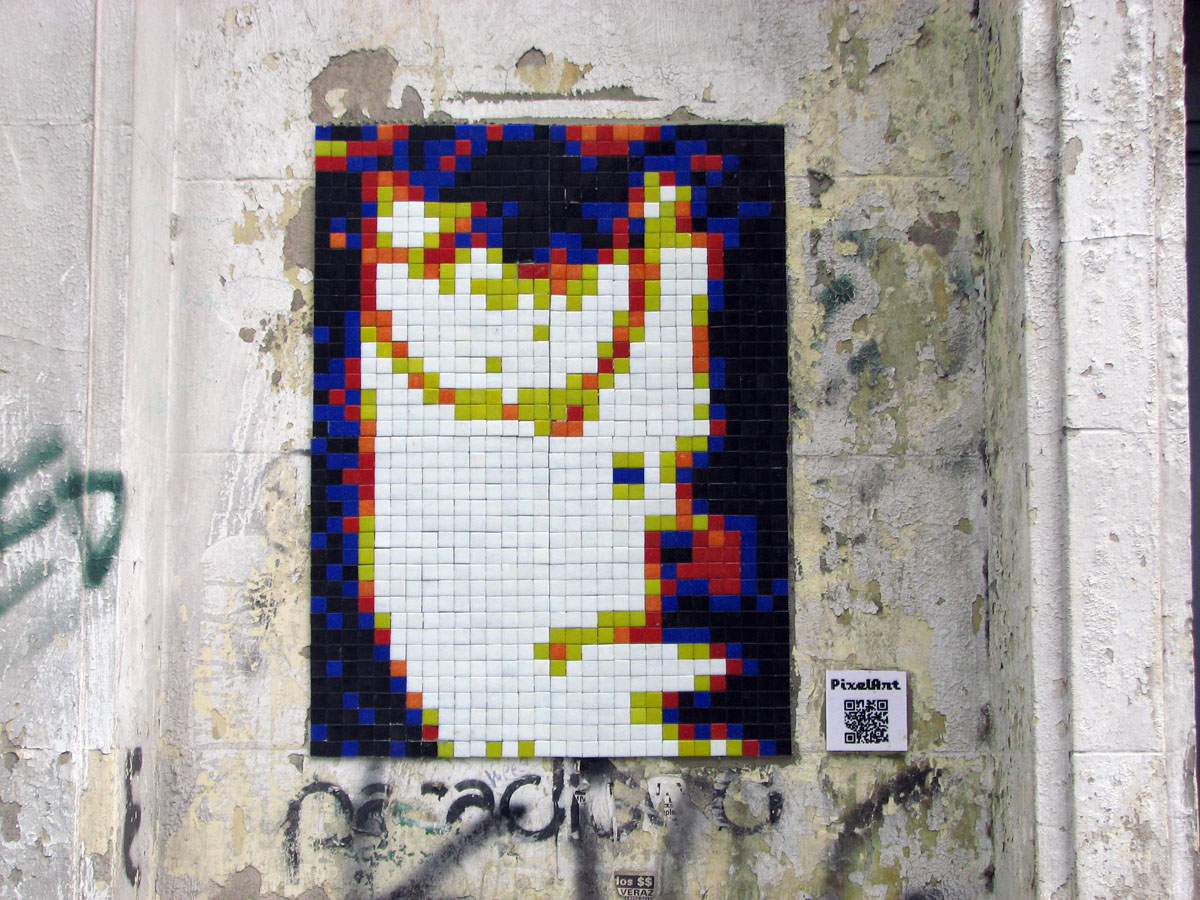
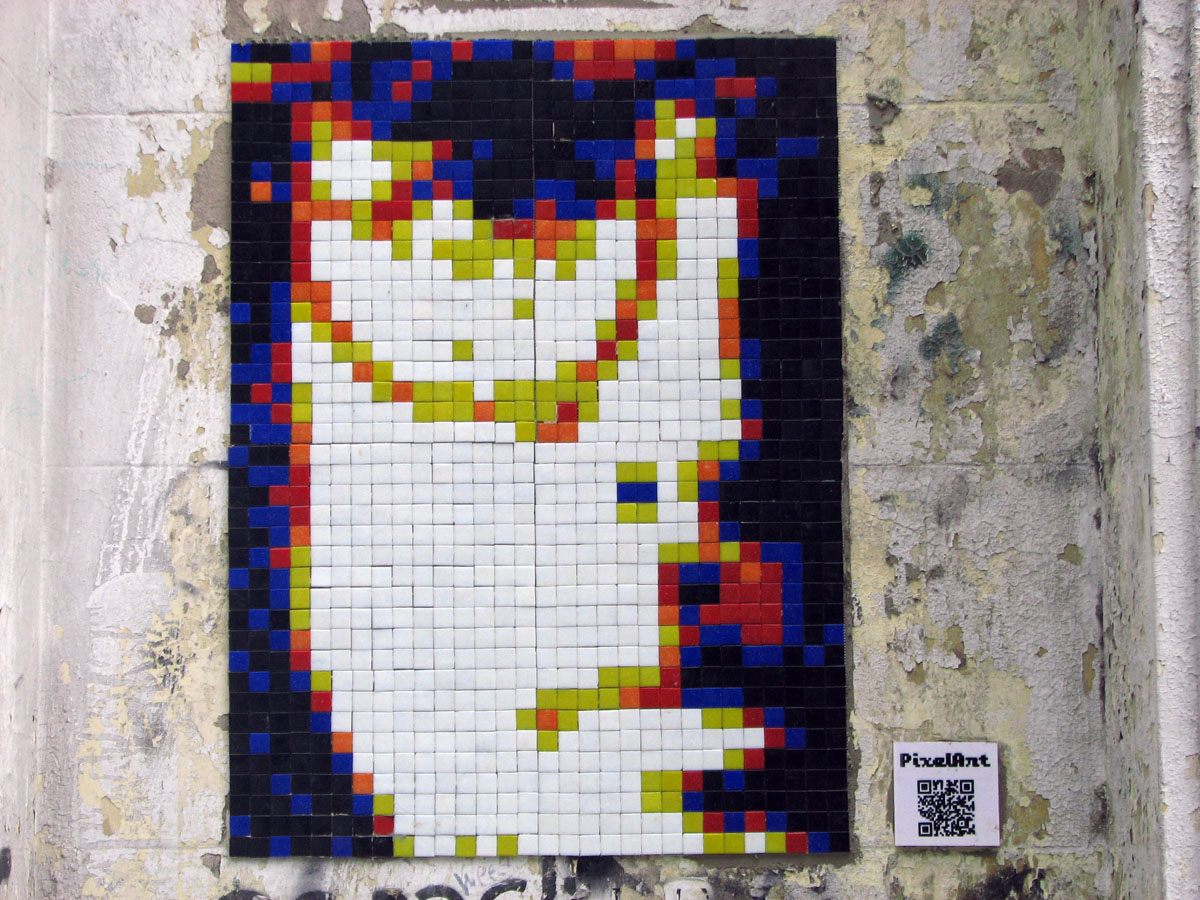
Pixel-based mosaic portrait created in homage to Charly García and installed in Buenos Aires for the artist’s sixty-fourth birthday. The intervention translates cultural memory into a portable urban artifact, connecting music, collective identity and public space across national boundaries.
Installed in Buenos Aires as a tribute to Charly García on the occasion of his sixty-fourth birthday, this mosaic transforms one of Latin America’s most influential musicians into a handcrafted pixel structure composed through a reduced chromatic system of reds, blues, yellows, black and white. The portrait forms part of the artist’s ongoing investigation into how cultural icons can be reconstructed through minimal visual information while maintaining immediate recognizability and symbolic presence.
The intervention explores the relationship between music, memory and urban space. Rather than functioning as a conventional commemorative monument, the work operates as a small-scale cultural signal embedded within the visual rhythm of the city. Through pixelation and chromatic reduction, the portrait oscillates between abstraction and representation, requiring the viewer’s perception to actively reconstruct the image.
Installed within the urban fabric of Buenos Aires, the mosaic extends the artist’s practice beyond Chilean territory and introduces a transnational dimension to his growing archive of public interventions. The work reflects how music and cultural memory circulate across borders, creating symbolic territories that exist independently of nationality while remaining deeply rooted in local identity.
Years after its installation, the mosaic experienced an unusual transformation. Rather than being vandalized or destroyed, the work was reportedly removed by the owner of the property and relocated into a private space. This unexpected migration converted the intervention into a rare example of urban artwork passing from the public realm into personal preservation, reinforcing the idea that images continue to evolve beyond the intentions of their creator.
Positioned between musical homage, urban intervention and cultural memory, Charly García demonstrates how handcrafted pixel structures can function simultaneously as public art, symbolic portraiture and vessels of collective identity.