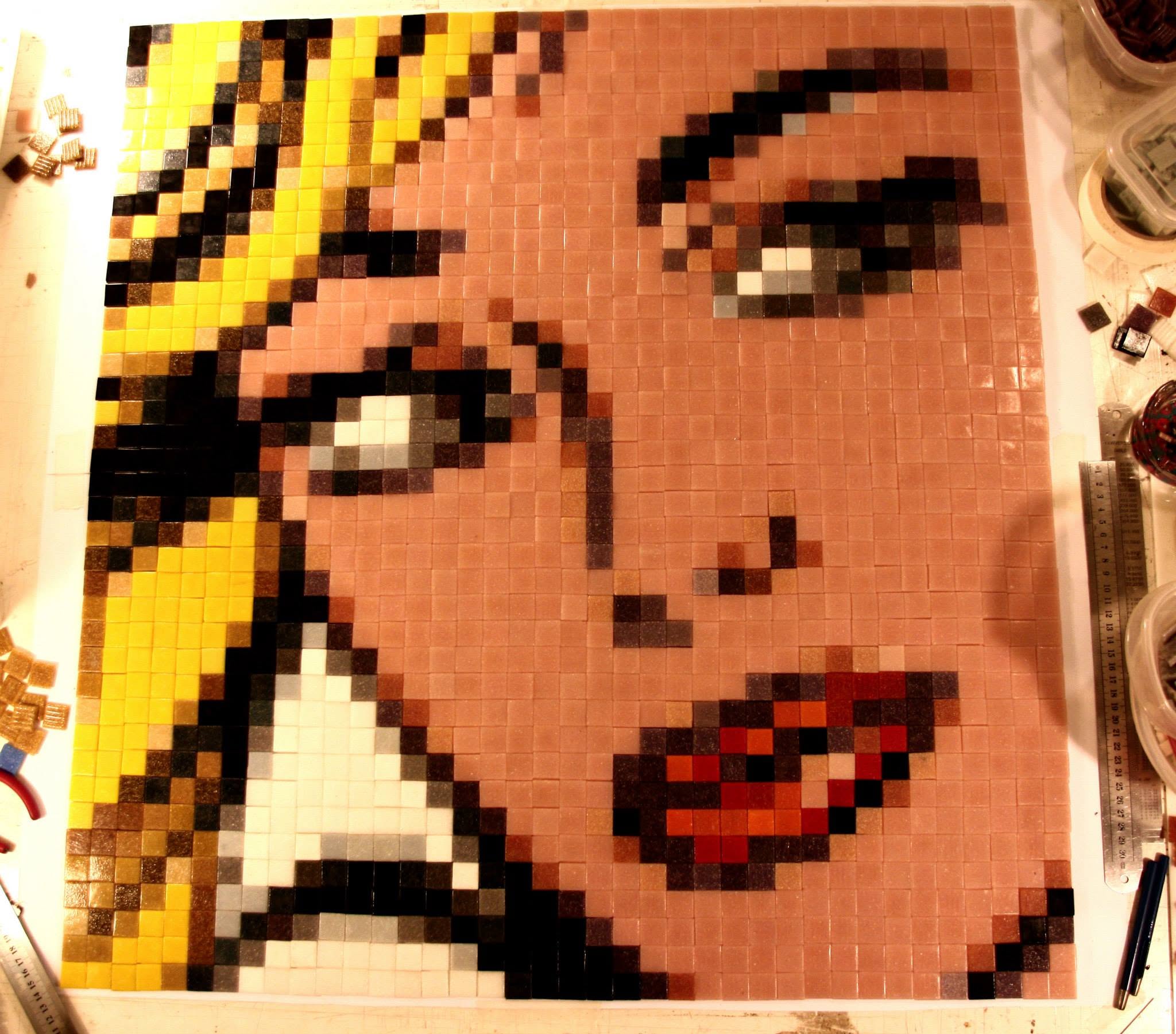
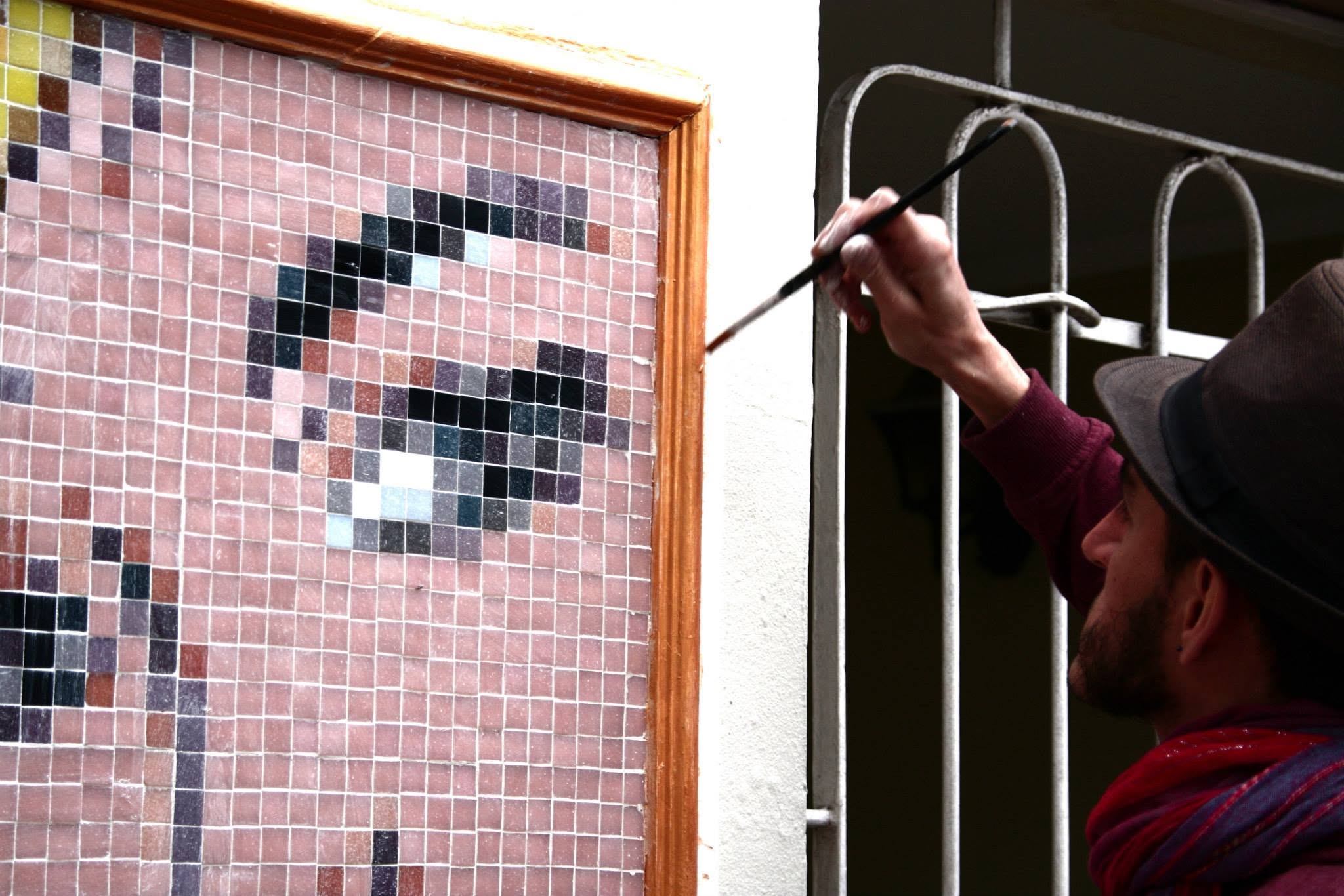
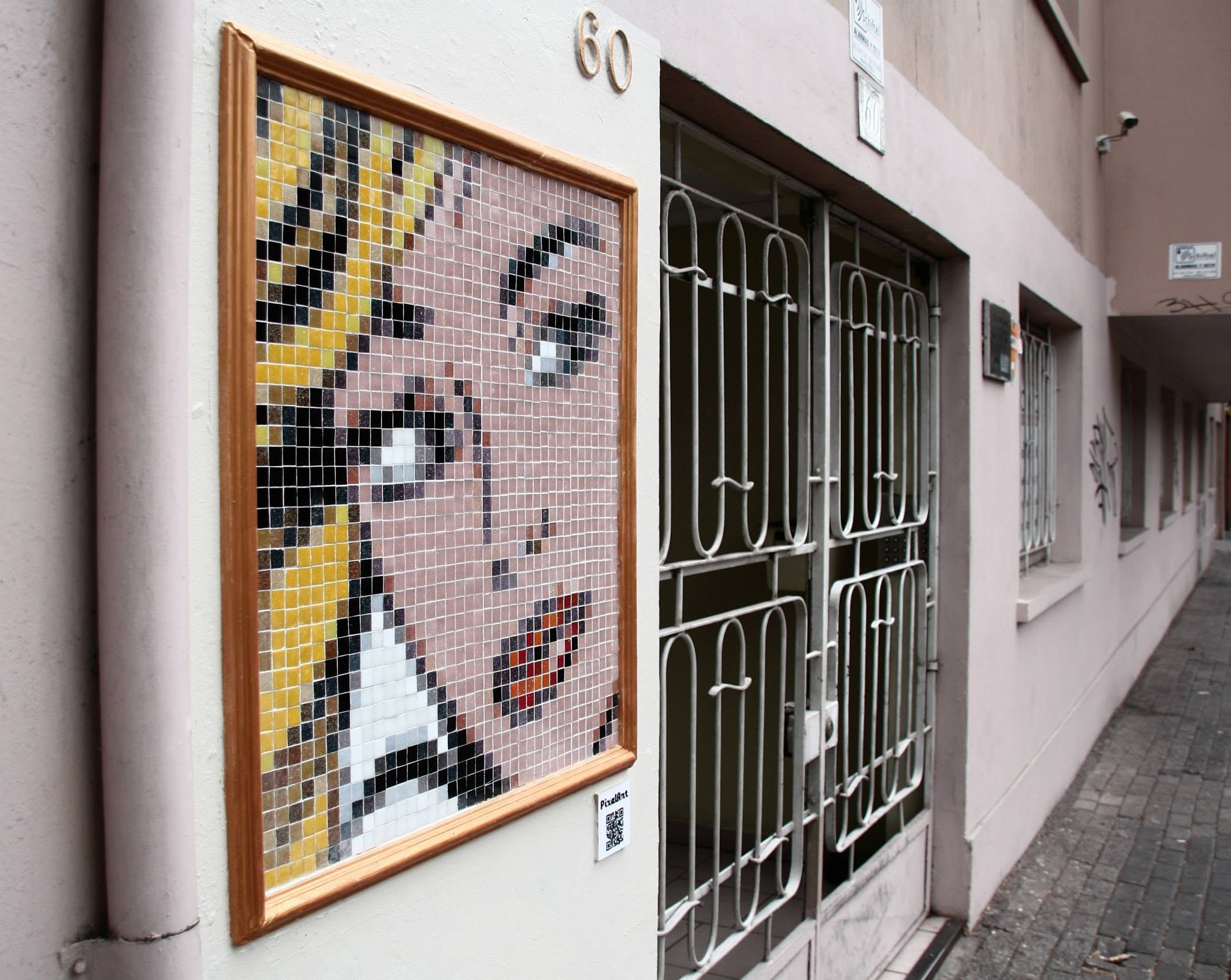
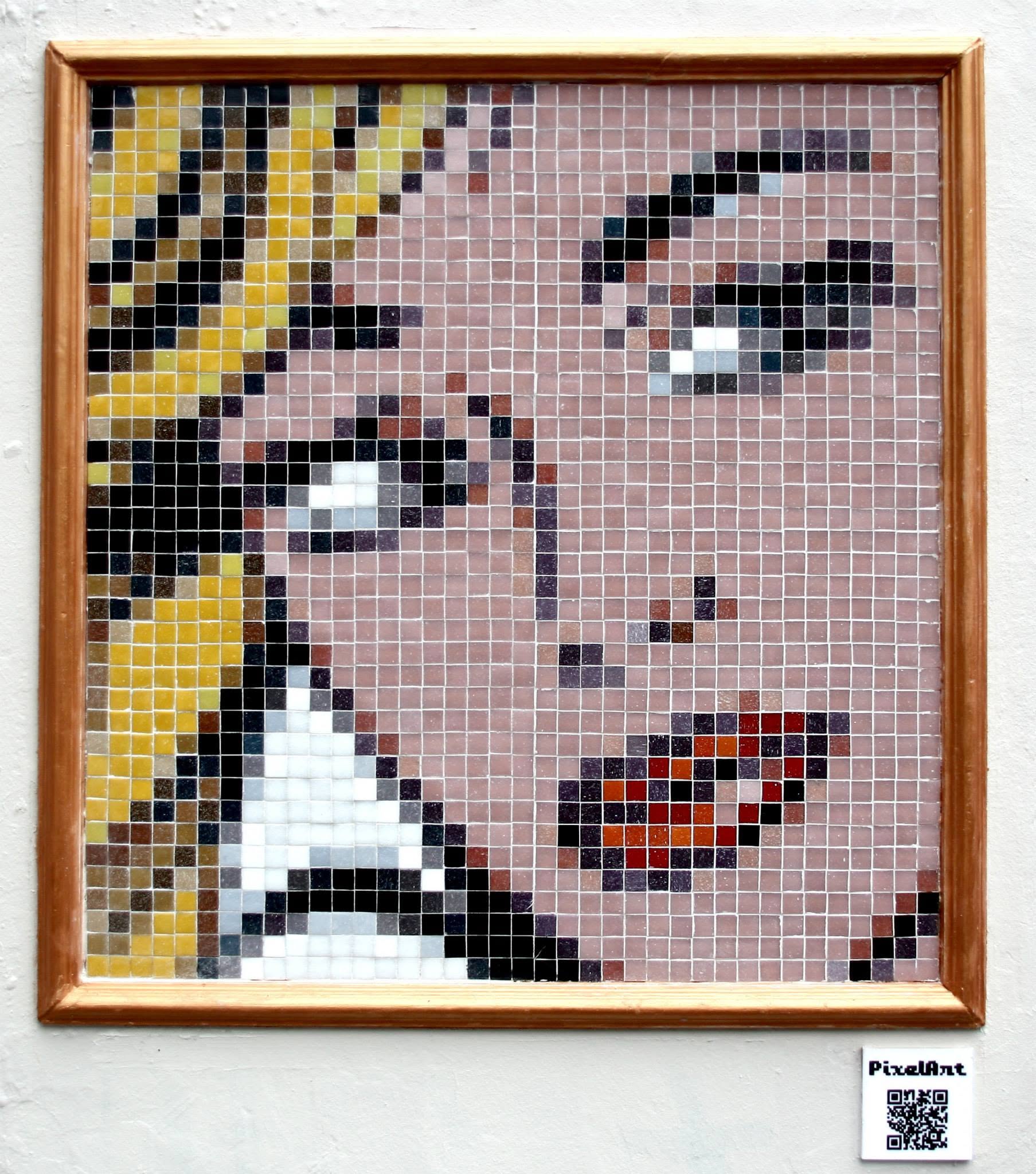
Urban mosaic intervention translating Roy Lichtenstein’s comic-based visual language into handcrafted pixel structures, exploring mediated emotion, repetition and the persistence of pop imagery within contemporary city space.
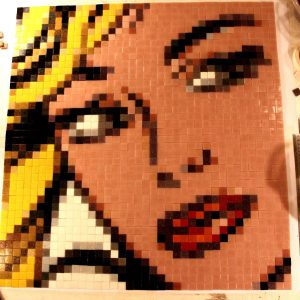
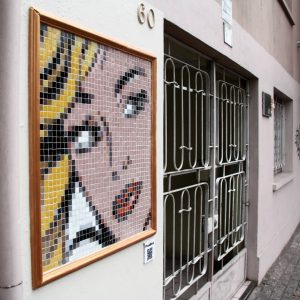
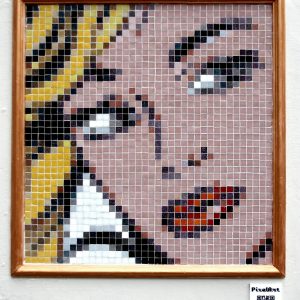
Installed as part of the artist’s growing urban gallery in Santiago, M-Maybe transforms one of Roy Lichtenstein’s most iconic comic images into a handcrafted pixel mosaic. By translating printed Benday-dot aesthetics into glass tesserae, the work establishes a dialogue between two systems of image construction separated by decades but united through repetition, fragmentation and visual synthesis.
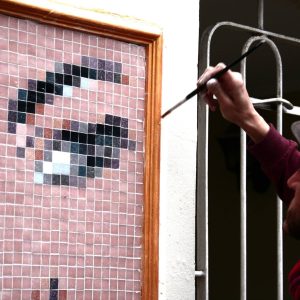
The intervention explores how emotion is mediated through contemporary image culture. Originally conceived as a mass-reproduced comic illustration and later elevated into the canon of Pop Art, the image undergoes a new transformation within the public sphere. The mosaic preserves the dramatic tension of the original composition while replacing industrial printing processes with the slow, manual rhythm of tessera-by-tessera construction.
Installed in the 80 × 80 cm format that would become a recurring scale within the artist’s urban archive, the work forms part of a distributed constellation of mosaics surrounding the studio. Together, these interventions investigate how cultural symbols migrate through different technologies, materials and contexts while maintaining their emotional and symbolic charge.
More than a tribute to Lichtenstein, M-Maybe functions as an exploration of image persistence across generations of media—from comic printing and Pop Art to pixel systems and contemporary urban intervention. The result is a work that exists simultaneously as public artwork, cultural quotation and fragment of a larger urban narrative.