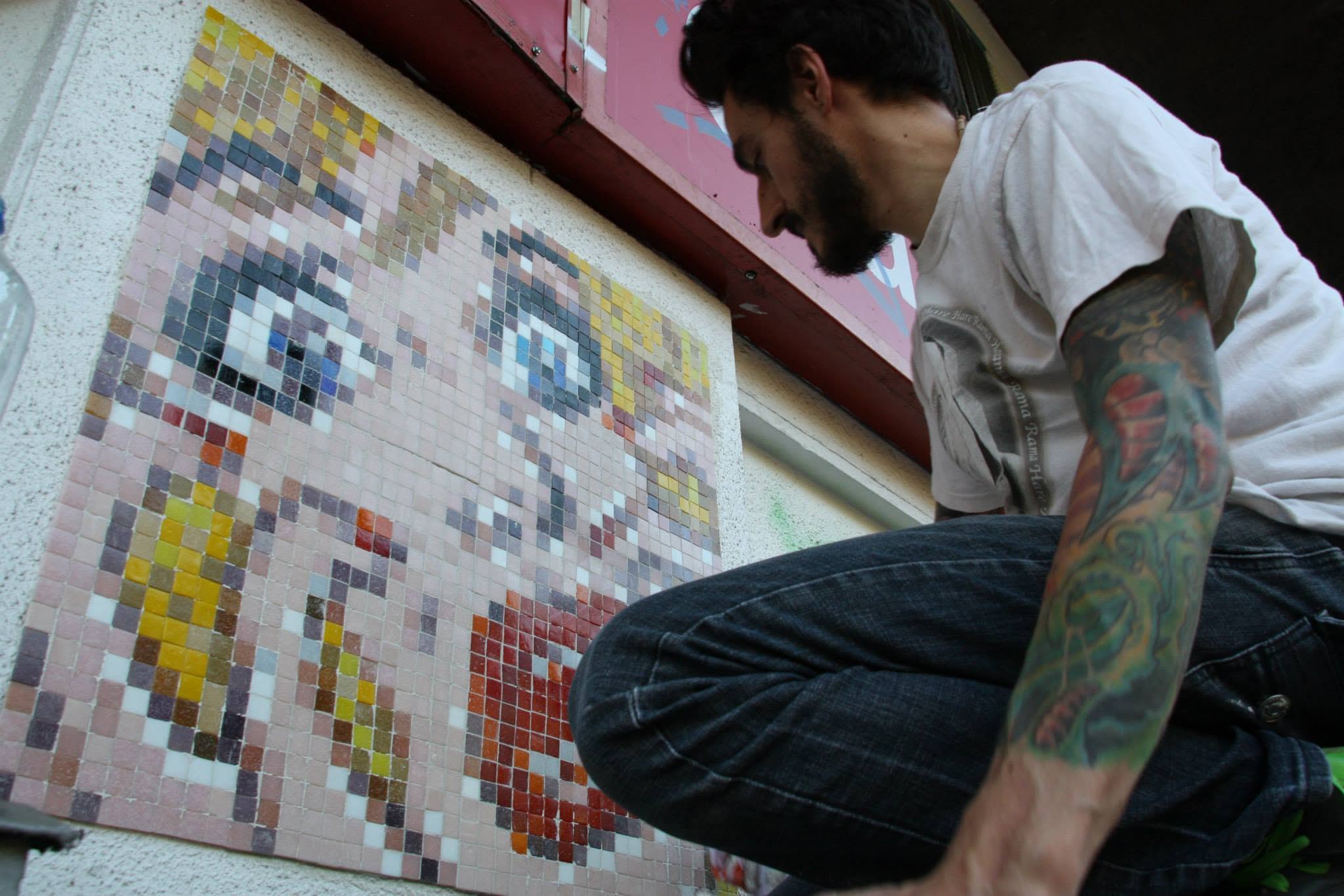
Mosaic intervention derived from Roy Lichtenstein’s visual language, translating comic-based emotional intensity into pixel structures where repetition, fragmentation and contemporary image systems converge within urban space.
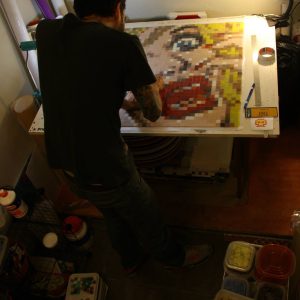
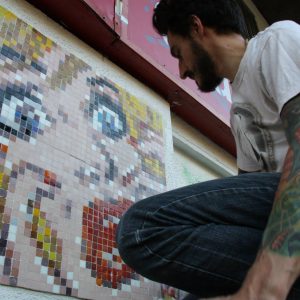
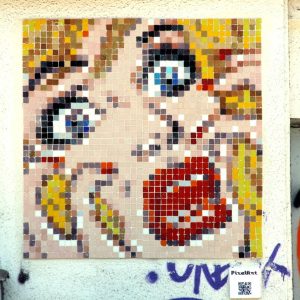
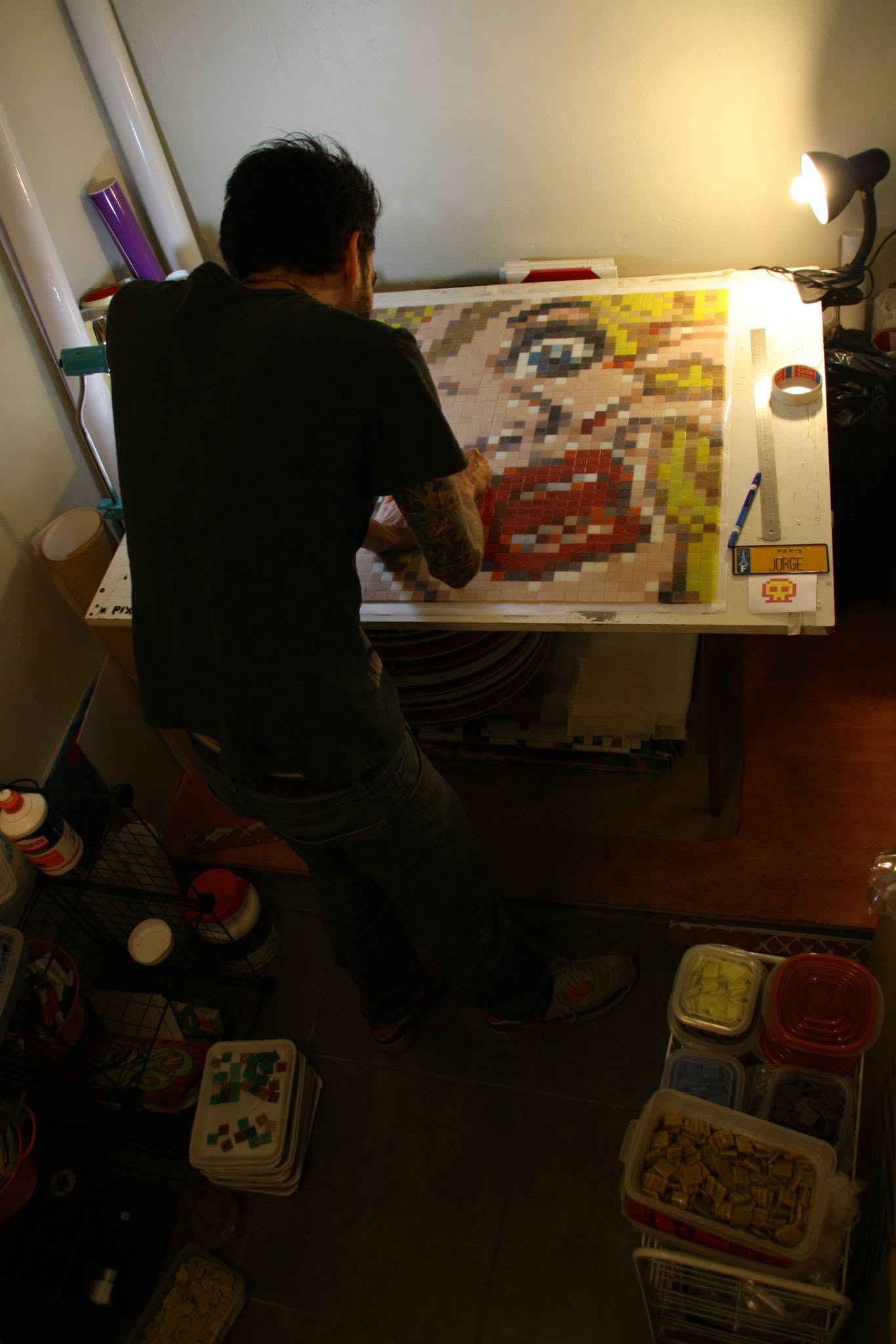
Installed in 2014 as part of the artist’s growing network of urban mosaics surrounding his studio, Screaming Lady reinterprets Roy Lichtenstein’s iconic visual language through a system of handcrafted pixel structures and Venetian glass tesserae. Composed of 2,500 individual mosaic units, the intervention translates the emotional intensity of comic-book imagery into a durable architectural surface designed to operate within the everyday landscape of the city.
The work explores the relationship between popular culture and contemporary image construction. By replacing Lichtenstein’s printed Ben-Day dots with a pixel-based mosaic grid, the intervention establishes a dialogue between twentieth-century mass media and the digital visual systems that increasingly shape contemporary perception. Fragmentation becomes both a technical method and a conceptual strategy, allowing emotion to emerge through discrete units of information.
Installed in public space and exposed continuously to urban conditions, the mosaic has remained intact for more than a decade. This persistence transforms the work into an ongoing experiment in image durability, demonstrating how symbols originally designed for rapid consumption can acquire permanence through architecture and material craftsmanship.
The work’s continued presence is particularly significant.
Several years after its installation, the building underwent a complete facade renovation. Rather than discarding the intervention, the construction team carefully removed the mosaic and later reinstalled it in its original position once the new ceramic cladding was completed. This unexpected act of preservation reveals a transformation rarely observed in urban art: the image ceased to function as an external intervention and became part of the architectural identity and collective memory of the site itself.
Executed tessera by tessera using traditional mosaic techniques, Screaming Lady occupies a key position within the artist’s investigation of appropriation, pixel aesthetics and urban memory. Positioned between Pop Art, digital culture and public intervention, the work transforms a fleeting emotional image into a lasting component of the contemporary city.