
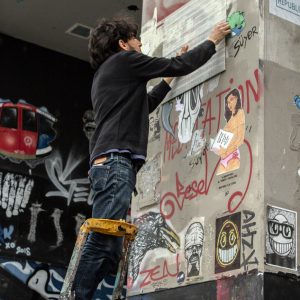
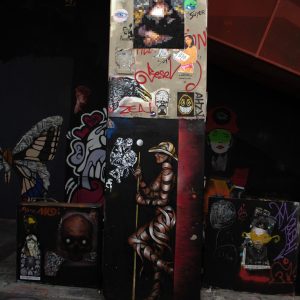
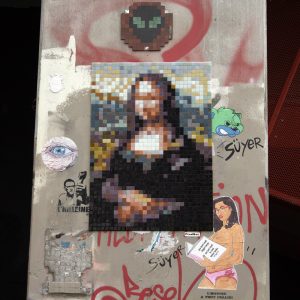
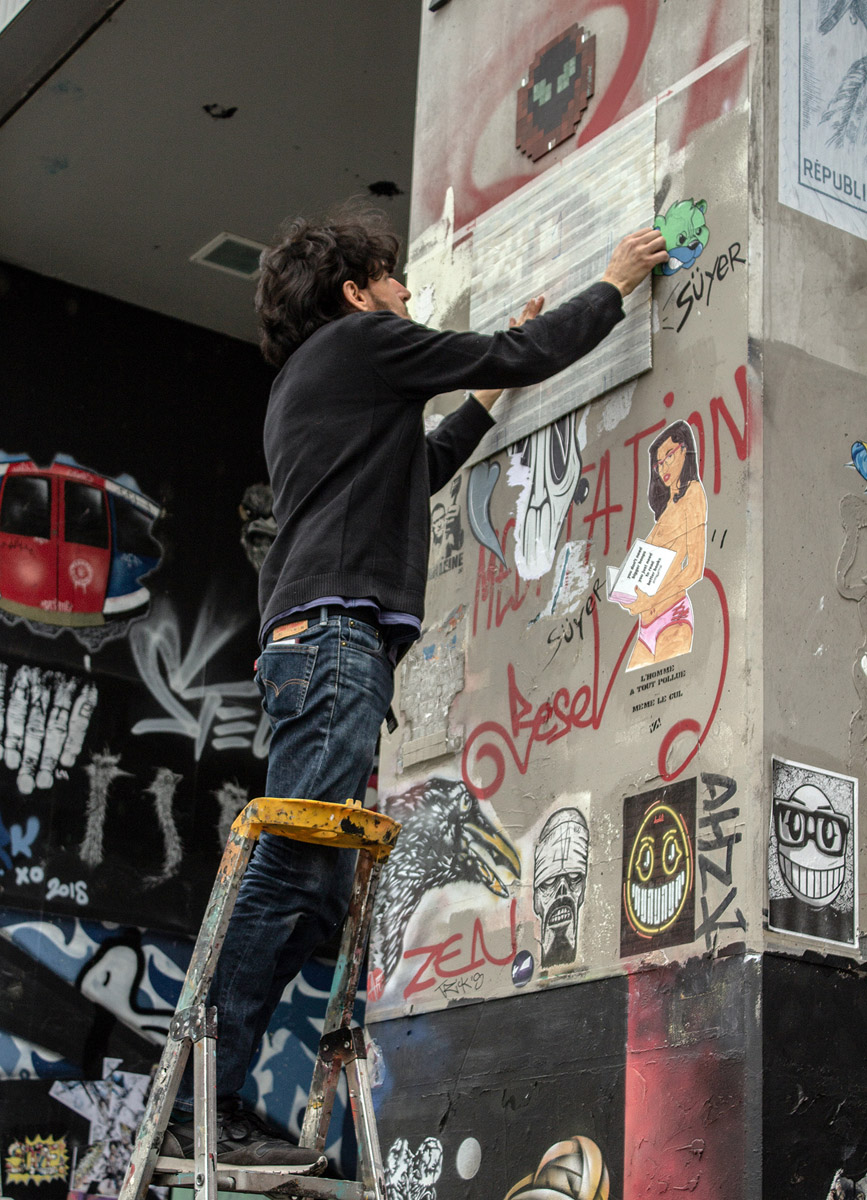
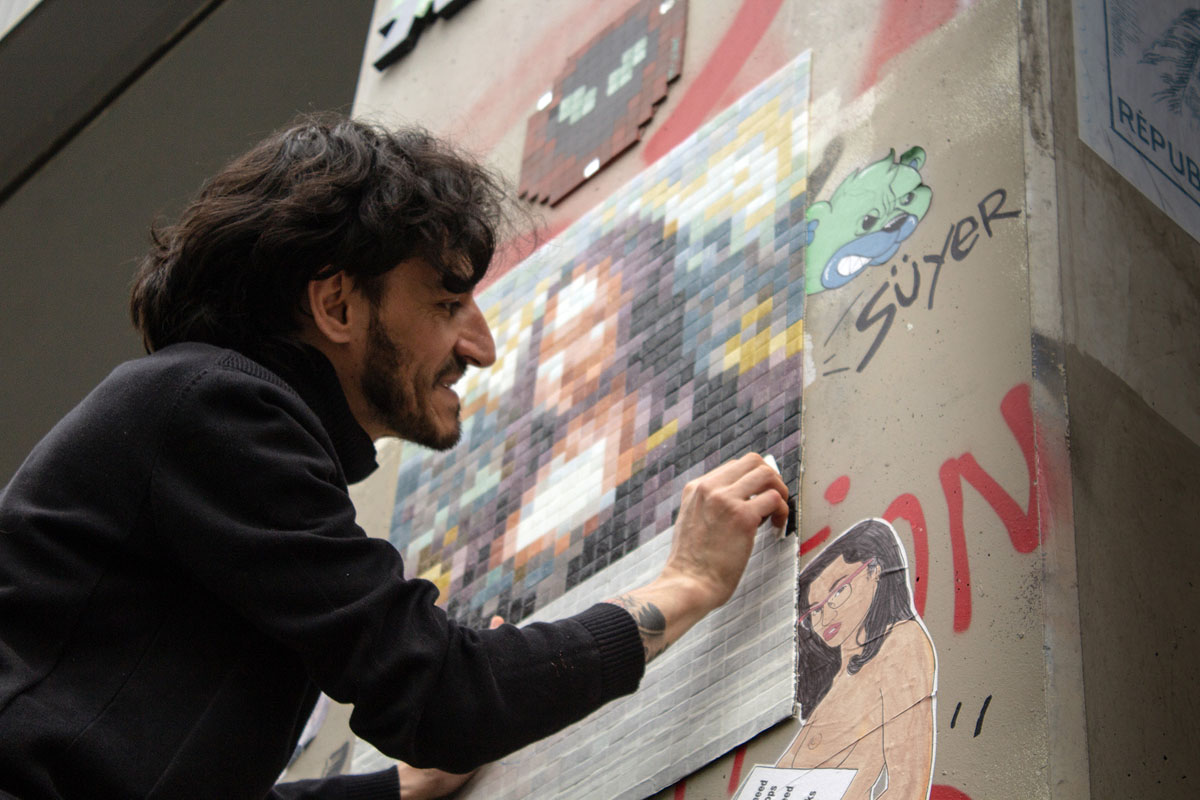
Urban mosaic reconstruction of Leonardo da Vinci’s Mona Lisa installed in Paris near Le Lavo//Matik, investigating how canonical imagery migrates into contemporary city space through pixel fragmentation and symbolic persistence.
PixelArt / Mona Lisa
Urban mosaic reconstruction of Leonardo da Vinci’s Mona Lisa installed in Paris near Le Lavo//Matik, investigating how canonical imagery migrates into contemporary city space through pixel fragmentation and symbolic persistence.
Installed in Paris near Le Lavo//Matik, this urban mosaic intervention reinterprets Leonardo da Vinci’s Mona Lisa through a system of pixel-based reconstruction and handcrafted mosaic techniques. Positioned on a structural pillar adjacent to the building housing the gallery, the work investigates how one of the most recognizable images in art history can migrate from the museum into the everyday visual fabric of the contemporary city.
By translating the painting into a fragmented mosaic structure, the intervention transforms a canonical Renaissance image into a public encounter shaped by distance, movement and urban context. The work continues the artist’s ongoing exploration of image persistence, demonstrating how cultural icons remain active through processes of adaptation, reproduction and relocation across different visual systems.
The project also occupies a significant place within the artist’s international trajectory. Installed independently within the urban landscape of Paris, the intervention established an early connection with Le Lavo//Matik, one of the city’s most recognized spaces dedicated to mosaic art. This relationship would later lead to an invitation to participate in the gallery’s fifth-anniversary exhibition, where the artist presented and sold a studio mosaic version of the Mona Lisa, creating a direct dialogue between public intervention and institutional exhibition.
Executed through traditional indirect mosaic techniques, the work functions simultaneously as urban artwork, cultural translation and symbolic marker. Positioned between Renaissance appropriation, public art and contemporary pixel aesthetics, the intervention demonstrates how historical imagery can continue to circulate, evolve and acquire new meanings within the architecture of contemporary cities.