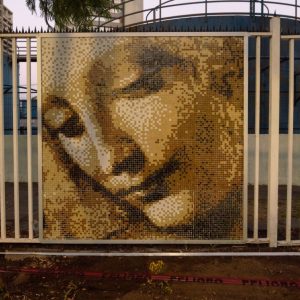
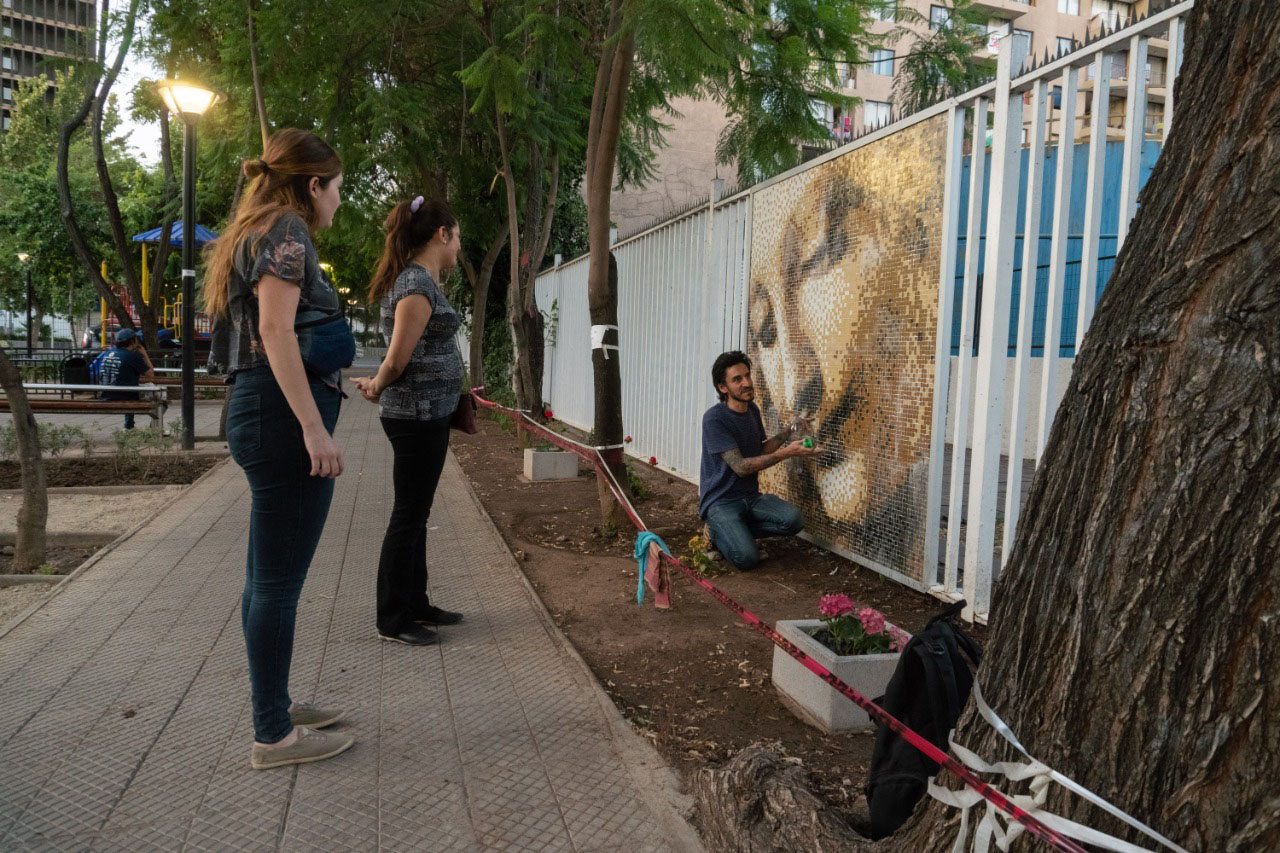
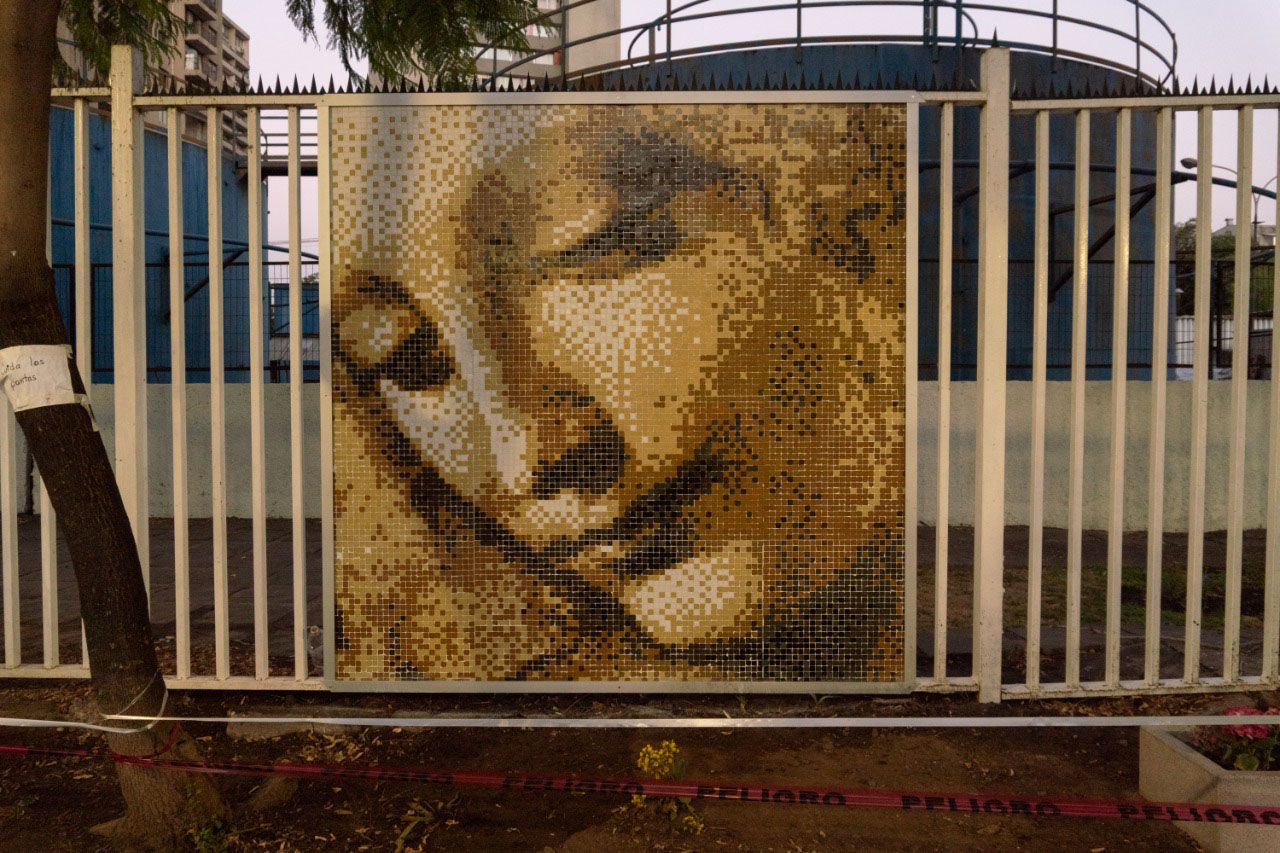
Mosaic reconstruction derived from Leonardo da Vinci’s Head of a Woman, installed within Plaza Leonardo da Vinci as a site-specific urban invocation connecting Renaissance imagery, architectural memory and symbolic presence.
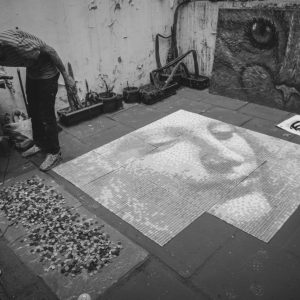
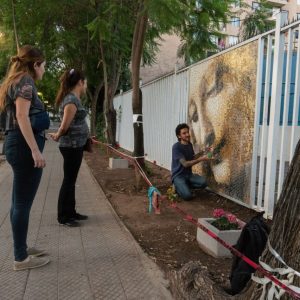
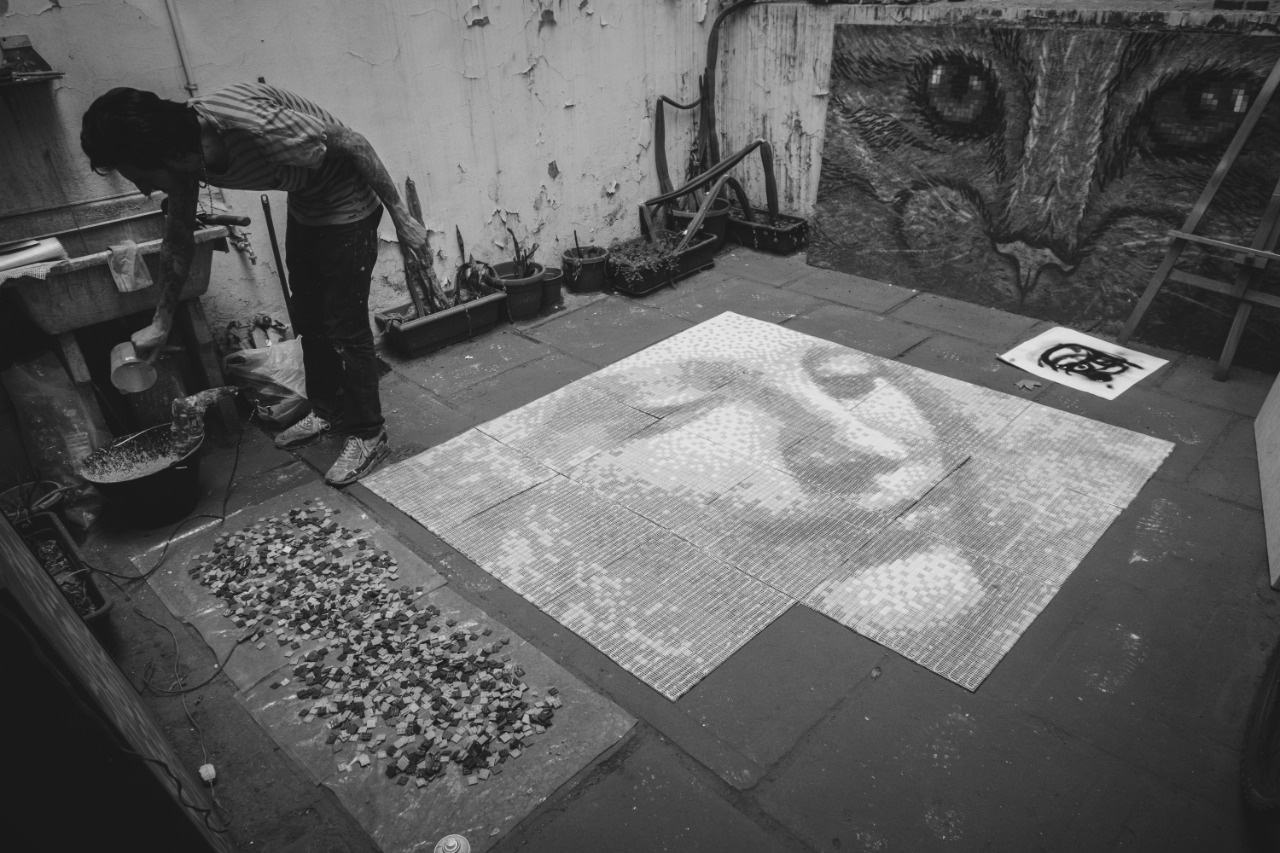
Installed within Plaza Leonardo da Vinci, this large-scale mosaic intervention reinterprets one of Leonardo’s most celebrated drawings through a system of pixel-based reconstruction and handcrafted mosaic techniques. Measuring 200 × 200 cm and composed of approximately 10,000 individual tesserae, the work translates the delicate lines of a Renaissance sketch into a durable public image embedded within the contemporary urban landscape.
Derived from Head of a Woman, one of Leonardo da Vinci’s most iconic studies, the intervention transforms a preparatory drawing originally intended for the private space of artistic creation into a permanent monument of collective visibility. The migration from paper to mosaic, and from studio practice to public space, reflects the artist’s ongoing investigation into how historical images survive, evolve and acquire new meanings through changing technologies and contexts.
The location is fundamental to the work’s significance. Installed in a plaza dedicated to Leonardo himself, the mosaic operates as a form of symbolic invocation, reintroducing the master’s presence into the architectural environment that bears his name. The intervention establishes a dialogue across five centuries of image-making, connecting Renaissance drawing, digital fragmentation and contemporary urban art through a common concern with observation, structure and representation.
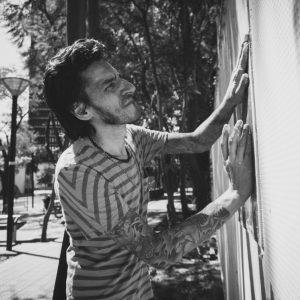
Executed tessera by tessera using traditional indirect mosaic techniques, the work reinforces the artist’s broader exploration of cultural memory, public symbolism and the persistence of historical imagery within contemporary visual systems. Positioned between urban intervention, digital aesthetics and classical appropriation, Head of a Woman becomes both tribute and transformation, allowing a Renaissance image to inhabit the visual language of the pixel age.