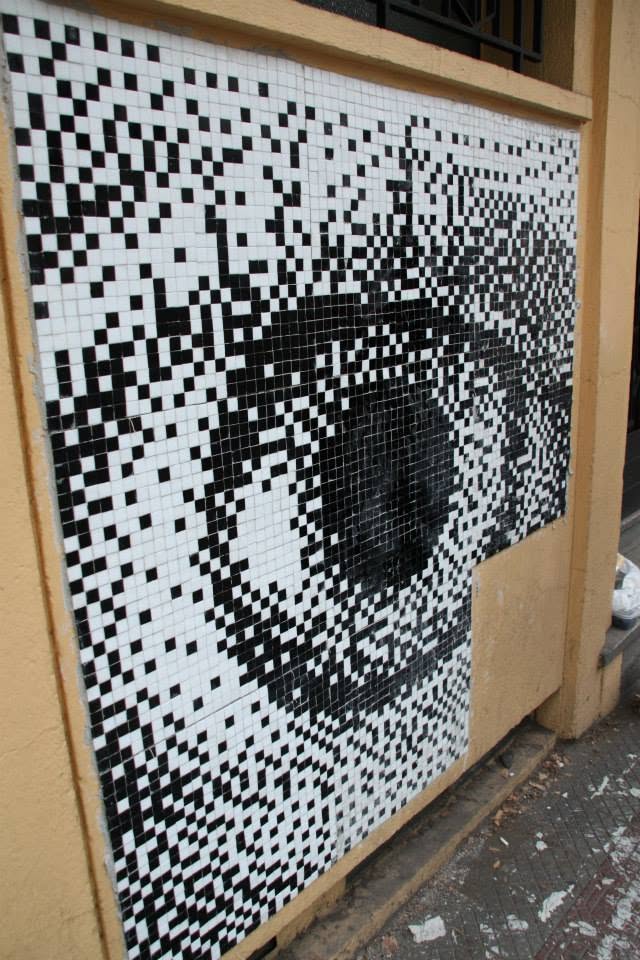
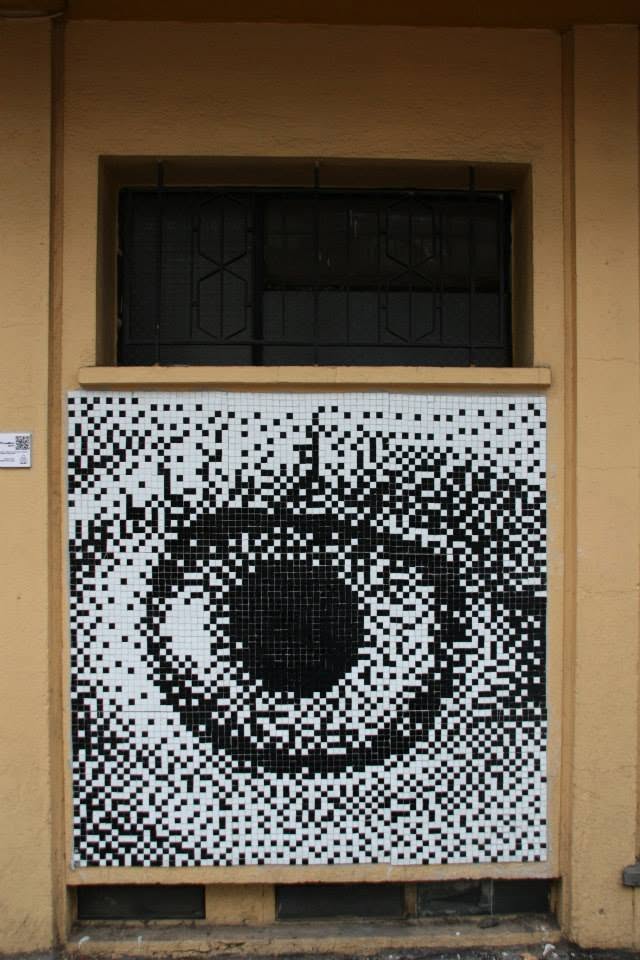
Pixel-based urban intervention investigating the transformation of the human gaze within contemporary surveillance culture, where observers progressively become monitored, traceable and behaviorally predictable subjects.
Created in 2013, Eye Tracking is the artist’s first urban mosaic intervention and the starting point of a public practice that would later expand into dozens of large-scale installations. Developed during his years working as a web designer and webmaster, the project emerged from an early fascination with eye-tracking studies and usability research, fields that sought to understand how users visually navigate digital interfaces.
At the time, heat maps and gaze analysis systems were becoming increasingly influential in web design, revealing where attention could be captured, directed and measured. The work transforms these emerging technologies into a public image, reversing the traditional relationship between observer and observed. Rather than simply looking outward, the eye becomes a symbol of a new condition in which human attention itself is monitored, recorded and increasingly predicted.
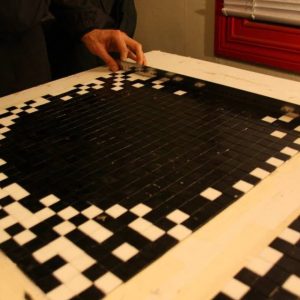
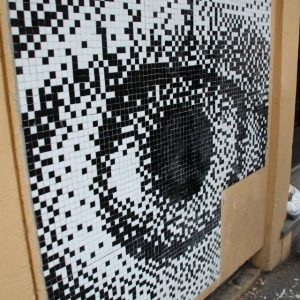
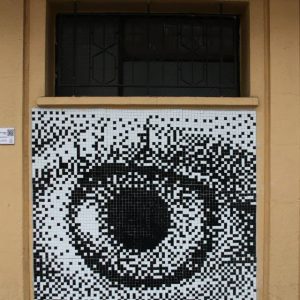
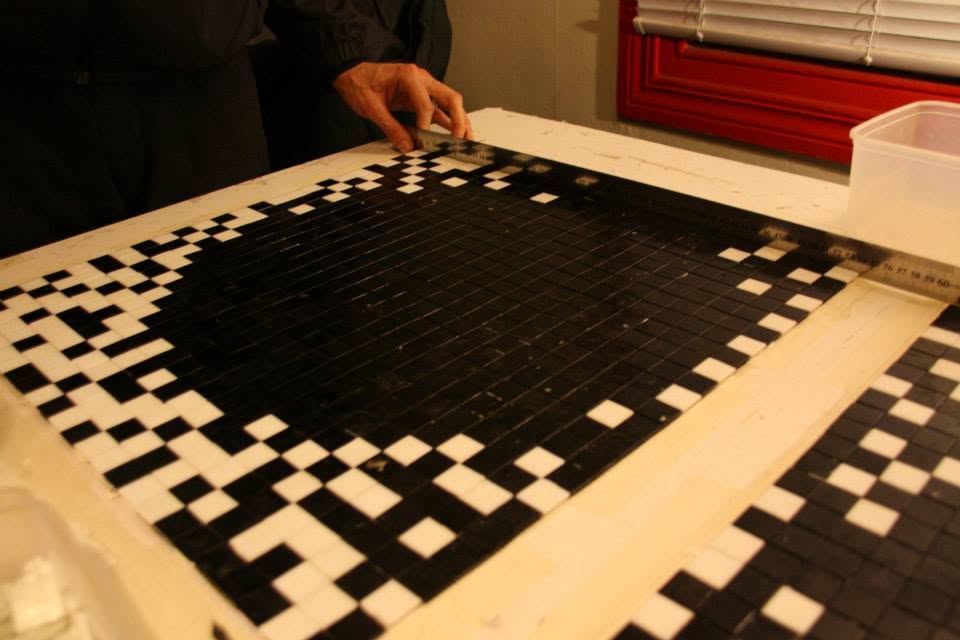
Constructed as a strictly binary mosaic, the intervention reduces visual information to its most fundamental structure while preserving a powerful psychological presence. The image operates simultaneously as portrait, symbol and warning, anticipating many of the concerns surrounding surveillance culture, behavioral data collection and algorithmic visibility that would later become central to contemporary digital life.
Installed outside the artist’s studio, the work has remained in place for more than thirteen years despite being created before the development of the techniques and materials that would later define his mosaic practice. Its continued survival transforms the intervention into a historical marker within the artist’s trajectory: a persistent witness to the emergence of pixel-based public art and the gradual expansion of digital culture into everyday experience.
Today, Eye Tracking stands as both an urban landmark and an early reflection on the politics of attention, demonstrating how a simple binary image can embody complex questions about technology, observation and human agency in the information age.